TIC- Cover Story
TIC- Cover Story
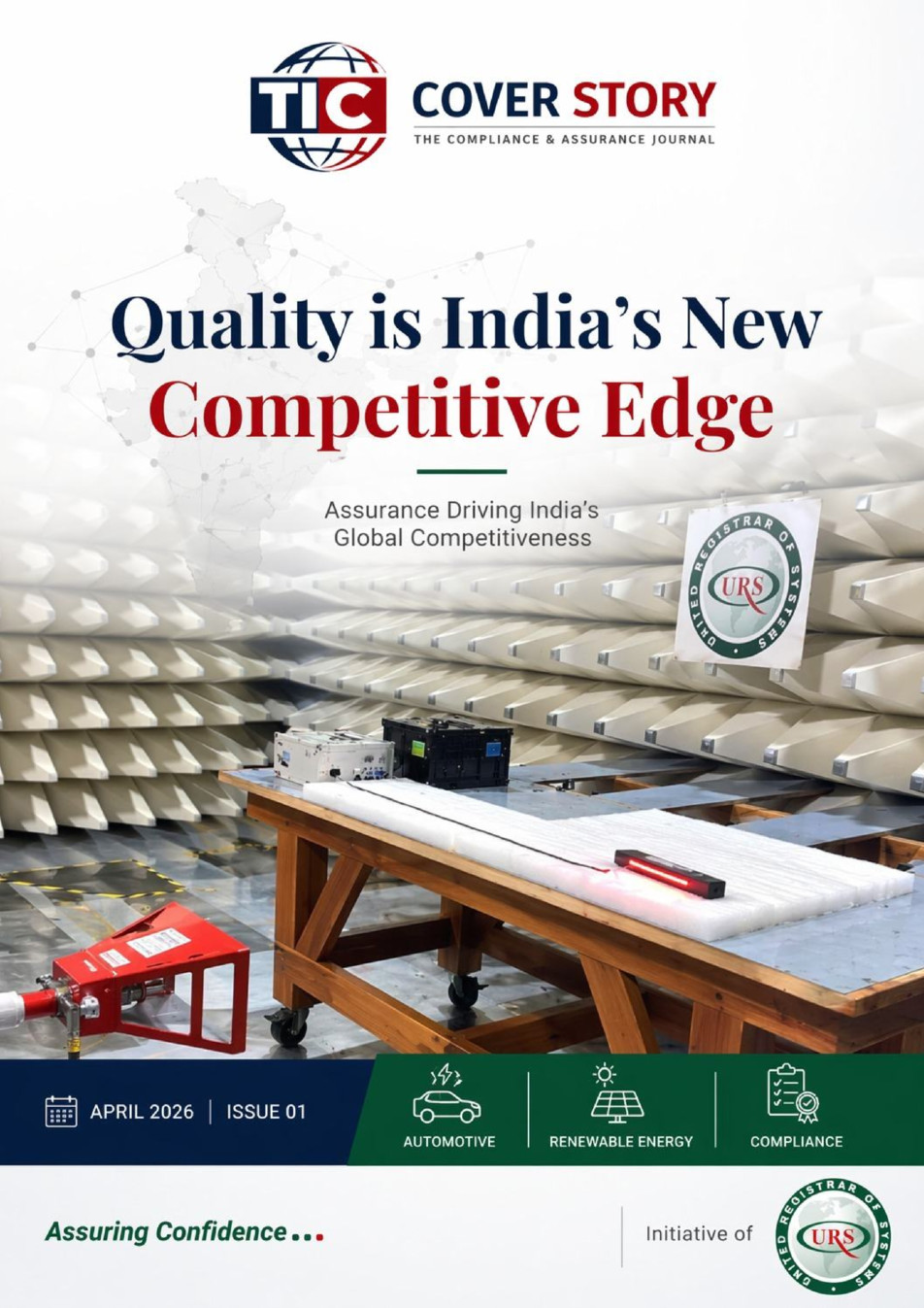
TIC Cover Story: Leadership, Standards, and Innovation in a Transforming Testing, Inspection, and Certification Landscape
Editorial Note
URS presents TIC Cover Story as a focused briefing on how the Testing, Inspection, and Certification sector is evolving in response to advancing technologies and shifting regulatory expectations. The narrative underscores that electric mobility, renewable energy, and sustainability-oriented compliance are driving a heightened need for dependable assurance and validation. This publication distills the most relevant developments and future directions shaping the TIC domain, aiming to place quality at the forefront of strategic decision making rather than treating it as a compliance checkpoint. The aim is to illuminate how leaders and practitioners can navigate these changes with rigor, transparency, and a commitment to continual improvement. (Page 1)
In today’s dynamic environment, the emphasis on quality is inseparable from business strategy. The editorial outlines how the TIC community is embracing a culture of rigorous detail, stringent adherence to standards, and ongoing capability development to maintain credibility across markets and industries. The focus is on building trust through every test, inspection, and certification activity, ensuring outcomes are reliable, reproducible, and aligned with evolving expectations. The piece also reaffirms URS’s dedication to impartiality, independence, and fairness as the bedrock of trusted assurance. (Page 1)
Editorial context also notes that as industries transition toward more electrified and digitized systems, the role of TIC expands beyond traditional conformity checks. Instead, assurance becomes embedded in product design, risk management, and market access strategies. This shift reflects a broader move toward integrating verification into development lifecycles, supporting faster, more confident deployment of innovative solutions. (Page 1)
Ultimately, the editorial emphasizes that leadership in the TIC field entails modeling integrity, accountability, and excellence. When organizations test, inspect, and certify, they deliver more than compliance—they deliver trust that underpins performance, safety, and sustainable progress across sectors. (Page 1)
Industry Voice
From a strategic standpoint, compliance alone is no longer the endgame; it now serves as the starting point for competing effectively in global markets. As sectors such as electric mobility, renewable energy, and sustainability demand higher levels of transparency, regulators tighten their frameworks, supply chains seek greater visibility, and investors increasingly tie performance to governance. (Page 2)
Dr. Mukesh Singhal observes that assurance activities are transitioning from periodic checks to continuous governance functions embedded within the leadership and management of the organization. This evolution places TIC activities at the core of decision-making around product development, service delivery, and long-term viability. The result is a more integrated approach to validation that aligns risk management, market access, and customer confidence. (Page 2)
What marks this moment is the broader shift in how assurance is applied: it is no longer a peripheral service but a central capability that supports lifecycle reliability. Whether the focus is battery systems in next-generation vehicles, the durability of solar assets under varied climates, or comprehensive carbon accounting under ESG reporting, stakeholders expect robust evidence of performance over time. (Page 2)
Industry leaders are therefore rethinking how compliance is used to unlock value. By weaving validation into design, expanding validation infrastructures, and partnering with trusted institutions, organizations can mitigate risk, shorten time-to-market, and strengthen confidence among investors and customers. The objective is not merely to meet standards but to shape market confidence through transparent, credible assurance. (Page 2)
Looking ahead, assurance should be viewed as a driver of innovation and market access. When properly leveraged, it transcends compliance and becomes a strategic asset that differentiates organizations through demonstrated reliability and responsible governance. (Page 2)
Standards & Protocols
The standards landscape is actively renewing itself to reflect current and emerging technologies. The IEC has introduced a slate of new and updated documents, including a pre-release for a forthcoming battery-related standard and updates to several key electrical and safety frameworks. These developments illustrate how international guidelines are continually revised to address evolving industry practices, ensure interoperability, and reinforce safety and performance expectations. (Page 3)
Among the notable entries are a pre-release for updated battery cell considerations, revised methods for calculating magnetic component parameters, and new or revised versions for essential machinery safety and electrical equipment standards. The move toward consolidated and redline versions underlines the industry’s emphasis on clarity, traceability, and the ability to track changes as technologies advance. (Page 3)
Further updates include expansions in safety-related controls for machines, photovoltaic installation guidelines, and EMC evaluation strategies that recognize measurement uncertainty. The IAS/IEC ecosystem now includes ISO/IEC 17020:2026, which updates requirements for bodies performing inspection, signaling ongoing alignment with modern conformity assessment needs. (Page 3)
These standards illustrate a broader trend: regulatory and standard-setting bodies are keeping pace with rapid technological change while seeking to preserve safety, reliability, and fair competition. For organizations, this means continuous learning and timely adoption of revised requirements to avoid de-risking delays and market barriers. (Page 3)
In a rapidly changing world, staying current with international standards is not a nuisance but a strategic capability. The ability to anticipate, interpret, and incorporate new standards into product development and testing programs is essential for maintaining global competitiveness and access to cross-border markets. (Page 3)
Industry Pulse
India’s mobility and energy transition is elevating testing from a support function to a central pillar of product development and market readiness. The country’s electric-vehicle shift, reinforced by government programs and a broad push toward renewable energy, has intensified demand for sophisticated testing services—particularly in EMI/EMC, battery reliability, and electronics systems. The solar sector is similarly expanding, with a surge in demand for rigorous module testing to ensure enduring performance in diverse environments. (Page 4)
Regulatory expectations are tightening, and global benchmarks are increasingly shaping domestic standards. As policy debates emphasize safety, lifecycle performance, and accountability, the role of testing becomes a critical enabler of innovation and market access. Companies are aligning quality assurance with longer-term strategic goals, recognizing that robust validation is essential to reduce risk and accelerate deployment. (Page 4)
The shift described here points to a broader strategic move: testing is no longer a late-stage checkpoint but an integral ingredient of design and lifecycle management. By embedding rigorous validation early and continuously, firms can improve performance outcomes, shorten cycles, and strengthen stakeholder trust. (Page 4)
Innovation & Technology
Innovation in today’s industrial landscape is increasingly measured not only by breakthroughs but also by the ability to adapt and lead across multiple sectors. Companies that anticipate change and build agile capabilities are the ones that generate lasting impact. URS has recently been recognized for its contributions to automotive and solar testing at a national event, underscoring the organization’s growing role in supporting India’s transition toward advanced mobility and renewable energy. (Page 5)
The recognition reflects a broader commitment to partnering with industries undergoing structural change. As automotive safety requirements tighten, electrification accelerates, and intelligent mobility concepts gain prominence, testing standards are becoming more stringent. In the solar arena, growth is fueled by sustainability objectives, energy independence initiatives, and large-scale infrastructure programs. (Page 5)
To address these evolving needs, URS has invested in cutting-edge testing infrastructure, modern laboratory assets, and specialized technical expertise that span conventional automotive components to next-generation electric vehicle systems, plus comprehensive solar PV module performance and durability assessments. The cross-sector capability enables URS to contribute meaningfully to the twin missions of cleaner energy and safer transportation. (Page 5)
What sets URS apart is the deliberate expansion of its scope across two critical industries rather than deepening a single vertical. This approach aligns with national priorities and global trends, enabling a more resilient and comprehensive response to future demand. By fostering cross-disciplinary know-how, URS supports a future where mobility and energy systems co-evolve toward greater efficiency, reliability, and safety. (Page 5)
The overarching message is that leadership in innovation requires not only technical prowess but also strategic collaboration, investment in capabilities, and a clear vision for how testing can accelerate responsible progress in multiple frontier areas. (Page 5)
Certification Lens
Mumbai Metro Rail’s Operations and Maintenance division has achieved Integrated Management System (IMS) certification, marking a notable milestone in the pursuit of excellence, safety, and efficiency. The IMS certification represents the convergence of key management systems into a cohesive framework that covers quality, environmental stewardship, and occupational health and safety. (Page 6)
The certification, awarded by URS Certification Ltd, validates the organization’s commitment to upholding high standards across its metro rail operations. It signals a disciplined culture of compliance, ongoing improvement, and proactive risk management, which are essential for delivering safe, dependable services to millions of commuters daily. The accreditation process involved a thorough assessment of operational processes spanning the Mumbai Metro Line-3 corridor, from Cuffe Parade to Aarey JVLR, including the Aarey Depot, and demonstrates alignment with international best practices for safety and sustainability. (Page 6)
By achieving IMS certification, the Mumbai Metro Rail O&M team reinforces its commitment to quality, environmental responsibility, and worker well-being, illustrating how integrated systems can enhance performance, resilience, and public trust in large-scale transit infrastructure. This milestone also highlights URS’s role in supporting complex urban mobility projects through rigorous validation and comprehensive risk management strategies. (Page 6)
Flipbook Gallery
The publication’s online gallery offers a curated portal to a variety of content formats that reflect URS’s communications ecosystem. Visitors can browse magazines, catalogs, reports, flyers, portfolios, and artworks, all presented within a single digital space. This gallery structure supports accessibility and broad dissemination of industry insights, case studies, and thought leadership. (Page 7)
In showcasing these materials, URS demonstrates how knowledge products can travel across audiences—from practitioners seeking technical guidance to stakeholders interested in overarching industry trends. The flipbook format provides a flexible, interactive way to engage with content that spans technical standards, project case studies, and strategic perspectives on testing, inspection, and certification. (Page 7)
As the digital publishing landscape evolves, the gallery serves as a repository for enduring insights that reinforce URS’s role as a trusted partner in mobility, energy, and compliance ecosystems. The platform complements traditional reporting with accessible, visually rich resources designed to inform decision makers and spark dialogue about best practices in TIC. (Page 7)
© 2021 Fleepit Digital, and related materials are presented to provide readers with a comprehensive view of URS’s work and the broader TIC landscape. The content reflects a snapshot of ongoing activities, priorities, and achievements that shape how testing, inspection, and certification contribute to safer, more reliable technologies and infrastructures. (Page 7)