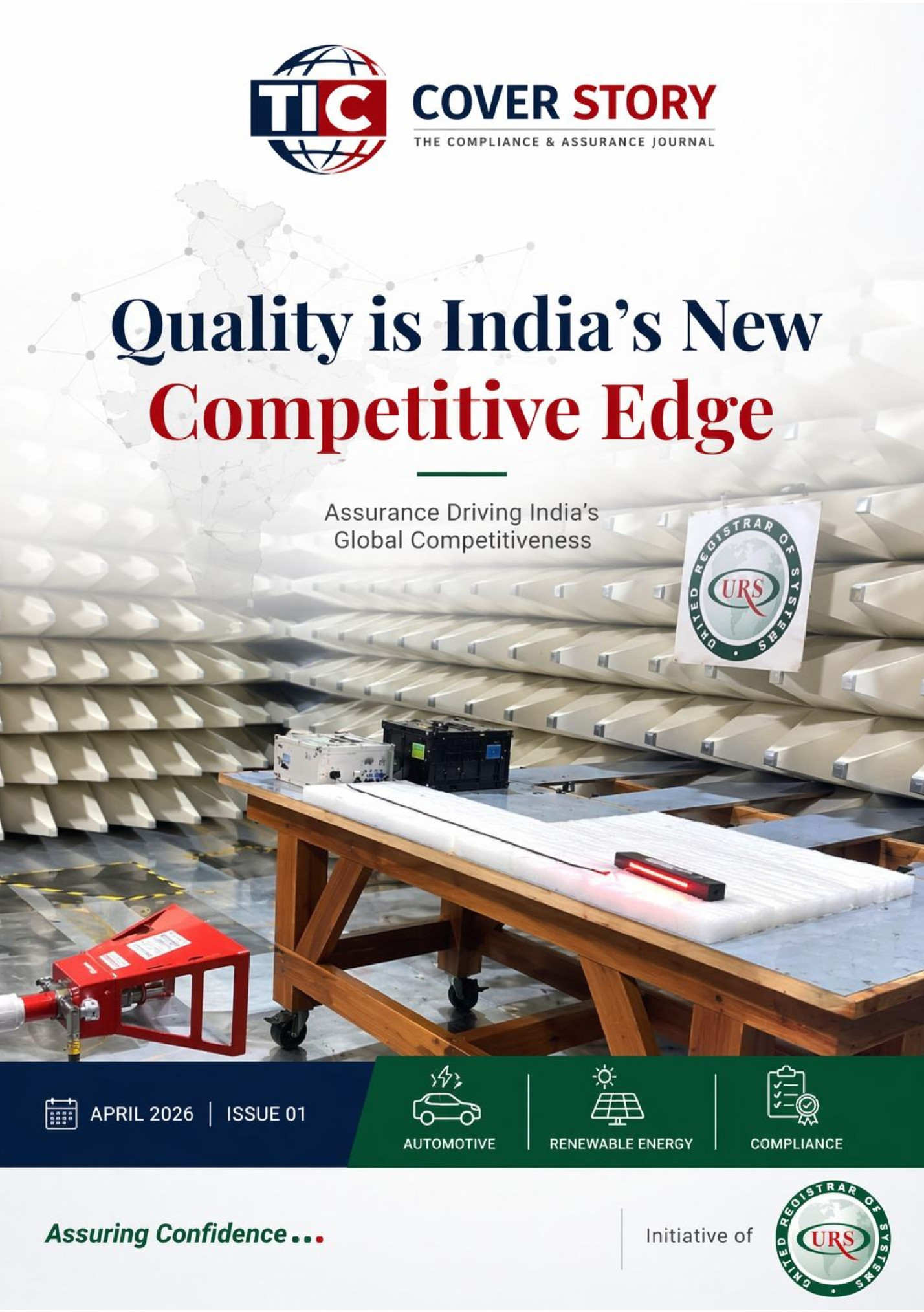
Leaders from the global certification industry gathered together. At the center is Mr. David Riggs; to his left stands Mr. Mukesh Singhal (Group Deputy Managing Director), and to his right is Mr. Petr Malicovsky. They are joined by distinguished leaders from the U.K., Korea, Italy, France, Spain, Portugal, Canada, China, Thailand, Indonesia, Singapore, Malaysia, Bulgaria, Japan, Egypt, Israel, Romania, the Czech Republic, Poland, and other countries. Leadership is about building trust in every result we deliver Leaders must foster a culture where quality is non-negotiable—where attention to detail, adherence to standards, and continuous improvement define our credibility. Our strength lies in our technical expertise, and by investing in training, mentoring, and empowering teams, we ensure alignment with evolving industry standards. In the TIC industry, impartiality is paramount. Transparency, independence, and fairness must guide every decision, and we are proud that URS upholds this culture in all our deliverables. In a dynamic environment, adaptability remains critical. As regulations evolve and expectations grow, we must stay agile while maintaining the rigor that defines our work. Ultimately, leadership is about setting the right example—driving integrity, accountability, and excellence across the organization. At URS, everything we test, inspect, and certify stands as a mark of trust and reliability. Editorial Note TIC Cover Story is an initiative by URS to bring focused insights from the evolving Testing, Inspection, and Certification landscape. As industries transition towards electric mobility, renewable energy, and sustainability-driven compliance, the demand for reliable assurance and validation is rapidly increasing. This publication aims to capture these shifts through key topics that reflect current industry priorities and future direction. Quality, today, is not just compliance—it is a strategic business imperative. 2
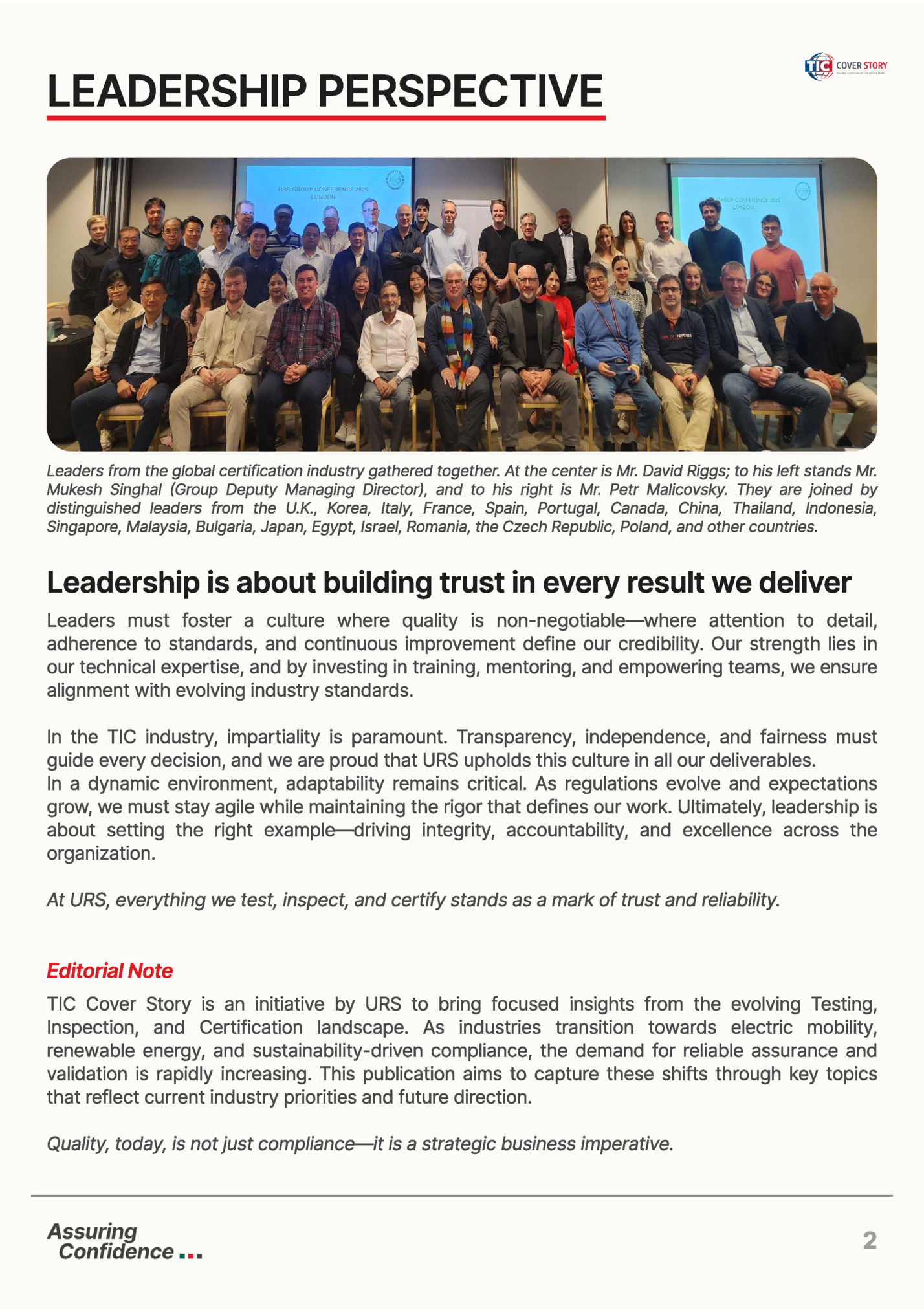
From Compliance to Competitiveness: The New Role of Assurance In today’s evolving industrial landscape, compliance is no longer the end objective—it is the starting point of competitiveness. Across sectors such as electric mobility, renewable energy, and sustainability, the expectations from businesses are changing rapidly. Regulators are tightening frameworks, global supply chains are demanding greater transparency, and investors are increasingly linking performance with accountability. Dr. (CA) Mukesh Singhal In this environment, assurance is no longer a Group Deputy Managing Director, URS periodic activity—it is becoming a continuous CEO & Managing Director, URS India business function. What distinguishes this phase from the past is the depth and continuity of validation required. Whether it is battery systems in electric vehicles, long-term performance of solar assets, or carbon reporting under ESG frameworks, organizations are now expected to demonstrate reliability not just at a point in time, but across the lifecycle of their operations. This shift is redefining the role of Testing, Inspection, and Certification. TIC is no longer a support service operating at the periphery—it is moving closer to the core of product development, risk management, and market access. Forward-looking organizations are already adapting to this reality. They are integrating compliance into design, investing in validation infrastructure, and partnering with institutions that can support them across multiple domains. In doing so, they are not only reducing risk but also accelerating time to market and strengthening stakeholder confidence. The question for industry is no longer whether compliance is required—but how effectively it can be leveraged to build trust, enable innovation, and create a competitive advantage. In the emerging landscape, assurance is not about meeting standards—it is about shaping market confidence. 3
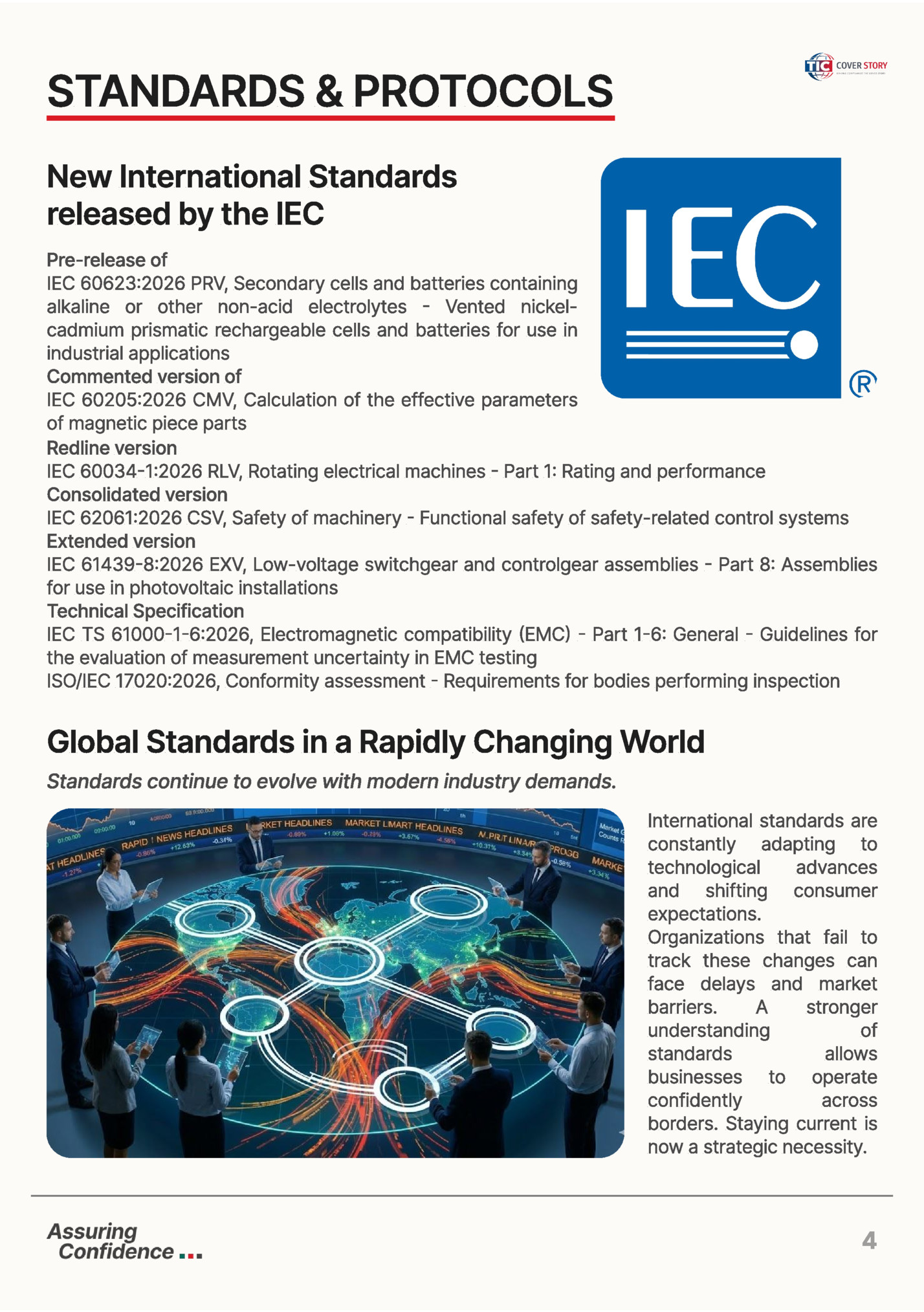
New International Standards released by the IEC Pre-release of IEC 60623:2026 PRV, Secondary cells and batteries containing alkaline or other non-acid electrolytes - Vented nickelcadmium prismatic rechargeable cells and batteries for use in industrial applications Commented version of IEC 60205:2026 CMV, Calculation of the effective parameters of magnetic piece parts Redline version IEC 60034-1:2026 RLV, Rotating electrical machines - Part 1: Rating and performance Consolidated version IEC 62061:2026 CSV, Safety of machinery - Functional safety of safety-related control systems Extended version IEC 61439-8:2026 EXV, Low-voltage switchgear and controlgear assemblies - Part 8: Assemblies for use in photovoltaic installations Technical Specification IEC TS 61000-1-6:2026, Electromagnetic compatibility (EMC) - Part 1-6: General - Guidelines for the evaluation of measurement uncertainty in EMC testing ISO/IEC 17020:2026, Conformity assessment - Requirements for bodies performing inspection Global Standards in a Rapidly Changing World Standards continue to evolve with modern industry demands. International standards are constantly adapting to technological advances and shifting consumer expectations. Organizations that fail to track these changes can face delays and market barriers. A stronger understanding of standards allows businesses to operate confidently across borders. Staying current is now a strategic necessity. 4
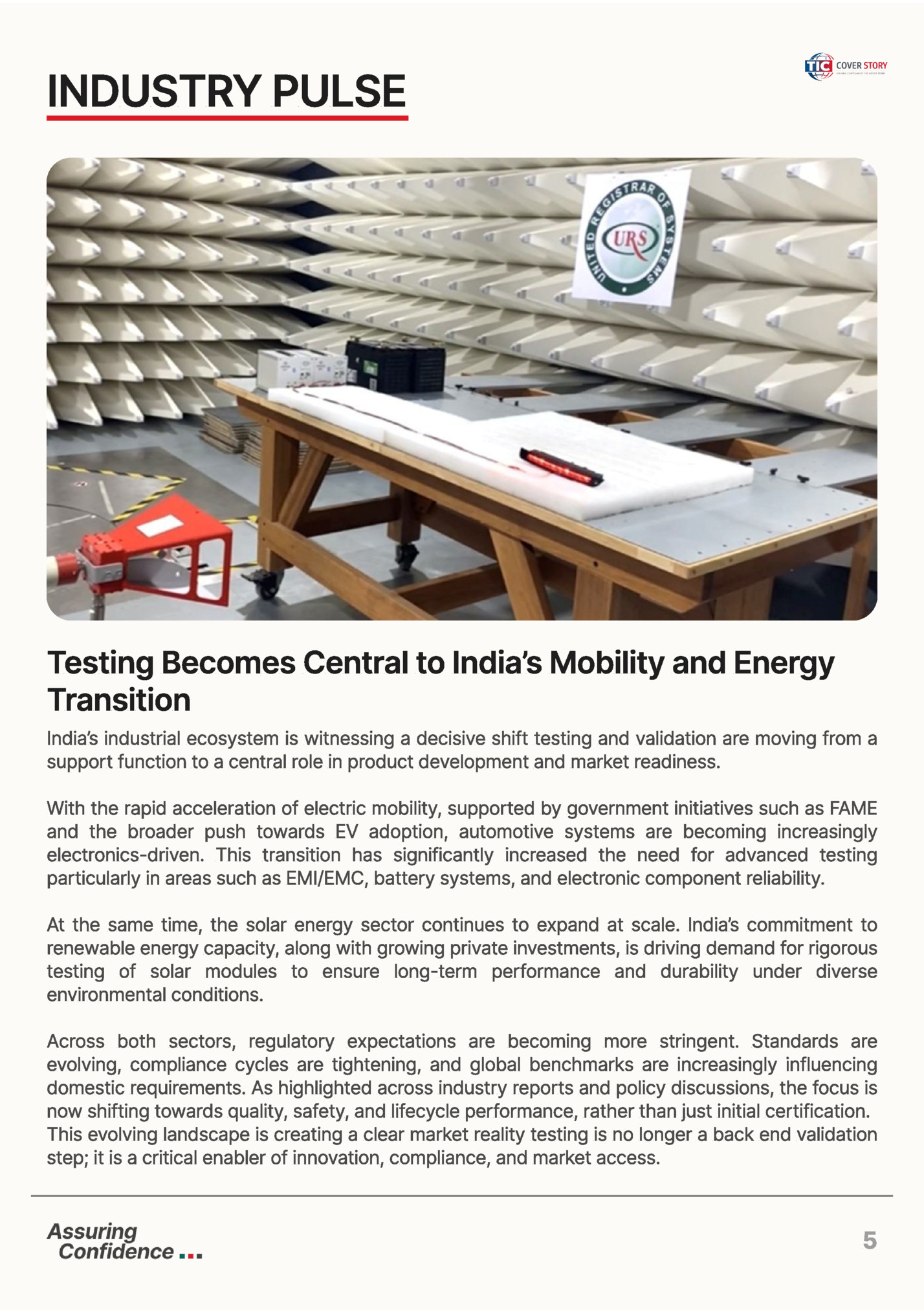
Testing Becomes Central to India’s Mobility and Energy Transition India’s industrial ecosystem is witnessing a decisive shift testing and validation are moving from a support function to a central role in product development and market readiness. With the rapid acceleration of electric mobility, supported by government initiatives such as FAME and the broader push towards EV adoption, automotive systems are becoming increasingly electronics-driven. This transition has significantly increased the need for advanced testing particularly in areas such as EMI/EMC, battery systems, and electronic component reliability. At the same time, the solar energy sector continues to expand at scale. India’s commitment to renewable energy capacity, along with growing private investments, is driving demand for rigorous testing of solar modules to ensure long-term performance and durability under diverse environmental conditions. Across both sectors, regulatory expectations are becoming more stringent. Standards are evolving, compliance cycles are tightening, and global benchmarks are increasingly influencing domestic requirements. As highlighted across industry reports and policy discussions, the focus is now shifting towards quality, safety, and lifecycle performance, rather than just initial certification. This evolving landscape is creating a clear market reality testing is no longer a back end validation step; it is a critical enabler of innovation, compliance, and market access. 5
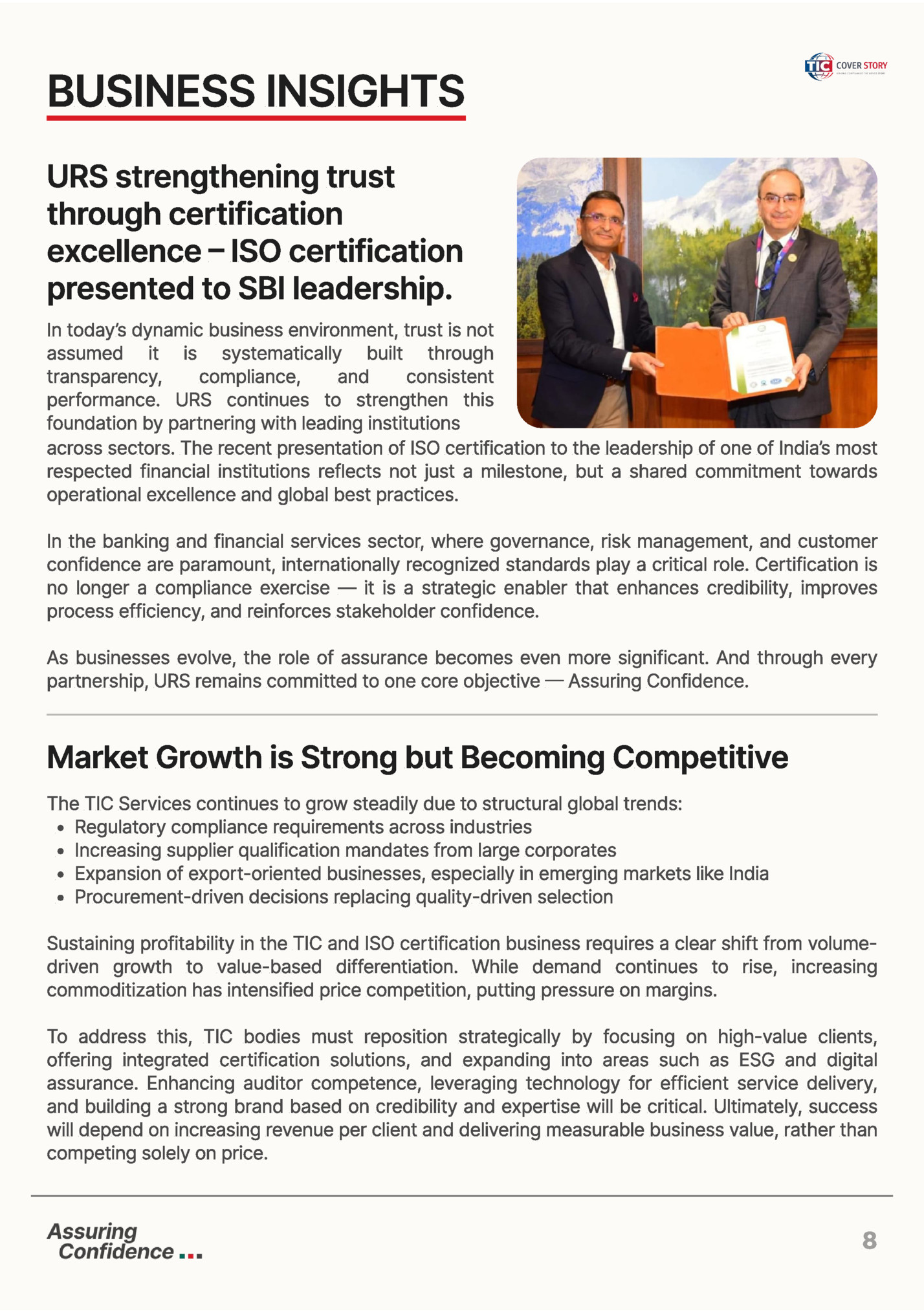
Driving Excellence Across Automotive & Solar Testing Innovation today is no longer defined solely by technological breakthroughs, it is increasingly measured by an organization’s ability to adapt, evolve, and lead across industries that are shaping the future. In a rapidly transforming industrial landscape, businesses that can anticipate change and respond with capability become the ones that create lasting impact. URS was recently recognized for its outstanding contribution to automotive and solar testing at a prestigious national platform in the presence of Hon’ble Minister Nitin Gadkari. The recognition was received by Mukesh Singhal, Kshitiz Singhal, and Paras Singh, underscoring the organization’s growing reputation as a trusted partner in India’s journey toward advanced mobility and renewable energy transformation. This recognition represents more than an achievement, it reflects URS’s commitment to supporting industries that are undergoing significant structural change. As the automotive sector moves toward stricter safety regulations, electrification, and intelligent mobility systems, testing standards are becoming more demanding than ever before. At the same time, the solar industry is witnessing accelerated expansion driven by sustainability goals, energy independence initiatives, and large-scale infrastructure development. In both sectors, the need for precise, reliable, and globally aligned testing solutions has become essential. To meet these evolving requirements, URS has made strategic investments in advanced testing infrastructure, modern laboratory capabilities, and specialized technical expertise. Its facilities are designed to support a wide range of validation requirements — from conventional automotive components to next-generation electric vehicle systems, as well as comprehensive solar photovoltaic module performance and durability assessments. What distinguishes URS is its ability to build strength across two critical sectors simultaneously. Rather than limiting innovation to a single vertical, the organization has embraced a broader vision that aligns with national priorities and global industrial trends. This cross-sector capability enables URS to contribute meaningfully to two of the most important transitions of our time — cleaner energy systems and safer transportation ecosystems. 6
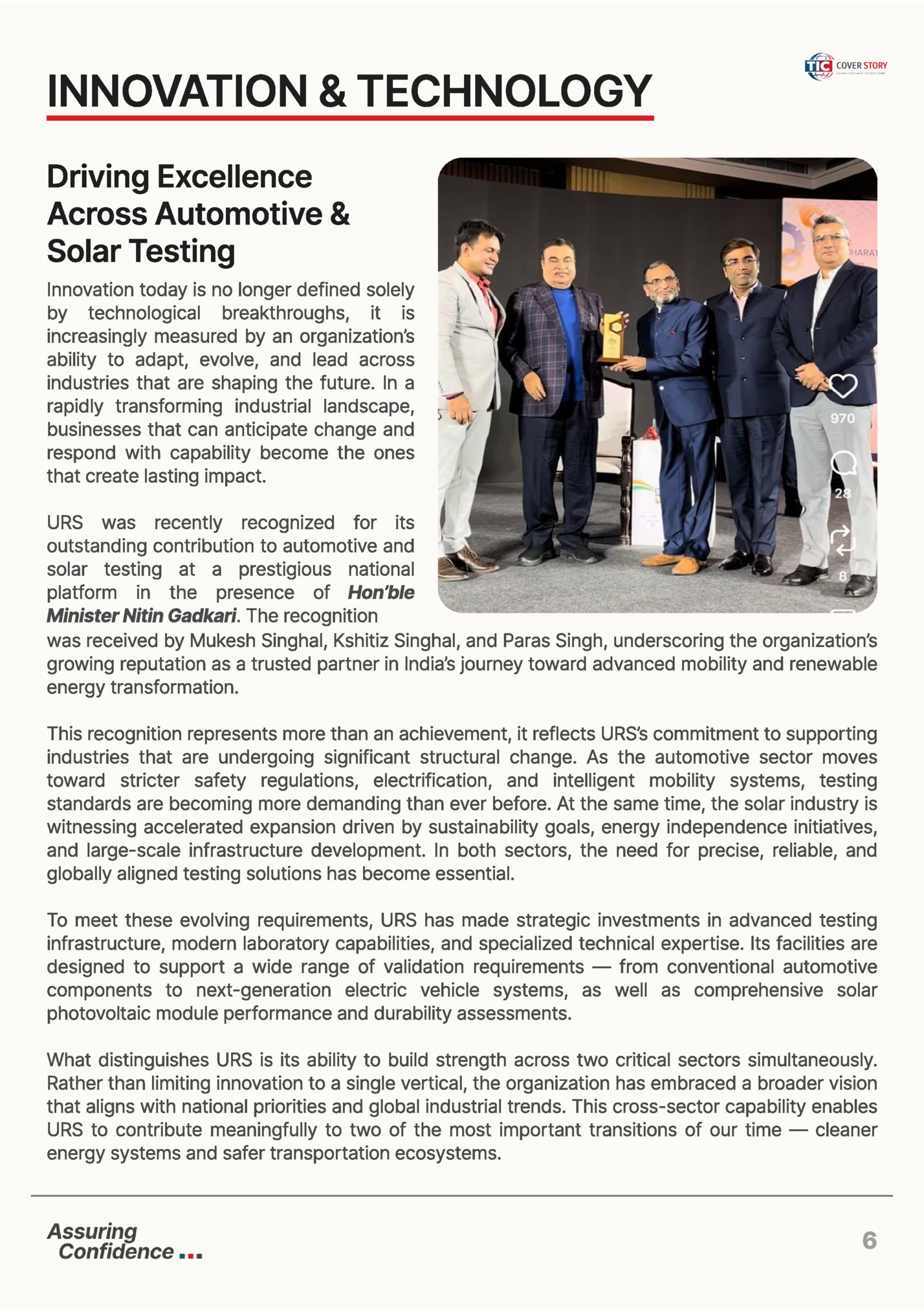
Mumbai Metro Rail O&M Achieves IMS Certification IMS Certification marks a significant milestone in reinforcing our commitment to excellence, safety, and operational efficiency. The IMS framework integrates key management systems, ensuring a holistic approach to quality, environmental responsibility, and occupational health & safety. Mumbai Metro Rail Operation and Maintenance has been successfully certified for the Integrated Management System (IMS) standard by URS Certification Ltd. Achieving this certification reflects the organization’s unwavering dedication to maintaining the highest standards in metro rail operations. It demonstrates a strong culture of compliance, continuous improvement, and risk management—critical elements in delivering safe and reliable services to millions of commuters every day. The rigorous assessment conducted by URS Certification Ltd underscores the robustness of operational processes covering Operation and Maintenance of Mumbai Metro Line-3, consisting of 27 stations from Cuffe Parade to Aarey JVLR, including the Aarey Depot, adherence to international standards, and the proactive approach taken by the team towards sustainability and safety. This extensive scope highlights the scale, complexity, and operational excellence embedded within the system. This certification marks a significant milestone in reinforcing our commitment to excellence, safety, and operational efficiency. The IMS framework integrates key management systems, ensuring a holistic approach to quality, environmental responsibility, and occupational health & safety. 7
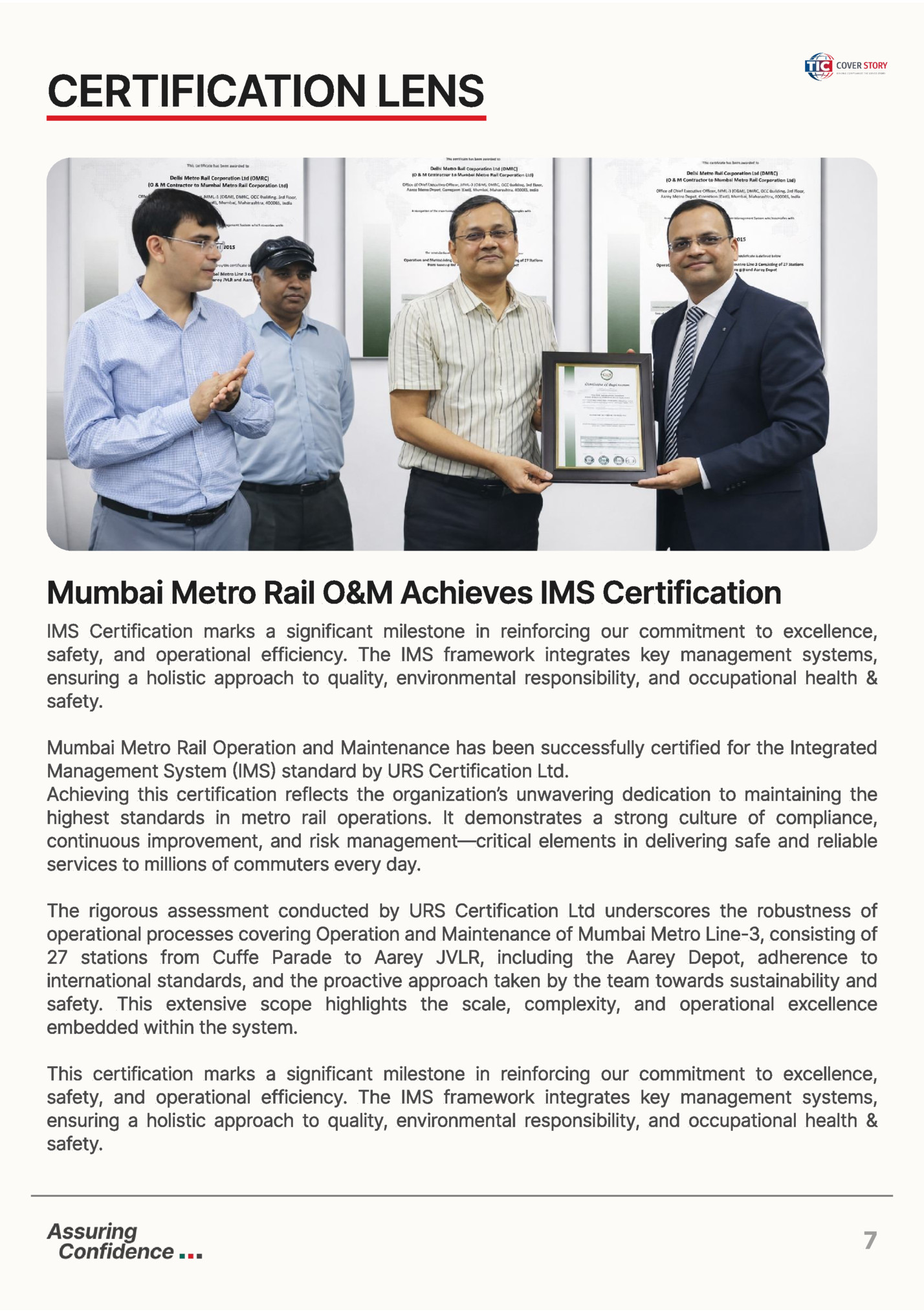
URS strengthening trust through certification excellence – ISO certification presented to SBI leadership. In today’s dynamic business environment, trust is not assumed it is systematically built through transparency, compliance, and consistent performance. URS continues to strengthen this foundation by partnering with leading institutions across sectors. The recent presentation of ISO certification to the leadership of one of India’s most respected financial institutions reflects not just a milestone, but a shared commitment towards operational excellence and global best practices. In the banking and financial services sector, where governance, risk management, and customer confidence are paramount, internationally recognized standards play a critical role. Certification is no longer a compliance exercise — it is a strategic enabler that enhances credibility, improves process efficiency, and reinforces stakeholder confidence. As businesses evolve, the role of assurance becomes even more significant. And through every partnership, URS remains committed to one core objective — Assuring Confidence. Market Growth is Strong but Becoming Competitive The TIC Services continues to grow steadily due to structural global trends: Regulatory compliance requirements across industries Increasing supplier qualification mandates from large corporates Expansion of export-oriented businesses, especially in emerging markets like India Procurement-driven decisions replacing quality-driven selection Sustaining profitability in the TIC and ISO certification business requires a clear shift from volumedriven growth to value-based differentiation. While demand continues to rise, increasing commoditization has intensified price competition, putting pressure on margins. To address this, TIC bodies must reposition strategically by focusing on high-value clients, offering integrated certification solutions, and expanding into areas such as ESG and digital assurance. Enhancing auditor competence, leveraging technology for efficient service delivery, and building a strong brand based on credibility and expertise will be critical. Ultimately, success will depend on increasing revenue per client and delivering measurable business value, rather than competing solely on price. 8
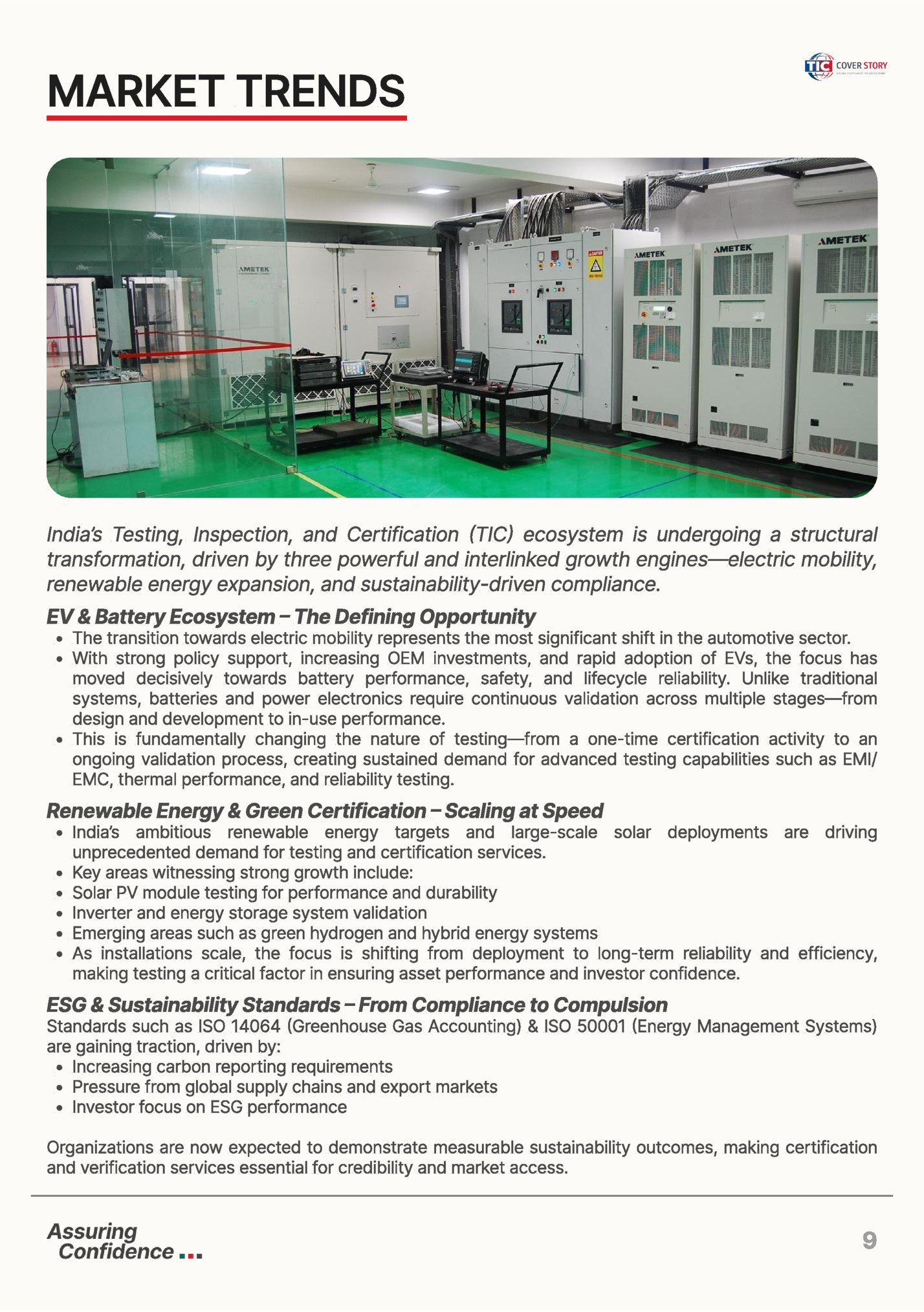
India’s Testing, Inspection, and Certification (TIC) ecosystem is undergoing a structural transformation, driven by three powerful and interlinked growth engines—electric mobility, renewable energy expansion, and sustainability-driven compliance. EV & Battery Ecosystem – The Defining Opportunity The transition towards electric mobility represents the most significant shift in the automotive sector. With strong policy support, increasing OEM investments, and rapid adoption of EVs, the focus has moved decisively towards battery performance, safety, and lifecycle reliability. Unlike traditional systems, batteries and power electronics require continuous validation across multiple stages—from design and development to in-use performance. This is fundamentally changing the nature of testing—from a one-time certification activity to an ongoing validation process, creating sustained demand for advanced testing capabilities such as EMI/ EMC, thermal performance, and reliability testing. Renewable Energy & Green Certification – Scaling at Speed India’s ambitious renewable energy targets and large-scale solar deployments are driving unprecedented demand for testing and certification services. Key areas witnessing strong growth include: Solar PV module testing for performance and durability Inverter and energy storage system validation Emerging areas such as green hydrogen and hybrid energy systems As installations scale, the focus is shifting from deployment to long-term reliability and efficiency, making testing a critical factor in ensuring asset performance and investor confidence. ESG & Sustainability Standards – From Compliance to Compulsion Standards such as ISO 14064 (Greenhouse Gas Accounting) & ISO 50001 (Energy Management Systems) are gaining traction, driven by: Increasing carbon reporting requirements Pressure from global supply chains and export markets Investor focus on ESG performance Organizations are now expected to demonstrate measurable sustainability outcomes, making certification and verification services essential for credibility and market access. 9
Fleepit Digital © 2021