Bioplastics Roadmap
Bioplastics Roadmap
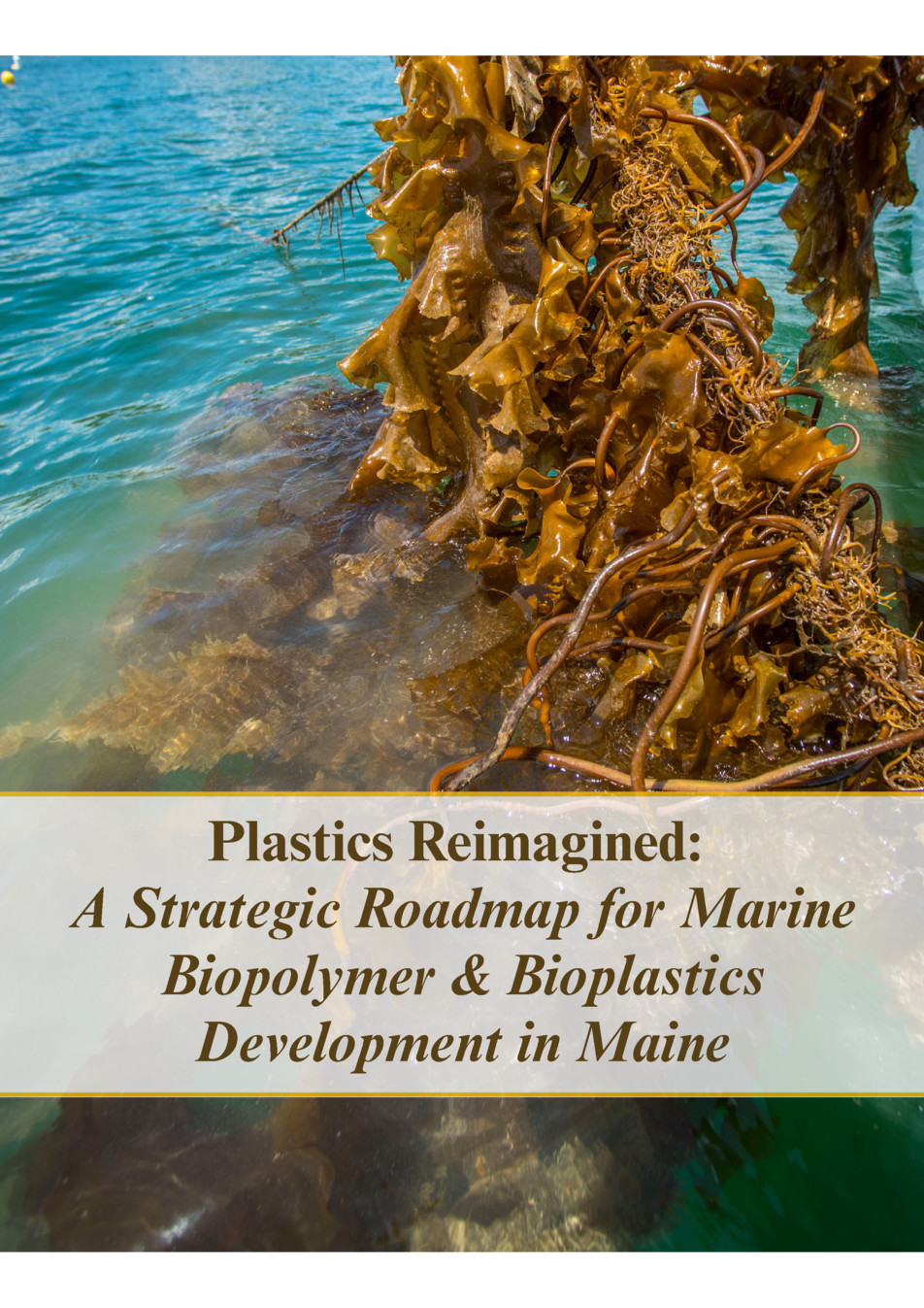
Plastics Reimagined: A Strategic Roadmap for Maine's Marine Biopolymers and Bioplastics
Executive Summary
Plastics Reimagined represents a concerted, cross‑institutional effort that was conceived during the Maine Impact Forum held in September 2024 at Northeastern University’s Roux Institute in Portland. The collaboration drew together a diverse team spanning the University of Maine’s Cooperative Extension, Aquaculture Research Institute, and multiple engineering and communications departments; the Roux Institute at Northeastern University; IDEXX Laboratories; and the University of New England, including programs focused on marine environments and design. The initiative unfolded across roughly twelve months—from January through September 2025—culminating in a forward‑looking strategic document. The goal of this work was to inventory Maine’s biopolymer resources, engage with stakeholders to surface R&D challenges and market opportunities, and produce a guiding blueprint to stimulate interdisciplinary collaboration and identify pathways for securing future funding. The published roadmap, released in September 2025, serves as a foundation for action in Maine’s emerging marine biopolymer and bioplastics sector. Page 1
At its core, the project sought to translate a wide range of inputs into a practical pathway for expanding Maine’s bio-based materials ecosystem. The work aimed to catalog assets—people, expertise, facilities, capacity, and species—while simultaneously catalyzing conversations with customers, researchers, industry leaders, and policymakers to pinpoint the most pressing R&D needs and the market potential of new materials. The result is a strategic roadmap designed not only to share knowledge but also to accelerate interdisciplinary collaboration and align stakeholders around common industry needs, thereby improving the odds of attracting funding and moving innovative ideas toward commercialization. Page 1
Acknowledging that such an undertaking rests on broad participation, the authors express gratitude to many contributors whose input helped shape the direction of Maine’s marine biopolymers and bioplastics sectors. The effort benefited from support provided through the 2024 Maine Impact Forum—a collaboration among FocusMaine, the Maine Department of Economic and Community Development, the Maine Technology Institute, and the Maine Life Sciences Network, with additional backing from Northeastern’s Roux Institute. The roster of collaborators spans academic researchers, industry practitioners, and community advocates, all contributing time, expertise, and perspectives that informed the study’s conclusions. The Roadmap credits these collaborators and the institutions involved for their collective, value‑driven approach to advancing sustainable materials in Maine. Page 1
The document is organized around five foundational themes—Stakeholder Networking & Collaboration, Workforce & Talent Pipeline, Materials & Feedstocks, Scientific & Technical Infrastructure, and Policy & Market Landscape—and it reflects a synthesis of inputs gathered through more than fifty stakeholder focus groups, one‑on‑one interviews, surveys, and site visits. By distilling these insights into actionable guidance, the Roadmap aims to catalyze concrete collaborations, accelerate knowledge transfer, and identify opportunities for funding and program development that will help Maine become a national leader in coastal bio‑based materials. Page 1
Why This Roadmap & Why Now
The roadmap is grounded in a clear understanding of the global plastics challenge and a Maine‑specific opportunity to reimagine materials through a maritime lens. Globally, plastics production and the resulting waste have reached the hundreds of millions of metric tons annually, with only a fraction of that material being recycled. This translates into meaningful ecological and public health costs, including impacts on marine environments and nearby communities. In Maine, policy actions such as bans on single‑use plastic bags and foam takeout containers signal a regional commitment to reducing plastic waste. Against this backdrop, Maine’s unique mix of biopolymer resources, an established network of research institutions, and a growing cadre of farmers, entrepreneurs, and manufacturers creates a favorable environment for innovating renewable, marine‑derived plastics. The Roadmap builds on more than fifty stakeholder engagements to surface the opportunities and challenges across five foundational themes and to chart a course toward a scalable, cross‑sector bio‑based materials ecosystem. Page 2
A central premise driving the strategy is that the insights gathered from researchers, engineers, seaweed farmers, industry leaders, policymakers, and community advocates can be translated into a practical blueprint. This plan emphasizes collaboration across disciplines and sectors, with attention to market realities, regulatory pathways, and funding opportunities. The aim is to move from promising concepts to deployable solutions—building economic resilience for coastal communities while advancing sustainable manufacturing practices that leverage Maine’s coastal and forest bioproducts heritage. By articulating concrete needs and priorities, the Roadmap seeks to align public support, private investment, and academic inquiry around a cohesive, executable agenda. Page 2
The Roadmap positions Maine as a national innovation hub for renewable, bio‑based materials produced from locally sourced biomass. This ambition is paired with a clear strategy to strengthen networks, streamline collaboration, and align testing standards, policy development, and market development so that products can progress from concept to commercial viability. The five foundational themes are not treated as silos; rather, they are interconnected pillars designed to reinforce one another as the state builds a coherent ecosystem for blue‑tech innovation. The document also emphasizes environmental integrity, traceability across supply chains, and the importance of a Maine‑specific branding initiative to communicate performance and end‑of‑life considerations for bioplastics. Page 2
In addition to outlining strategic priorities, the Roadmap describes a practical path for implementation. It highlights the need for mid‑scale, shared‑use processing and manufacturing facilities to de‑risk investment and facilitate scale‑up, establishes a framework for testing and regulatory alignment, and proposes a credible, transparent supply chain that can earn the confidence of customers, funders, and policymakers. By articulating these steps, the Roadmap seeks to translate vision into action—creating tangible opportunities for Maine’s coastal economy, research institutions, and private sector partners to collaborate on the development of marine‑derived biopolymers and sustainable plastics. Page 2
Vision & Strategic Goals
The vision statement frames Maine as a nationwide leader in renewable, bio‑based materials, anchored in the use of locally sourced biomass. The objective is to catalyze sustainable manufacturing practices, support coastal economic development, spur technology innovation, foster cross‑sector partnerships, and maintain healthy ecosystems. By pursuing this vision, Maine seeks to harness its scientific and industrial strengths to create a robust, forward‑looking materials economy that benefits communities along the coast and beyond. Page 3
The Roadmap’s strategic goals are designed to work in concert rather than in isolation. The first goal emphasizes strengthening networking and collaboration by establishing formal networks, enabling rapid knowledge transfer, sharing infrastructure and data, and supporting cross‑sector commercialization efforts. A second goal focuses on workforce development and reducing barriers to entry and retention, prioritizing training for aquaculture farmers, seaweed producers, and materials scientists and engineers, while addressing housing and other barriers that impede a robust coastal labor force. A third goal targets material innovation—expediting R&D on marine‑safe, injection‑m moldable, and durable bioplastics that meet or exceed the performance of conventional plastics, drawing on Maine’s seaweed, microalgae, shellfish, and forestry resources. A fourth goal calls for building shared infrastructure—mid‑scale, shared‑use processing and advanced manufacturing facilities that de‑risk investment and support scale‑up. The fifth goal concentrates on aligning testing, policy, and market development by establishing reliable standards, coordinating regulatory pathways and funding, and developing a trusted Maine Biopolymer brand that conveys performance, environmental safety, and traceability across the supply chain, positioning Maine as a national leader in blue‑tech innovation. Page 3
These goals are designed to be mutually reinforcing. Strengthened networks and collaborative platforms provide the foundation for workforce development and material innovation, while shared infrastructure and standardized testing enable more predictable investment and faster commercialization cycles. The policy and market alignment workstream ensures that regulatory processes and funding mechanisms support practical deployment of new materials, helping to accelerate the transition from lab discoveries to market‑ready products. Together, these strategic priorities create a cohesive blueprint for building a resilient, state‑led ecosystem that can mobilize both public and private resources toward a sustainable, marine‑based plastics economy. Page 3
Acknowledging that achieving these ambitions requires attention to equity, inclusion, and community engagement, the Roadmap envisions governance structures and stakeholder processes that ensure broad participation and benefit. In particular, it emphasizes the value of Indigenous and community input, accessible pathways to employment, and place‑based innovation that appreciates and integrates local context into technology development and market creation. By foregrounding these principles, Maine aims to build a material economy that is not only technologically advanced but also socially responsible and environmentally sound. Page 3
Finally, the Roadmap highlights the importance of aligning coastal heritage with modern materials development. By connecting Maine’s forest, fisheries, and farming legacies with next‑generation biopolymers and bioplastics, the plan seeks to transform regional strengths into competitive advantages. The envisioned outcomes include enhanced industry partnerships, new career opportunities along the coast, and a clearer pathway for research institutions and private companies to work together on scalable, responsible solutions that support a circular bioeconomy. Page 3
In sum, the Vision & Strategic Goals section outlines a comprehensive, interconnected strategy designed to mobilize Maine’s assets—scientific expertise, industrial capacity, and coastal resources—toward a durable, equitable, and environmentally responsible biopolymer economy. It emphasizes networked collaboration, workforce development, material innovation, shared infrastructure, and policy coherence as the core levers for turning ambition into tangible, sustained impact on the ground. Page 3
Cross-Cutting Themes
The Roadmap places circularity at the heart of its approach. Circular Economy principles guide decisions to valorize the full spectrum of biomass streams, minimize waste, and lower lifecycle emissions. This focus informs design choices, supply chain planning, and end‑of‑life considerations for bioplastic products, ensuring that Maine’s materials economy remains aligned with environmental stewardship and resource efficiency. Page 4
Equity and Access is a central consideration across all activities. The document calls for meaningful Indigenous and community input, inclusive workforce development, and place‑based innovation that respects regional differences and cultural contexts. By embedding equity into governance and program design, the Roadmap aspires to create opportunities for a broad set of communities to participate in and benefit from Maine’s bio‑based materials economy. Page 4
Heritage to Innovation captures the ethos of Maine’s evolving materials landscape: it seeks to bridge the state’s long‑standing forest, fisheries, and farming legacies with contemporary biopolymer and bioplastics development. The intent is to translate regional strengths into commercially viable products, supported by robust research, industry partnerships, and policy alignment that together advance a circular, low‑carbon economy while preserving local traditions and livelihoods. Page 4
The Cross‑Cutting Themes also emphasize the practical steps needed to move from strategy to execution. This includes creating pathways for ongoing stakeholder engagement, developing clear metrics for progress, and maintaining flexibility to adjust priorities as markets, technologies, and policy conditions evolve. By weaving these themes into every program and project, Maine aims to sustain momentum and ensure that the Roadmap remains responsive to new opportunities and challenges. Page 4