Blood on the Snow
Blood on the Snow
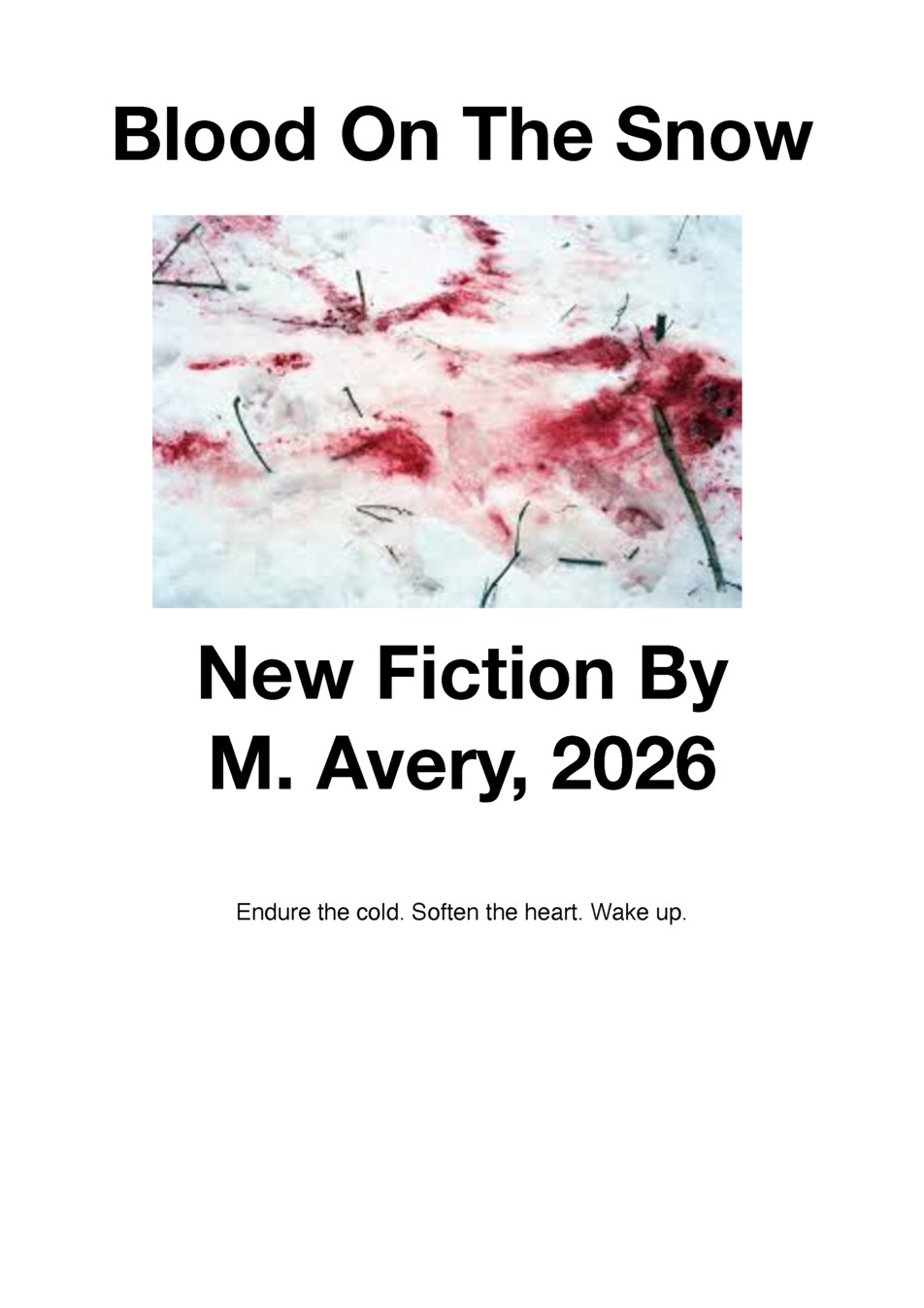
Blood on the Snow: Expanded Summary and Critical Reflection on a Dystopian Protest Ballad
Overview and tonal orientation
In this imagined narrative, the cold serves not just as a weather motif but as a pressure that tests moral resolve and invites a recalibration of empathy. The text opens with a call to endure hardship, to temper hardened instincts with a softer, more awake posture, and to confront a reality that demands active moral attention rather than passive resignation. The framing positions resilience and awakening as intertwined tasks, suggesting that emotional effort is a prerequisite to recognizing and responding to collective injustice. (page: n/a)
The piece situates its drama at the intersection of personal memory, communal grievance, and a provocative act of art that somehow becomes a catalyst for social reflection. The mood blends stark austerity with a fierce demand for accountability, setting up a situation in which individuals are invited to move beyond private perception toward shared responsibility. The opening cadence implies that there is a tipping point in public feeling—one that literature and song might help to reveal, rather than merely accompany. (page: n/a)
As the narrative narrows its focus, it introduces a spine-tingling image of a city on edge, where cultural artifacts and political power collide in ways that feel both intimate and systemic. The text signals that what begins as a rumor or an underground sentiment can coalesce into a visible, disruptive force when confronted with violence and state authority. The reader is prepared for a story about perception, memory, and the possibility that art can become a weapon of clarity in a world of obfuscation. (page: n/a)
The ballad as a political artifact and its origin story
The centerpiece of the narrative is a ballad born out of a startling public incident in Minneapolis: a rapid, opaque action by federal authorities that leaves a city shaken and a family marked by tragedy. Sensory details—smell, sound, and the ache of fear—ground the scene in immediacy, making the event feel both particular and emblematic of broader tensions between enforcement power and ordinary life. (page: n/a)
What follows is an origin myth of sorts: a song is crafted not in a studio but on the back of a diner napkin, penned in the small hours by a famous musician who channels the names of those affected into a stark, direct witness. The act of writing becomes an act of bearing witness, insisting on naming individuals whose lives were altered by state-backed violence. This insistence on naming—Alex Pretti and Renée Good—transforms private grief into a public, navigable memory. (page: n/a)
The lyrics—cutting, explicit, unadorned—are presented not as metaphor but as a streaming, audible testimony. The artist’s voice is characterized as cracked and weathered, yet potent, choosing to address the dead directly as if at their bedsides. The purpose is not to aestheticize but to insist that truth be spoken plainly, even when it fractures conventional rhetoric. (page: n/a)
From this point, the ballad becomes a force that outpaces conventional channels of discourse. It moves through the city with the velocity of a contagion, not merely as a song but as an ever-present call to remember and to act. The narrative details how the piece is encountered in places far removed from its origin—through social media, urban murals, classroom listening sessions, and conversations that spill into street life—demonstrating the way culture circulates as a living, contagious memory. (page: n/a)
The work’s protagonist is not a single performer but a chorus of people who respond by making the ballad audible in diverse ways: in classrooms, in vehicles, in public spaces, and in the private spaces of life—where fear, anger, and hope intersect. The text emphasizes that the song’s impact arises from its ability to translate political danger into a shared spiritual experience, turning fear into a mobilizing force rather than a paralyzing one. (page: n/a)
The public fallout and emergent collective action
The public reaction to the ballad is swift and multi-directional. Traditional media outlets offer harsh interpretations, labeling the music as treasonous or unpatriotic, while political figures react with alarm that blends rhetoric with punitive consequences. The narrative shows how discourse fractures along ideological lines, with some insisting that the song represents a dangerous inversion of national norms and others recognizing it as a form of candid testimony about state violence and the human cost it exacts. (page: n/a)
In contrast to the sensational backlash, grassroots and everyday acts of solidarity proliferate. Instances of collective singing in varied locales convert a single musical moment into a distributed act of communal memory. The ballad travels through informal networks—video clips, shared playlists, hand-copied lyrics carried as talismans—signaling a cultural shift in which art becomes a tool for counter-memory and moral vigilance. (page: n/a)
Visual and material ripples accompany the sonic phenomenon: a mural appearing overnight in a distant city bearing iconography that blends sanctity with haunting imagery; a public symbol that reframes the artist as both saint and ghost. In parallel, a few individuals, including a law enforcement officer, publicly dissociate from their badges, signaling a tension between personal conscience and institutional allegiance. The narrative highlights that dissent can manifest in both symbolic and tangible acts, underscoring the fragility and permeability of power structures. (page: n/a)
As the ballad gains traction, its lyrics—no longer mere songs but ritual utterances—are carried by technologies that accelerate dissemination. AirDrop, USB drives, and intimate, paper-based exchanges turn the lyrics into portable scripture, a kind of subversive catechism that resists containment by conventional media. This diffusion reinforces the sense that the ballad has become a social instrument, capable of bypassing official channels and reaching people in private moments when they are most receptive to moral reflection. (page: n/a)
The narrative makes clear that the ballad’s reach is not purely auditory; it is a set of performative demands: to listen, to remember, to act. The song’s chorus—call-and-response in its cadence—appears in schools, homes, and public gatherings, provoking debates about loyalty, justice, and the responsibilities communities owe to one another in the face of state violence. The text suggests that art can both reveal truth and destabilize comfort, pressing communities toward a more accountable public life. (page: n/a)
In the face of organized resistance, media and political figures attempt to police meaning, portraying the ballad as a threat to national unity. Yet the phenomenon persists because its appeal lies not in partisan rhetoric but in a shared longing for recognition of harm and redress. The story implies that when people are named and remembered aloud, they cease to be abstract statistics and become agents of a common moral project. (page: n/a)
The ballad’s momentum also exposes the tension between art and policy, between the impulse to bear witness and the impulse to suppress dissent. The narrative does not offer a tidy resolution; instead, it maps a landscape where memory, sound, and public life continuously interact, reshaping civic imagination and expectations about what counts as legitimate political speech. (page: n/a)
Dreams, visions, and the formation of a shared mythos
Beyond immediate political outrage, the story introduces a dreamscape in which ordinary people encounter a figure in a leather jacket who walks desolate streets at dawn, playing a stringless guitar. These dreams are not random Bilderbuch moments but deliberate iterations of a mythic figure who embodies resistance, endurance, and the possibility of moral reawakening. They function as collective psyche experiments, offering scenes where the boundaries between the living and the memorialized blur. (page: n/a)
In these nocturnal visions, the dead reappear not as distant relics but as active interlocutors in the present moment. Names associated with violence and mourning form a chorus that travels through sleep and waking life, linking personal grief to a broader, shared narrative about justice and accountability. The dreams transform fear into a language of resistance, transforming passive spectators into participants in a common memory-work. (page: n/a)
The recurrence of the same song in dreams suggests an emergent liturgy, a ritualized practice that binds diverse people through a common sonic and symbolic grammar. The motifs of a ghostly presence, a failed or battered instrument, and a vigilant gaze create a mythos in which memory is not a passive archive but an active, future-oriented force. (page: n/a)
In specific moments, the imagery of the ballad’s messenger—whether the singer on a rooftop, or the specter at dawn—functions as a moral compass, directing attention toward those who are most vulnerable to harm. The narrative uses these dream episodes to argue that justice requires both waking action and nocturnal vigilance, a duality that keeps the moral conversation alive across time and space. (page: n/a)
The public reception of these dreams reinforces the ballad’s role as a catalyst for memory-making. People bring the lyrics into varied spaces of life and interpret them through diverse lenses, reinforcing that memory, like music, can be polyvalent and change meaning as it travels. The myths accumulate not to soothe anxiety but to sustain a continuous, collective effort toward accountability and reform. (page: n/a)
Ban, backlash, and the redefinition of “art that speaks truth”
A recurring tension in the narrative is whether art should challenge power in provocative ways or risk jeopardizing social cohesion. The ballad’s journey from provocative obsession to widely circulated memory rites redefines what counts as transformative art. It demonstrates that even controversial art can function as a beacon for truth-telling, especially when it refuses to glamourize violence or evade painful specifics. (page: n/a)
The backlash—ranging from political condemnations to algorithmic silencing—serves to illuminate the fragility of free expression in a digital age. Yet the insistence of communities to hold onto the song’s message shows how a cultural artifact can endure despite attempts to suppress it. The narrative frames suppression as a test of resilience, not a final verdict, underscoring that art’s social power often persists beyond the reach of conventional gatekeepers. (page: n/a)
Through episodes of policing and protests, the text invites readers to consider the ethics of resistance. It questions whether calls for accountability should be expressed through civil disobedience, public art, or direct political action, and it acknowledges that each mode carries risks while offering unique possibilities for memory and reform. The ballad’s arc suggests that the line between dissidence and danger is porous and often context-dependent, requiring ongoing reflection and courage. (page: n/a)
In the end, the narrative offers a meditation on how a single creative act can reverberate through a culture, shaping conversation, memory, and moral posture. The ballad does not merely narrate an event; it constructs a framework for how communities might acknowledge harm, bear witness, and insist on accountability—even when the path forward remains uncertain and contested. (page: n/a)
The closing image of a napkin burning in a diner—while a writer convenes the next line—encapsulates the story’s core impulse: creation as a continuous, fragile act that generates future possibilities from present pain. The work leaves readers with a sense of ongoing transformation, a reminder that the work of justice is not a finished act but a living practice that continues to unfold with every new line written and every voice raised in confrontation with cruelty or indifference. (page: n/a)
Concluding reflections and implications for readers
What the text ultimately offers is a compelling argument for the power of art to bear witness, to destabilize complacency, and to mobilize ordinary people toward collective action. It calls attention to the way memory—of individuals, families, and communities—can be reinvigorated when a cultural form insists on explicit accountability and refuses to let painful histories recede into silence. The ballad’s afterlife speaks to a broader cultural commitment: that society must listen, remember, and respond with courage, even when the political weather remains harsh and uncertain. (page: n/a)
For readers and audiences, the piece becomes a mirror in which one sees the costs of silence and the potential rewards of speaking truth aloud. It invites reflection on how public art can become a shared ritual that sustains moral inquiry, especially in moments when institutions try to redraw the borders between legitimacy and dissent. The narrative thus elevates the role of storytelling as a form of civic practice, capable of shaping not only opinions but actions that affect real lives. (page: n/a)
In sum, Blood on the Snow presents a vivid, provocative meditation on memory, power, and the resilience of justice-seeking communities. It argues that culture, far from being decorative, can embody a stubborn insistence on recognizing harm, honoring those affected, and demanding accountability. By portraying art as a living, dangerous, and hopeful force, the text invites ongoing discussion about how societies should respond when faced with state violence and the urgent need for moral clarity. (page: n/a)
As readers close the pages or end the reading experience, they are prompted to carry forward the ballad’s spirit in their own lives: to listen more closely to those who bear witness, to resist attempts to erase memory, and to insist that justice remains an active, communal project rather than a distant ideal. The napkin-burning image at the story’s edge serves as a perpetual invitation to begin anew, to decide what comes next, and to craft a future in which courage and compassion guide the work of public life. (page: n/a)