SCLA Journal 2024
SCLA Journal 2024
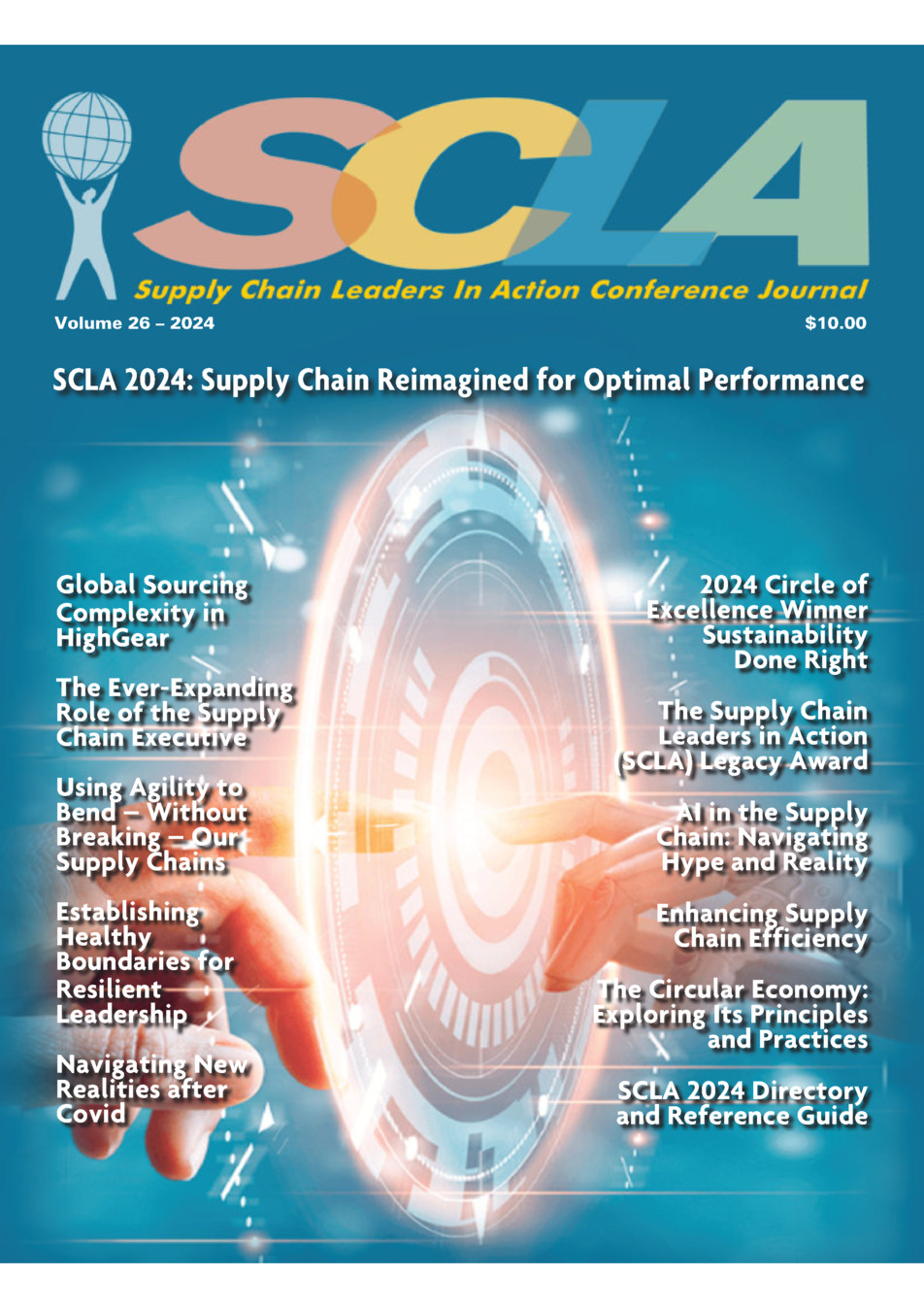
Meta Title: SCLA Journal 2024 — A Comprehensive Reimagining of the Supply Chain for Optimal Performance
Context and Theme
The 2024 edition of the SCLA Journal publishes a broad, forward-looking examination of how supply chains can be redesigned to deliver peak performance in an era marked by geopolitical tension, shifting trade patterns, and rapid technological change. The issue threads together strategic leadership insights, agile operating models, sustainability commitments, and practical guidance on tools and practices that drive resilience and efficiency across the end-to-end network. Drawing on the outcomes and discussions from the 2024 Supply Chain Leaders in Action executive forum, the publication emphasizes the imperative for leaders to rethink governance, collaboration, and decision-making to align with evolving stakeholder expectations. The collection invites readers to explore how data-driven strategies, cross-functional alignment, and responsible innovation can transform sourcing, operations, and customer value. By blending case studies, expert commentary, and pragmatic frameworks, the issue aims to serve as a playbook for practitioners pursuing sustained performance and responsible growth. (No specific page reference available for this overall introduction)
Global Sourcing Complexity in High Gear
The feature on global sourcing delves into how external frictions—such as canal restrictions, geopolitical tensions, and port labor negotiations—create a volatile environment for procurement decision-making. It highlights the need for diversified supplier bases, nearshoring or regionalization where feasible, and proactive risk assessment to maintain continuity in the face of disruption. Beyond mere contingency planning, the piece argues for strategic resilience: building visibility across the supply network, investing in collaborative relationships with key suppliers, and deploying scenario-based planning to adapt sourcing configurations quickly as conditions evolve. The message is clear: successful sourcing in current times requires both structural diversification and agile governance that can reconfigure networks without sacrificing quality or reliability. (p. 14)
The Ever-Expanding Role of the Supply Chain Executive
This section underscores how the responsibilities of supply chain leaders have broadened to encompass not only logistics and procurement but also regulatory compliance, supplier risk management, and the integration of advanced technologies. Leaders are tasked with shaping enterprise strategy, orchestrating cross-functional alignment, and communicating value to a diverse set of stakeholders. The narrative emphasizes the importance of a holistic approach that combines data analytics, sustainability considerations, and collaboration with internal teams and external partners. In short, the role now demands strategic foresight, governance discipline, and the ability to translate complex information into actionable decisions that support long-term objectives. (p. 16)
Using Agility to Bend – Without Breaking – Our Supply Chains
Another pivotal thread centers on cognitive and organizational agility as a core capability. The text argues for flexible processes, rapid decision cycles, and preparedness to pivot in response to shifting market dynamics. It discusses how agile mindset—coupled with robust scenario planning and cross-functional coordination—enables supply chains to absorb shocks, reallocate resources, and seize opportunities without compromising resilience. The emphasis is on building adaptive operating models, transparent leadership communication, and continuous learning so that networks can bend under pressure yet remain intact and reliable. (p. 16)
SCLA 2024 Directory and Reference Guide
The directory serves as a practical map of the conference and the issue’s content, outlining sessions, topics, and thought leadership that informed the year’s discussions. It functions as a valuable reference for practitioners seeking to navigate the breadth of supply chain discourse, locate relevant case studies, and connect with experts across the ecosystem. Readers can use the guide to identify focal areas, plan knowledge sharing, and benchmark their own programs against industry-leading practices. (p. 19)
Establishing Healthy Boundaries for Resilient Leadership
This section highlights the significance of personal and professional boundary-setting as a cornerstone of effective leadership. It argues that sustainable performance depends not only on process improvements but also on the well-being and clarity of leaders themselves. Practical guidance covers setting expectations, safeguarding time for strategic thinking, and fostering a leadership culture that respects limits while maintaining accountability. By maintaining healthy boundaries, leaders can model resilience, reduce burnout, and sustain high-impact execution over time. (p. 44)
Navigating New Realities: Cultivating Resilience and Innovation in Supply Chain Management
Challenging the notion of a fixed "New Normal," this piece advocates for continual adaptation and inventive problem-solving in response to volatility, uncertainty, complexity, and ambiguity. It encourages readers to adopt flexible strategies, experiment with new ideas, and embed innovation into daily operations. The message is about turning change into a competitive advantage by redesigning processes, embracing new tools, and fostering an organizational culture that can anticipate shifts rather than merely react to them. (p. 46)
Do It Right: Ferguson’s Sustainability Leadership
The article examining Ferguson’s recognition as the 2024 Circle of Excellence Award winner highlights sustainable practices spanning packaging efficiency, health and safety improvements, thermostat recycling, and water conservation. It uses Ferguson’s example to illustrate broader trends in corporate responsibility and ESG integration, emphasizing how responsible performance can go hand in hand with operational excellence. The discussion places these achievements within a wider context of industry expectations and regulatory landscapes, offering practical lessons for organizations pursuing sustainability-driven innovation. (p. 5)
The Supply Chain Leaders in Action (SCLA) Legacy Award
This piece honors the enduring impact of exceptional leaders in the field, spotlighting their career trajectories, contributions to practice, and lasting influence on shaping the future of supply chain management. It reflects on how visionary leadership, mentorship, and strategic initiatives have driven meaningful advances across organizations and across the profession, serving as inspiration for the next generation of supply chain professionals. (p. 50)
In Memoriam: Omar Keith Helferich
The in memoriam tribute celebrates the life and legacy of Omar Keith Helferich, acknowledging the mark he left on the field and the communities he touched. The piece reflects on his professional contributions, values, and the enduring memory within the community, offering both reflection and gratitude for his impact. (p. 52)
AI in the Supply Chain: Navigating Hype and Reality
This analysis distinguishes between realistic capabilities and exaggerated expectations for artificial intelligence in supply chain management. It surveys practical use cases, potential efficiency gains, and the barriers that organizations must overcome, such as data quality, governance, and talent. The piece also outlines strategies for a disciplined, phased approach to AI adoption that aligns with business goals and yields measurable outcomes. (p. 54)
Enhancing Supply Chain Efficiency: A Guide to Optimizing Networks through Software
Presented as a seven-step framework, this guide outlines a structured path to leveraging software for network optimization. It stresses the importance of accurate data, interoperable systems, governance, and evidence-based decision making. The framework aims to help organizations design and refine their digital architectures so that software investments translate into tangible improvements in visibility, throughput, and cost efficiency. (p. 56)
The Circular Economy: Exploring Its Principles and Practices
This examination of circular economy concepts highlights their growing relevance to sustainability initiatives and operational performance. It explains core principles—design for longevity, reuse, recycling, and resource optimization—and illustrates how diverse industries apply these ideas in practice. The discussion emphasizes tangible benefits such as waste reduction, material efficiency, and new value streams that emerge from circular business models. (p. 59)
Editorial Scope and the Issue’s Intent
The editorial narrative ties together the themes of agility, resilience, sustainability, and technological enablement, positioning the issue as a cohesive guide for leaders seeking to reimagine supply chains for better outcomes. It notes that insights from the executive forum inform the conversations within, underscoring a commitment to practical applicability, cross-organizational collaboration, and continuous improvement. The aim is to help practitioners translate high-level concepts into actionable strategies that advance performance while upholding responsible practices. (No single page reference)
In This Issue: Voices, Staff, and Purpose
Acknowledging the collaborators behind the journal, this section names editorial leadership, contributing columnists, and the overarching mission of delivering timely, relevant content to supply chain professionals. It describes the publication’s annual cadence, its alignment with Distribution Business Management’s objectives, and the value it offers to a global audience of practitioners, executives, and scholars who seek to elevate their practice through informed discussion and shared learning. (No single page reference)
Publication Details and Credits
The journal is published by Distribution Business Management (DBM) and features a dedicated editorial team, a core group of contributors, and a commitment to distributing actionable insights across the supply chain community. The document lists contact information, subscriber options, and notes regarding copyright and reuse, highlighting the publication’s status as a continuing resource for professionals pursuing operational excellence and sustainable growth. (No single page reference)