ndrew book
ndrew book
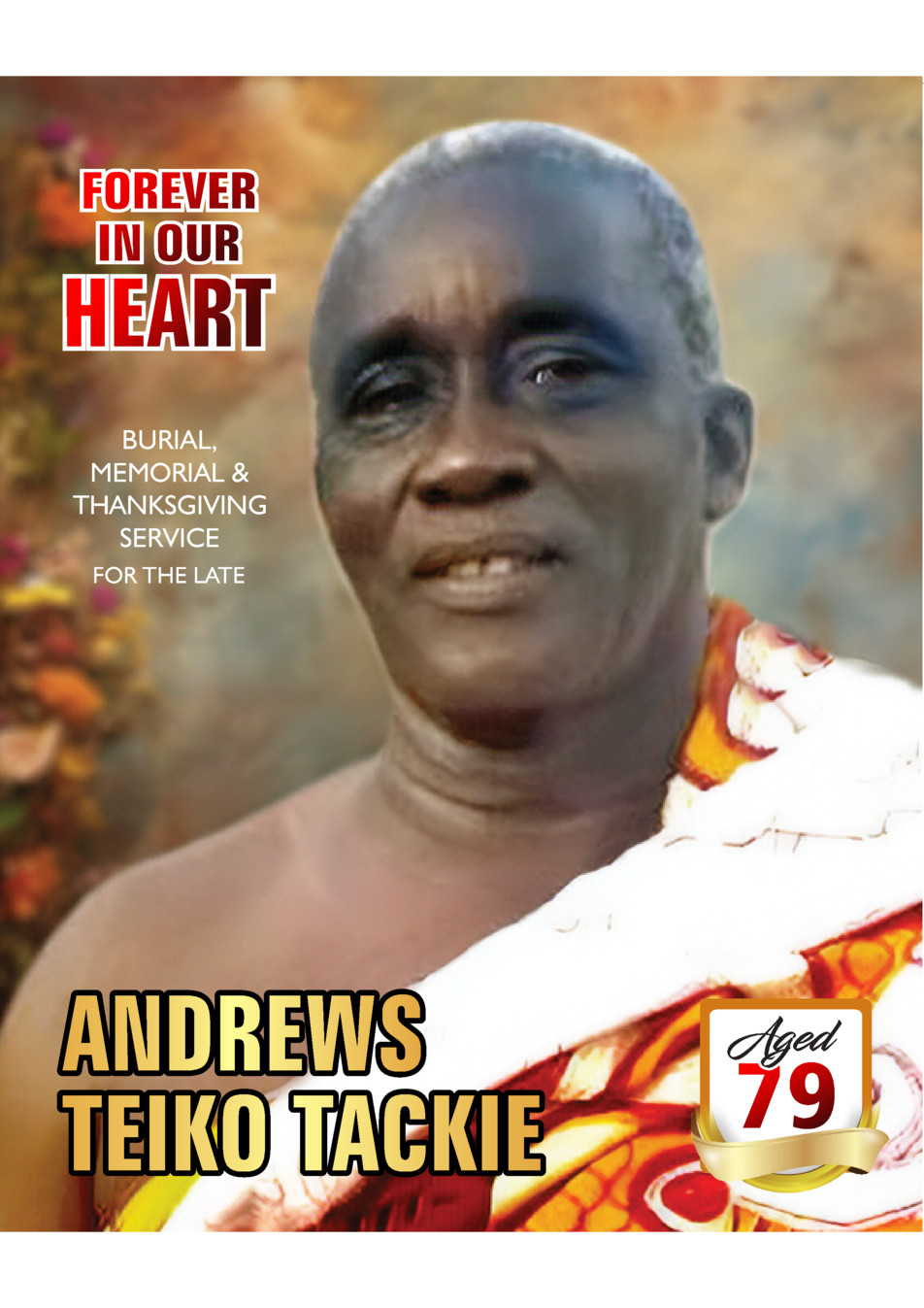
Forever in Our Hearts: Memorial Service for Andrews Teiko Tackie — A Comprehensive Summary of a Life of Humility, Service, Family, Faith, and Enduring Legacy
Page 1 — Opening, Theme, and Early Life Overview
The memorial service brings together family and friends to honor the life of Mr. Andrews Teiko Tackie, a man known by many affectionate names and valued for his reliability, warmth, and generosity. The event centers on prayer, worship, and heartfelt tributes that celebrate a life lived with purpose and care for others. The program frames remembrance as an opportunity to reflect on the resilience, faith, and community spirit that characterized his years of service and personal relationships. (Page 1)
Born on July 24, 1946, Andrews Teiko Tackie emerged from a family with roots traced to both the greater Accra region and the Ashanti region. His early life included a period living with his mother in Asafo, Kumasi, before moving to Akrokyere, a small community nestled between Efiduase and Kumawu. These beginnings laid the foundation for a lifelong commitment to family, place, and community. His early education continued in Akrokyere up to Kinbu Middle School, after which he relocated to Accra to live with his paternal relatives and pursue further schooling. (Page 1)
His professional journey began with the Accra Metropolitan Assembly, where he demonstrated diligence and a solid sense of responsibility. Seeking broader growth, he transitioned to the Public Works Department, expanding his skill set and preparing for greater responsibilities. This trajectory highlights a commitment to public service and development, a theme that would recur throughout his life. In due course, he enrolled at a training school in Weija, gaining training as a Draughtsman, and eventually advanced to a supervisory role at the Architectural and Engineering Services Limited. He remained with that institution until his retirement in 2006, marking a career defined by steady advancement, stewardship, and a steady work ethic. (Page 1)
In sum, the opening pages sketch a life rooted in humble beginnings, educational perseverance, and a career devoted to public infrastructure and service. His path reflects both professional ambition and a steady, values-driven approach that prioritized discipline, accountability, and a strong sense of duty to family and community. (Page 1)
Page 2 — Personal Character, Humor, and Family Influence
Colleagues and family alike remember Andrews as a man of humility and discipline, whose work ethic was complemented by an approachable, humane demeanor. His humility and sense of responsibility extended beyond the workplace and into daily life, where he was known for generosity with both time and wisdom. Family gatherings were enlivened by his humor and storytelling, which carried lessons about life and resilience. His approach to leadership and caregiving left an imprint on those around him, illustrating how character can shape relationships and opportunities for growth. (Page 2)
Beyond professional accomplishments, his enduring impact rested on the way he modeled values—steadfastness, respect for others, and a belief in the importance of unity and forgiveness within the family. He demonstrated that success is not only measured by achievements but also by the quality of care given to loved ones and the willingness to help others along the path of life. The story of his life thus becomes a testament to balancing ambition with generosity, discipline with warmth, and tradition with a readiness to support others in need. (Page 2)
As a father, husband, and brother, he fostered an environment where family connections remained strong even in challenging times. The narrative of his life emphasizes the role of shared memories, mutual support, and a commitment to living with integrity. The family remembers him as someone who valued togetherness, encouraged positive conduct, and modeled the importance of showing love and forgiveness in daily interactions. (Page 2)
Page 3 — Journaling, Faith, and the Legacy of a Lifewell-Lived Example
The service highlights his habit of keeping detailed journals, a practice that served as a living record of daily life, emotions, and cherished moments. These journals are presented as a tangible expression of a life observed with care, preserving memories and guiding future generations in understanding family history and values. His careful handwriting and reflective notes captured joys, hardships, and the growth that came from navigating life’s ups and downs. (Page 3)
Faith and spiritual life occupy a central place in the tribute, with an emphasis on living a life guided by principle, virtue, and devotion to God. The family references a steady commitment to church involvement and to embodying standards of honor, integrity, and devotion in everyday behavior. The messages tucked within the tribute draw on local language phrases and cultural expressions, illustrating how language and tradition helped transmit practical life lessons and moral teachings across generations. (Page 3)
Although the loss brings great sadness, the family finds consolation in the belief that he is now free from pain and resting in the Creator’s arms. His legacy, they say, endures through the quiet strength of his character, the example he set, and the positive influence he had on those who knew him. The memory of cherished conversations and shared moments continues to illuminate their lives. (Page 3)
Page 4 — Tribute from a Wife: Enduring Love, Shared Moments, and Spiritual Depth
In a heartfelt tribute, the wife speaks of a relationship built on companionship, encouragement, and deep friendship. She recalls the joy of working together on the farm at Akrokyere, the warmth of evenings spent listening to the radio, and the way shared faith and daily routines reflected a life grounded in love and spiritual devotion. The story of their partnership reveals how everyday acts—like enjoying a meal together or sharing humor—formed the backbone of a life lived with mutual support and joy. (Page 4)
Her reflections emphasize that his love continues to shape her present and future, even as he rests in eternal peace. She notes the solace found in small, ordinary moments that carried extraordinary meaning because they were shared with him. The tribute portrays a man whose presence was a comforting constant, whose kindness, faith, and laughter left a lasting imprint on those who depended on him. (Page 4)
Page 5 — Tribute from Children: Foundational Values, Scripture, and Everyday Wisdom
In a moving tribute from the children, the family leans on biblical assurances—such as the promise that life’s pain will be replaced by a future of peace—as a source of consolation. They describe their father as a man who embodied discipline, love, and strength, and who laid a solid foundation for their lives. The virtues they highlight—humility, modesty, sincerity, diligence, and compassion—formed the core of the ethos he imparted. They recall his insistence on accountability, respect, and virtuous living, and they emphasize the importance of regular church participation and living in a manner that honors God. (Page 5)
The children also note his use of Proverbs-like phrases in Twi and Ga, which carried practical lessons about behavior and values. He was not merely a father but a guardian of family history, carefully preserving journals and photographs to ensure that memories endure across generations. A poignant moment remembers a Sunday evening—the family’s recollection of his calm voice and final blessing—an intimate farewell that conveyed grace and love. They express pride in being his children and a commitment to carry forward his legacy with the same spirit he demonstrated. (Page 5)
The narrative also captures a specific date—the evening of August 17, 2025—an event that became a turning point in their collective memory, symbolizing his final acts of blessing and the gentle transition from life to eternal rest. The family’s reflections emphasize that his life was not only about personal achievement but about the love and care he extended to others, and the way his life continues to inspire them to live with integrity and generosity. (Page 5)
Page 6 — Closing Reflections and Ongoing Legacy
As the service draws to a close, the family reiterates a sense of pride in having called him their own and a resolve to honor his memory through actions aligned with his values. They speak of unity, forgiveness, and consistent effort to do good as living legacies that will guide their choices and relationships in the years ahead. The overall message is one of gratitude for the life he lived, a recognition of the gaps his absence creates, and a commitment to embody the virtues he embodied. (Page 6)
The concluding sentiments express love, gratitude, and enduring remembrance, with phrases that affirm his continued presence in their lives as a source of inspiration and spiritual grounding. They honor him as a person who led by example, cared deeply for family, and placed faith at the center of daily life. The farewell is marked by a sense of ongoing connection, the belief that his light remains with them, and a forward-looking pledge to live in a way that reflects his teachings. Da Yie, Daa—an expression of farewell that encapsulates both reverence and affection, carried by the family into the future. (Page 6)