Issue 2
Issue 2
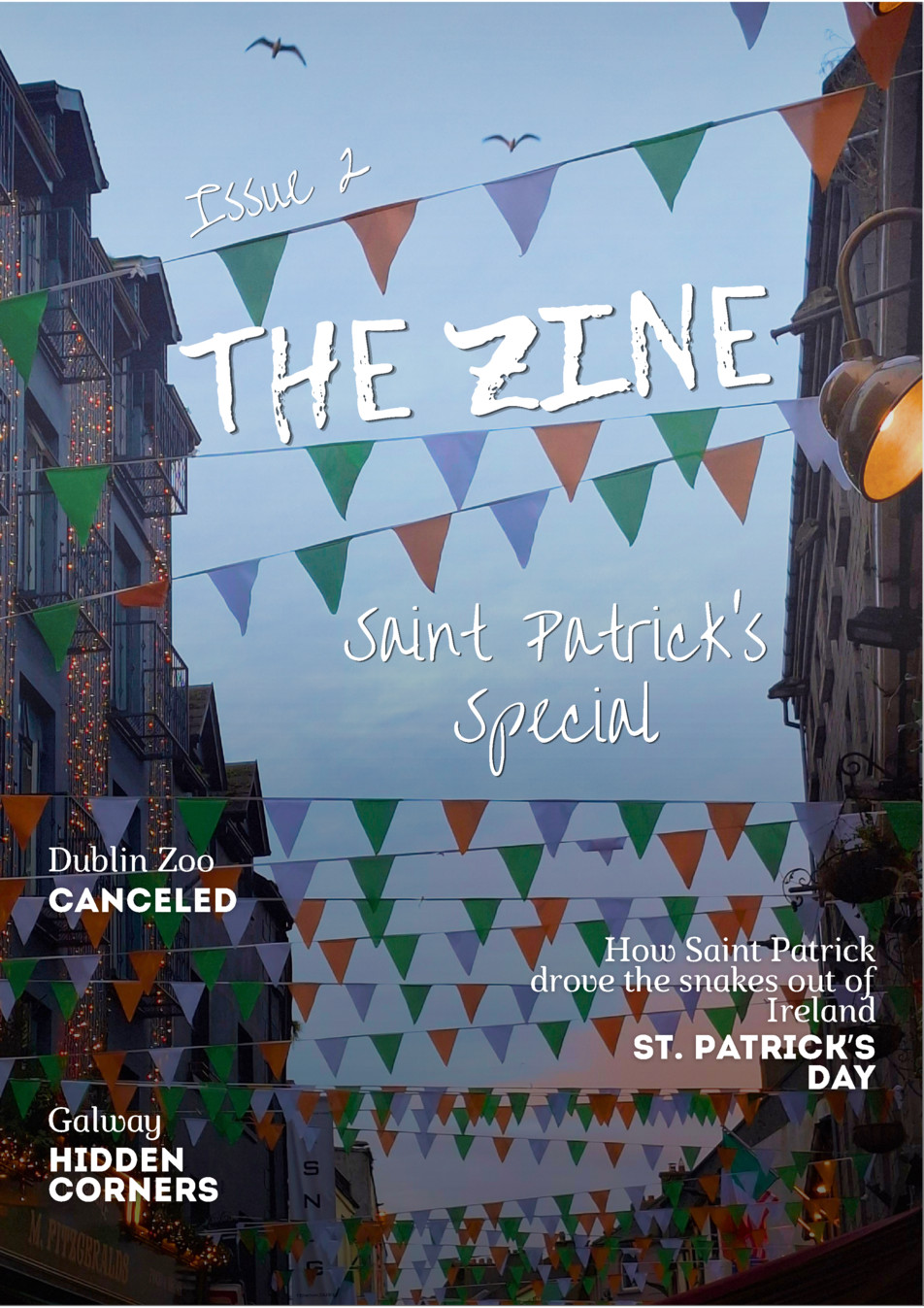
Saint Patrick’s Special Issue — A reflective look at Dublin Zoo, the legend of St. Patrick, and Galway’s hidden corners, exploring conservation, culture, and public perception
Dublin Zoo - CANCELED
During a stint volunteering at Sofia Zoo in Bulgaria, I came to view zoos as potential centers for animal welfare and conservation, rather than mere attractions, despite popular opinion. (page 02)
One stark example involved a rescued crocodile who had been kept illegally in a cramped water-filled hole near a residence. At the Sofia Zoo, he received care that gradually improved his condition, illustrating how proper stewardship can make a life-saving difference. (page 02)
This experience shaped my belief that not all zoos operate with the same ethics; a government bill I later read in Ireland described Dublin Zoo as treating animals as performances rather than sentient beings worthy of proper care. Such revelations initially drove me away, yet they also sparked a broader conversation about accountability and reform. (page 02)
Although the Dublin Zoo episode was disheartening, I remain hopeful because public demonstrations and educational leaflets are appearing more widely, signaling a demand for change. The core idea I hold is that zoos can play a meaningful role in saving species and individual animals when governed with compassion and scientific rigor. (page 02)
Key benefits of zoos include safeguarding endangered species, delivering education about the natural world, providing medical care for ill or injured animals, fostering respect for living beings, supporting rehabilitation efforts, contributing to research, and supporting biodiversity through conservation programs. (page 02)
In short, zoos can be valuable platforms for conservation and humane animal care when they adhere to high ethical standards and integrate welfare-focused practices. (page 02)
How Saint Patrick Drove the Snakes Out of Ireland
Every year on March 17, the date is marked by global festivities, from Irish parades to city pride around the world, including Chicago’s river that’s famously tinted green as part of the celebration. (page 04)
The popular tale claims Saint Patrick banished snakes from Ireland by force of will or speech, but fossil records show that serpents never inhabited Ireland to begin with. (page 04)
The true meaning of the legend lies in symbolism: Saint Patrick’s mission is seen as the suppression of evil and temptation through Christian faith, rather than a literal exodus of reptiles. The pageantry—parades, shamrocks, and green rivers—celebrates the triumph of faith and Ireland itself, rather than a focus on actual reptiles. (page 04)
St. Patrick’s Parade
Saint Patrick’s Day celebrations include organized processions, with Galway hosting its own notable parade each year, contributing to a sense of community and cultural heritage. (page 05)
The event brings together communities, traditions, and creative displays that reflect the enduring impact of Patrick’s legacy on Irish identity and regional celebration. (page 05)
Hidden Corners in Galway
This section promises an exploration of lesser-known places in Galway that lie beyond typical tourist paths, inviting readers to discover intimate corners of the city’s landscape and culture. (page 06)
Key takeaways
- The piece invites a nuanced view of zoos, recognizing both ethical concerns and the potential for responsible conservation when welfare and accountability are prioritized.
- Saint Patrick’s legend is framed as a symbolic triumph—emphasizing spiritual transformation and cultural celebration rather than a literal historical act against animals.
- Locally grounded explorations in Galway are highlighted as a path to uncovering the city’s overlooked spots and unique experiences beyond mainstream tourism.