Llanasa Life Issue 6
Llanasa Life Issue 6
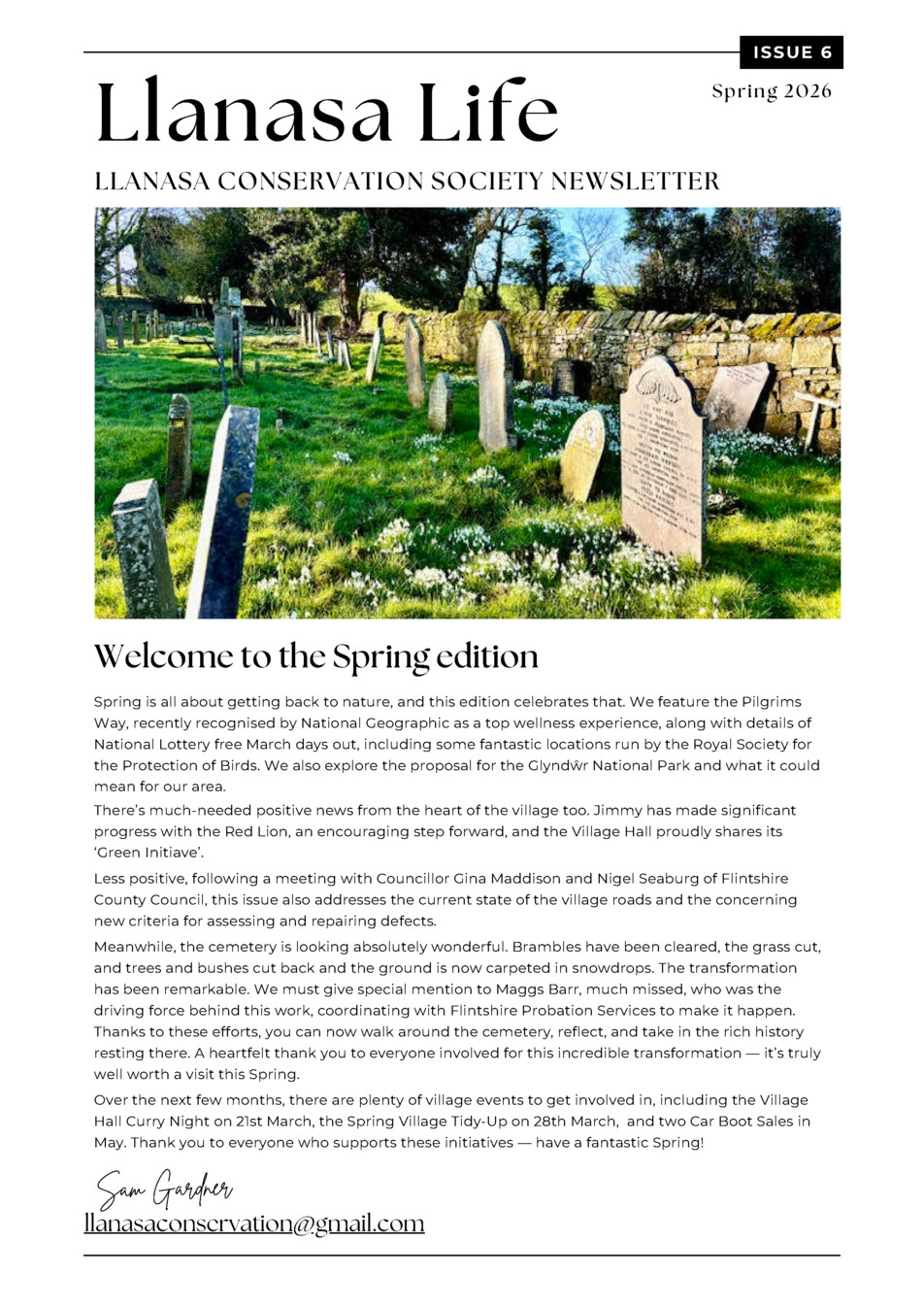
Llanasa Life Issue 6 – Spring 2026: Community News, Developments and Local Initiatives
Summary
The Spring 2026 edition of Llanasa Life opens with a clear emphasis on reengaging with the natural world and the rhythms of village life. It frames the season as a moment to refresh connections to nature, celebrate ongoing work in the community, and look ahead to projects that will shape the village’s future. Readers are invited to explore a blend of outdoor experiences, local governance concerns, and uplifting progress on notable community projects, all anchored in a shared sense of place and purpose.
The issue foregrounds the Pilgrims Way, recently acknowledged by National Geographic as a premier wellness experience for 2026. The feature highlights how this long-distance route encourages travelers to slow down, engage deeply with landscape and heritage, and pursue a more deliberate, restorative form of motion rather than conventional fast travel. This recognition places North Wales on the global map for contemplative travel and underscores the region’s unique cultural and natural assets.
Alongside the Pilgrims Way celebration, the newsletter points to free National Lottery–sponsored March days out that broaden access to outdoor activities. Several locations connected with the Royal Society for the Protection of Birds (RSPB) are highlighted, offering residents and visitors alike opportunities to enjoy nature, wildlife, and guided experiences during the tail end of winter and early spring.
The document also examines the Glyndŵr National Park proposal, unpacking what its establishment could mean for Llanasa and neighboring communities. Potential benefits are weighed against concerns about planning controls, housing affordability, and the pressures placed on local infrastructure and services. The discussion aims to surface a balanced view of how such a designation might reframe development and conservation in the region.
On the positive side, the issue reports tangible progress in local landmarks and institutions. The Red Lion project is moving forward, and the Village Hall has rolled out a Green Initiative designed to boost energy efficiency and reduce running costs. These developments reflect a broader push toward sustainable, community-oriented facilities that serve residents and visitors alike while preserving the village’s character.
In parallel, attention is given to the condition of village roads and the evolving policy landscape for road repairs. The report notes that pothole management remains a key concern for residents, with potential policy changes that could shift repair timelines and defect thresholds. The articles emphasize the need for sustained investment and collaborative action to safeguard safety and accessibility on rural routes.
A quiet but meaningful transformation is celebrated in the cemetery, where brambles have been cleared, grass cut, and trees pruned, leaving a serene spring landscape beneath a carpet of snowdrops. The piece pays tribute to Maggs Barr, whose leadership and partnership with Flintshire Probation Services made the improvements possible, creating a reflective space for visitors to engage with local history and memory.
Looking ahead, the calendar fills with community events that invite participation and volunteering. The Village Hall Curry Night on 21 March, the Spring Village Tidy-Up on 28 March, and two Car Boot Sales in May are highlighted as opportunities to contribute, connect, and support community spaces funded by local groups and partnerships. The tone is one of gratitude for volunteers and a call to continue lending time and energy to keep Llanasa vibrant.
Accounts from Sam Gardner underscore the ongoing effort to secure better roads for Llanasa. A recent dialogue with Streetscene representatives and local councillors highlighted maintenance realities, funding pressures, and pragmatic possibilities for improvement. The report stresses that budgeting constraints necessitate long-term planning and strategic resurfacing rather than short-term patchwork if the road network is to remain safe and reliable.
Turning to the Red Lion, the newsletter details continued progress with the discharge of planning conditions and the preparation of detailed drawings required for Building Regulations approval. The project team anticipates finalising plans soon, with a multi-disciplinary approach that respects the building’s heritage while enabling a functional reopening in due course. An online presence for the venue has been launched to share updates, stories from the Pilgrim’s Trail, and historical context, inviting broad community engagement.
The Llanasa Walking Group is highlighted as a social and accessible activity for locals. Regular walks typically attract a dozen to fifteen participants, with the next outing scheduled for mid-March starting at a nearby pub. The note encourages anyone interested to contact the organizer for details and to join the group for future excursions, underscoring the importance of informal, sociable outdoor experiences in village life.
Village Hall updates describe a sustained effort to improve energy efficiency and comfort. The Green Initiative includes replacing an aging boiler with a remotely controllable model, upgrading the underfloor heating distribution, and refurbishing the solar-powered hot water system. Recent secondary glazing installations on large hall windows preserve the historic character while boosting insulation. The funding mix blends internal fundraising with grants from the Gwynt y Mor Community Fund and the National Lottery, illustrating a collaborative financing model for sustainability upgrades.
In a separate, expansive section on the Pilgrims Way, National Geographic’s recognition is explored in depth. The route is celebrated for its scenic variety, from river valleys and beech woods to moorland and coast, offering walkers a sense of time slowing and a chance to engage with landscape on a meaningful level. The features highlight infrastructure updates, such as clearer wayfinding, and the revival of village hospitality through welcoming bed-and-breakfasts and restored churches and chapels along the way.
The Diocese of St Asaph has appointed Jane Finn as Pilgrimage Development Lead, tasked with coordinating growth along the 136-mile circuit. Her work focuses on enriching the pilgrim experience, identifying suitable accommodations, and promoting Welsh language and heritage. Foreseeable benefits include a gentle, staged itinerary that allows pilgrims to collect stamps for passports and gradually acclimate to daily walking, while also revealing how the route reflects broader cultural and historical currents across North Wales.
The Pilgrims Way narrative continues with a walk-by-walk overview, detailing how pilgrims move from setting to setting while engaging with the landscape and local communities. The route’s evolution is framed as a historical journey that traces North Wales’ development since early Celtic settlements, offering a sense of continuity between past and present for travelers and residents alike.
The Spring Village Tidy-Up is scheduled for 28 March, inviting residents to contribute to a communal effort that spruces up verges, borders, and key public spaces. Volunteers are urged to bring energy and a can-do attitude, with tools and equipment provided by grants from the Gwynt-y-Mor fund. A mid-morning treat of bacon and sausages adds a friendly incentive to come together, and organizers welcome vegetarian options with advance notice.
Llanasa Car Boot Sales for 2026 are announced as return events on several Bank Holiday Mondays, serving as essential fundraisers for the Church, Village Hall, and Llanasa Conservation Society. The announcements reiterate the importance of volunteer support to coordinate field setup, operations, and post-event tasks, and they invite everyone to participate in the 4 May, 25 May, and 31 August sales. The events are presented as cornerstone activities for maintaining community spaces and funding local projects.
The field “use” clause is acknowledged as a generous annual provision from the Gyrn Estate, whose ongoing backing is appreciated by the community. This support underpins the practical logistics of the events and everyday village life, reinforcing a collaborative ethos that underpins Llanasa’s resilience and sense of belonging.
The Glyndŵr National Park proposal is explored in depth, outlining a potential cross-border designation that would cover parts of North-East and Mid Wales. Proponents emphasize the long-term environmental protections, enhanced land management coordination, and broader funding opportunities that could accompany park status. They also highlight enhanced opportunities for outdoor education and cultural preservation, along with the potential to attract visitors and strengthen local businesses through higher visibility and tourism appeal.
Yet the plan also raises significant concerns for many residents, local councils, and rural organizations. Foremost among these is the risk of losing local planning autonomy to a National Park Authority, which could constrain housing, farm buildings, or small business development. Housing affordability may become more challenging as property demand rises in designated areas, while farmers worry about added regulatory burdens and potential restrictions on traditional practices. The balance between conservation objectives and rural livelihoods becomes a central debate in the community.
Tourism and traffic implications warrant careful consideration. While increased visitor numbers could bolster the regional economy, they might also strain narrow rural roads, parking, waste management, and public facilities unless infrastructure keeps pace with growth. The overall impact on quiet, rural village life depends heavily on how growth is managed and funded, and how communities are included in decision-making processes.
The document notes that questions remain about funding streams, governance structures, and the degree to which promised investments will meet local needs. Natural Resources Wales is tasked with submitting consultation feedback to the Welsh Government, after which government ministers will decide on the proposal—whether to approve, amend, delay, or reject. In the event of substantial objections, a public inquiry could follow to ensure broader community voices are heard and considered.
Overall, the Glyndŵr National Park concept is presented as a potential vehicle for lasting environmental protection and new opportunities for sustainable development. Its success, however, hinges on transparent governance, meaningful community participation, and a funding framework that aligns with local priorities and practical realities. The document invites ongoing dialogue so residents can influence how environmental goals intersect with everyday life in Llanasa and the wider region.
In closing, the issue emphasizes the importance of staying engaged with local developments and continuing to contribute to the village’s growth. Readers are encouraged to watch for further updates, share their perspectives, and participate in forthcoming events and initiatives. The overall tone is one of cautious optimism, tempered by a clear call for informed, collaborative action to safeguard road safety, heritage, and a high quality of life in Llanasa for years to come.
For readers seeking more specifics, the newsletter points to contact details and community channels where updates and opportunities to get involved will be posted. The spirit of Llanasa Life remains grounded in collective effort, a commitment to nature and heritage, and a shared sense of responsibility for the village’s future viability and vitality.