Prix simple. Outils puissants. Annulation à tout moment.
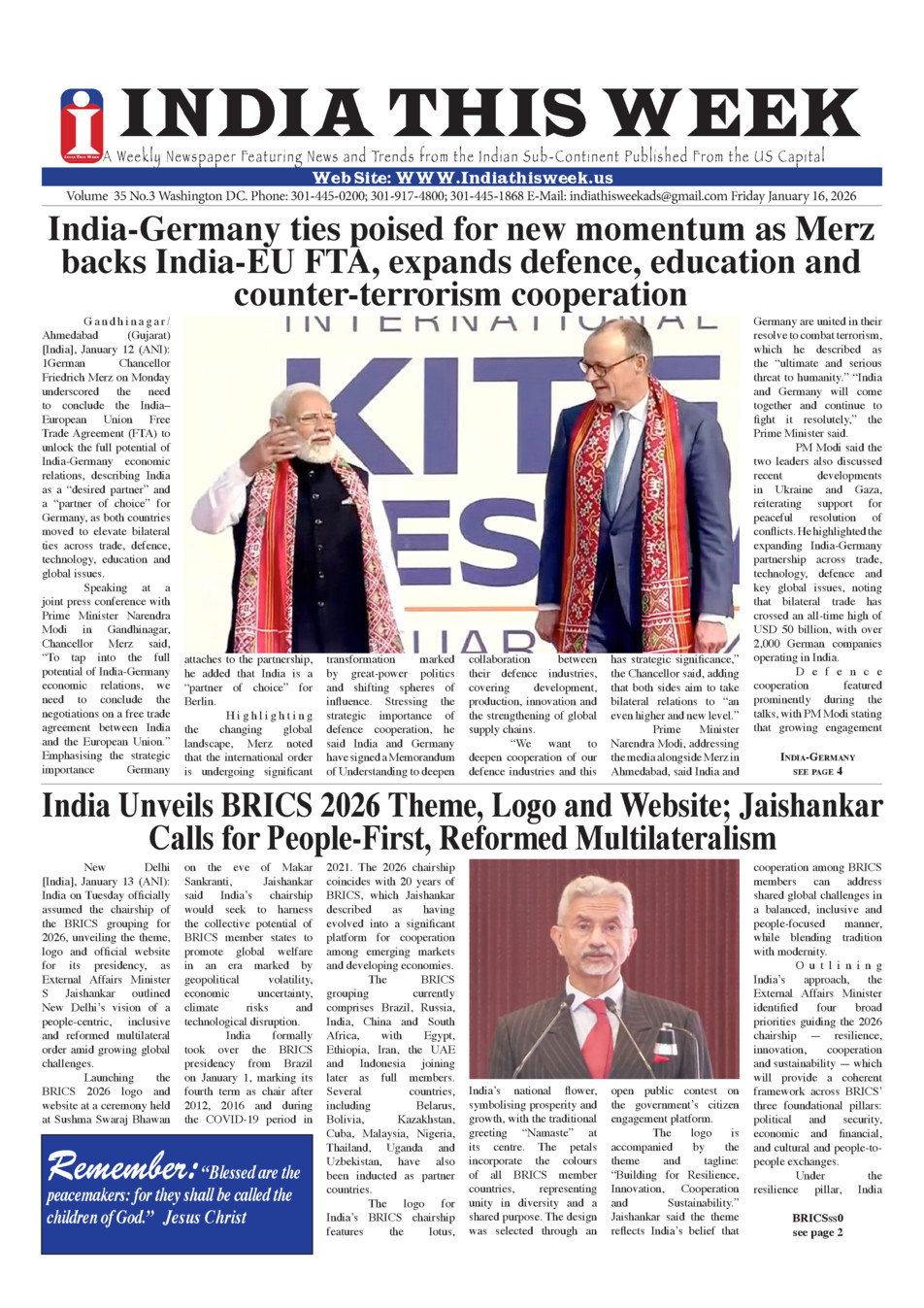
During the visit of German Chancellor Friedrich Merz to India, the emphasis was on accelerating a broader strategic partnership that could be catalyzed by concluding the India–EU Free Trade Agreement. Both leaders highlighted the growing importance of bilateral cooperation across areas such as defence, technology, education, and counter-terrorism, while underscoring that India plays a pivotal role in Berlin’s economic and strategic outlook. Merz and Prime Minister Narendra Modi emphasized the strength of trade ties, noting that bilateral commerce has reached historically high levels and that thousands of German firms operate in India. They also touched on the wider regional and global issues, including developments in Ukraine and Gaza, reinforcing a shared commitment to a secure and stable international order. (Page 1)
India assumed the BRICS chair for 2026, unveiling its theme, logo, and official website, with External Affairs Minister S. Jaishankar outlining a vision of a people-centric and reforms-based multilateral order. The 2026 agenda centers on four core priorities—resilience, innovation, cooperation, and sustainability—and spans BRICS’ political-security, economic-financial, and cultural exchanges. The logo, inspired by the lotus and encompassing the BRICS colors, symbolizes unity in diversity and public participation, having been selected via an open contest. The 2026 program also foregrounds robust people-to-people links, enhanced cooperation in science and education, and a strengthened New Development Bank as a cornerstone of infrastructure and sustainable growth. (Page 2)
In New Delhi, the U.S. Ambassador to India, Sergio Gor, pledged to deepen collaboration with India in defence, trade, technology, and critical minerals, framing the U.S.–India relationship as a partnership with vast potential. At a formal credential ceremony, Gor emphasized the goal of advancing shared priorities and strengthening ties across strategic and economic sectors. He noted the personal rapport between leaders and signaled a proactive, results-oriented agenda, including a potential follow-up meeting on trade talks and broader security cooperation. The ambassador also highlighted the aim to further integrate India into strategic initiatives such as Pax Silica, reflecting a broader push to bolster semiconductor supply chains and related industries. (Page 3)
Separately, India and Germany finalized a comprehensive set of 19 agreements covering defence, technology, health, energy, and human resources during Chancellor Merz’s two-day visit. A Joint Declaration on defence-industrial cooperation was among the prominent outcomes, along with a plan to set up a India-Germany CEO Forum and a higher-education roadmap that includes the establishment of a National Centre of Excellence for Skilling in Renewable Energy in Hyderabad. The package also included energy initiatives such as a green ammonia off-take agreement and collaboration on renewable energy regulation, with visa-free transit arrangements for Indian passport holders transiting through Germany. The MEA underscored that these measures will deepen co-innovation, expand opportunities in the Indo-Pacific, and strengthen people-to-people links as the partnership matures. (Page 1)
In a related development, External Affairs Minister Jaishankar spoke with U.S. Secretary of State Marco Rubio to reinforce bilateral cooperation in key domains such as trade, critical minerals, nuclear energy, defence, and energy collaboration. The dialogue followed ongoing trade negotiations and tariff-related tensions, including concerns over Indian imports linked to Russian oil. The leaders noted progress and expressed intent to stay in close contact, with discussions signaling the possibility of another meeting in the near term. Ambassador Gor later echoed the sentiment, highlighting the desire to advance a balanced and constructive relationship that can deliver tangible benefits in security, technology, and strategic supply chains. (Page 2)
Overall, the issue highlights India’s active role in shaping regional and global frameworks through strategic partnerships with Germany, the United States, and BRICS members, while pursuing structural reforms and opportunities in trade, energy, and technology that could influence the broader geopolitical and economic landscape in the coming years. (Page 1–3)