Prix simple. Outils puissants. Annulation à tout moment.
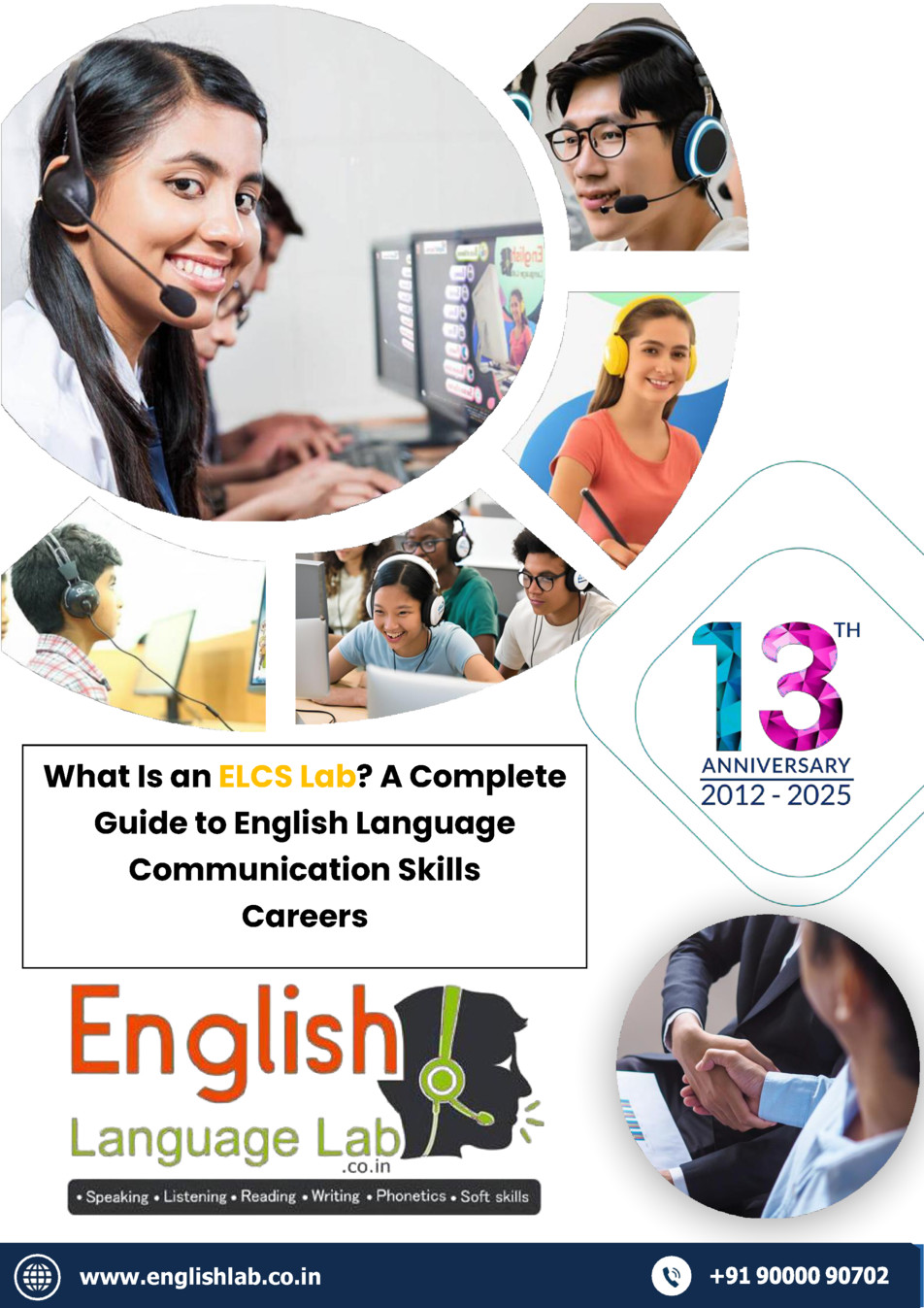
In today’s academic and professional landscape, simply knowing English grammar and vocabulary is not enough; the true value lies in the ability to use the language with confidence in real-life situations. Students often demonstrate strong theoretical knowledge but struggle to express ideas clearly, deliver concise presentations, or engage effectively in everyday communication. The ELCS Lab concept responds to this challenge by offering a learning environment that shifts the focus from traditional textbook methods toward practical language use. By prioritizing authentic communication, the lab helps learners bridge the gap between classroom learning and real-world application, enabling them to speak, listen, and interact more fluently in academic settings, internships, and future careers. This approach aligns with the expectations of modern employers who seek graduates capable of communicating with clarity and adaptability in diverse contexts. (Page 2)
An ELCS (English Language Communication Skills) Lab is a dedicated space where students develop their communication abilities. Its core purpose is to provide an opportunity for continuous improvement in English language use, moving beyond passive study to active practice. The teaching method emphasizes practical usage of English and centers on effective communication as the primary goal. Learners work on listening, speaking, reading, and writing (LSRW) through a combination of online content and traditional classroom activities, with a learning loop that encourages improvement through repetition and feedback. The lab’s design aims to cultivate practical fluency, enabling students to articulate ideas, participate in discussions, and convey information more naturally. (Page 2)
One of the standout features of the ELCS Lab is its deliberate alignment with academic requirements. The modules are structured to mirror the language skills outlined in higher secondary, undergraduate, and professional curricula, ensuring that language development progresses in tandem with subject learning. This approach helps students enhance their English proficiency while staying on track with their degree programs, exams, vivas, and presentations. In practice, learners can strengthen their language skills without sacrificing course content, creating a coherent pathway for language and subject mastery. The curriculum alignment also positions the lab as a supportive component rather than an additional burden. (Page 2)
Through this integrated design, students can expect to see improvements in core language areas while meeting the demands of their academic programs. The ELCS Lab thus serves as a structural enhancer—supporting examination preparation, academic discussions, and professional communication—without derailing the primary focus on course requirements. This combination of curriculum coherence and practical language practice helps learners develop a more versatile skill set that serves both their studies and future career plans. (Page 2)
Colleges face a persistent gap between what students know academically and the communication abilities employers expect. The ELCS Lab addresses this disparity by offering a structured space where learners from diverse linguistic backgrounds can participate actively, build confidence, and practice English in realistic scenarios. Regular guided practice helps raise overall participation in class, fosters clearer interaction, and prepares students for common selection processes such as interviews and group discussions. In addition, the lab supports professional communication in workplace contexts, enabling learners to speak with clarity and confidence in professional conversations and presentations. By delivering measurable, repeatable practice, colleges can observe tangible gains in student readiness for real-world tasks. (Page 8)
The ELCS Lab emphasizes using English in real-life situations rather than relying on memorized phrases. Rather than focusing solely on correctness, learners are encouraged to express ideas, engage in meaningful discussions, and refine pronunciation and tone to suit different audiences. This practical emphasis helps students connect language learning with immediate communication needs, making the learning process more relevant and motivating. Over time, learners develop the ability to adapt their language to context, negotiate meaning, and convey information with professional nuance. (Page 8)
The Digital Teacher ELCS Lab supports students by providing a structured, supportive environment for ongoing practice. It lays out a clear path from foundational to advanced language skills and offers a combination of guided activities and self-paced learning. Key benefits include consistent practice opportunities, improved listening and pronunciation, increased speaking confidence, and a gradual buildup of competence across levels. The platform also accommodates individual pacing, making it suitable for learners at various starting points and helping reduce anxiety around language use. (Page 8)
Learning in the ELCS Lab typically follows a blended approach that combines technology with interactive classroom activities. Instruction is augmented by multimedia resources, including slides, audio, and video, complemented by practical exercises. Common learning activities include concept-focused presentations, listening and pronunciation practice, speaking tasks and role plays, and reading and writing drills. This mix is designed to keep sessions engaging and immersive while reinforcing language skills across listening, speaking, reading, and writing. Learners can also choose to advance at their own pace, ensuring that individuals progress in a way that suits their needs. (Page 8)
There are compelling reasons to adopt the Digital Teacher ELCS Lab beyond its content and activities. The approach strengthens English communication in a structured, practical framework that aligns with existing college programs. It emphasizes continuous practice, supports learners from diverse backgrounds, and enhances readiness for careers and placements by focusing on real-world language use rather than theoretical knowledge alone. By integrating with the college’s current systems, it becomes a feasible addition that can deliver tangible improvements in student outcomes without imposing excessive administrative burdens on teachers. (Page 8)
Before making a commitment, institutions can arrange a demonstration to observe how the ELCS Lab operates in a live classroom setting. A hands-on demo helps educators and management evaluate the teaching flow, the user experience for students, engagement levels, and progress-tracking capabilities. The demonstration clarifies how the lab functions in practice, offering insights into implementation logistics, the alignment of activities with learning outcomes, and the potential impact on overall student performance. Such a trial can be instrumental in deciding whether the lab meets institutional goals. (Page 8)
In conclusion, an ELCS Lab transforms English from a conventional subject into a practical life skill. By blending curriculum alignment with technology-enabled practice and real-language activities, it enables learners to speak with greater confidence and precision. For colleges committed to boosting student performance and employability, the ELCS Lab represents a strategic investment that supports both academic success and future career opportunities. (Page 8)
To explore further or request a demonstration, institutions can visit the official website or contact the sales team for more information. Details such as the website address, email, and phone number are provided by the program to facilitate inquiries and scheduling. (Page 8)
What Is an ELCS Lab? A Complete Guide to English Language Communication Skills - Flipbook by Fleepit