Prix simple. Outils puissants. Annulation à tout moment.
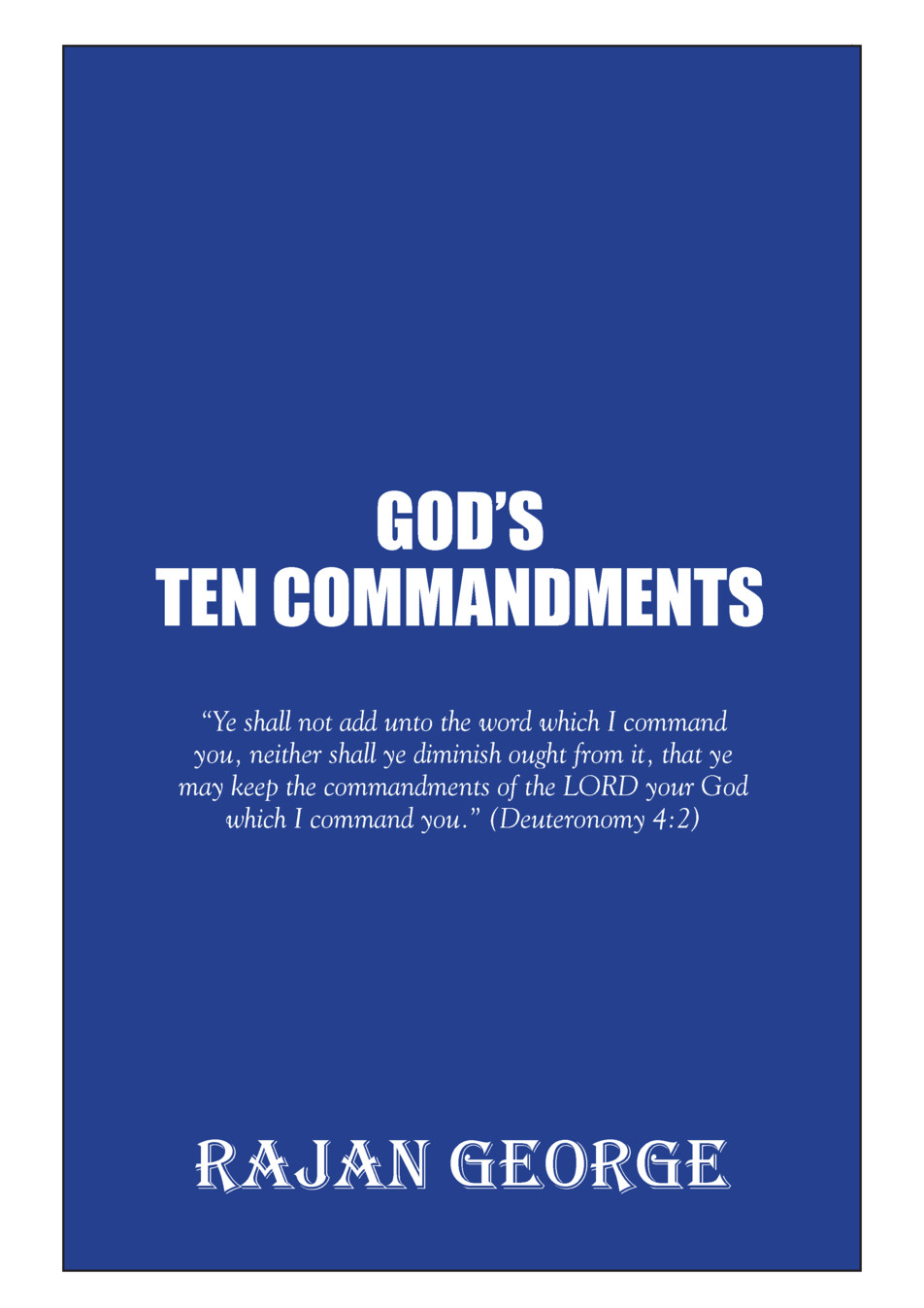
The piece presented examines the Ten Commandments as a foundational document that originated from the mouth of God and was later powerfully inscribed by His own hand on tablets of stone more than three millennia ago. It emphasizes that the integrity of these commandments is non-negotiable: they were given with divine authority and are not subject to modification. The author cites a verse warning against adding to or subtracting from the Lord’s commands, underscoring the expectation that people preserve the precise form of what God declared and wrote. The discussion frames the commandments as a perpetual standard, not a temporary revelation, which invites readers to ask whether human beings possess the right to alter what God has spoken. In parallel, the author invokes scriptural claims about inspiration, noting that while all Scripture is inspired by God, there is a distinct distinction between human authors’ writings and the exact words God spoke, which remain unaltered.
The author highlights that the character of God is unchanging, and therefore His commandments reflect that unchanging nature. If God’s knowledge and purposes are absolute, then the commandments He delivered should be regarded as timeless and stable. This line of thought rejects any notion that divine wisdom evolves or expands in ways that would require adjusting those core decrees. The piece positions the immutability of God as a guiding principle for understanding the status of the commandments: because God does not progress in knowledge, the content of His law cannot be upgraded or replaced by human innovation. This framing lays the groundwork for a broader argument about the enduring authority of biblical law across generations and covenants.
The article also notes that there is a continued debate today about how to interpret or apply the commandments, but it insists that true authority rests in the source of the commandments themselves rather than in ecclesiastical structures that would claim stewardship over them. It argues that any attempt to change or diminish God’s written word is not only misguided but perilous, because it encroaches on God’s rightful jurisdiction and invites divine displeasure. The author observes that the integrity of the original declaration—spoken by God, proclaimed to the people, and inscribed on stone—should serve as the model for how believers treat holy revelation: with reverence, fidelity, and an unwillingness to modify what God has plainly spoken.
The essay then situates the discussion within the broader biblical narrative, pointing to passages that reiterate the divine origin of Scripture and its sufficiency for guiding life and faith. It cites the prophetic conviction that God’s purposes stand from the beginning to the end, and that His word will accomplish all that He intends. This theological frame supports the central claim that the commandments themselves retain their force and credibility because they express God’s unchanging will and character, not because they were remarkable at one historical moment. The audible voice at Sinai and the written record on the tablets are presented as the definitive acts affirming the permanence of these commands.
In presenting these ideas, the author foregrounds a contrast between divine inevitability and human improvisation. While human beings may develop varied interpretations of Scripture or propose new theological constructs, the article argues that genuine change to God’s law is not possible without divine authorization, something not granted to fallible human institutions. The tone of the piece is admonitory: it warns readers not to fall for interpretations or movements that would claim God’s authority while seeking to modify the law. The ultimate message is that the commandments illuminate the God who does not change, and therefore those decrees remain central, stable, and non-negotiable across ages and cultures.
A major thread running through the discussion is a critique of any claim that Church authorities or human leaders possess the right to alter God’s written commandments. The text makes a careful distinction between the authority given to Christ’s apostles—basic to proclaiming the Gospel and organizing church life—and any authority to rewrite divine law. It reminds readers that Jesus did not come to dismiss the law but to fulfill it, reinforcing the idea that the law’s enduring substance remains intact. The reference to Jesus’ statement about not letting even the smallest letter disappear from the law until all is accomplished is treated as a sober reminder that divine law endures, and human attempts to nullify it are judged as contrary to the divine order. This section argues that the keys granted to the apostles were for governance within the community and for the proclamation of the Kingdom, not for altering God’s immutable commandments.
The author draws a nuanced analogy: the ability to open or close a door is not the same as changing the door or its lock. The apostles were empowered to regulate the life of the church, to adjudicate discipline, and to authorize or exclude individuals as needed to safeguard the integrity of the faith community. Yet this authority does not entail the power to revise the content of God’s law itself. The text also cites passages about forgiveness and repentance as part of the church’s ministry, underscoring that the focus of authority is on maintaining doctrinal clarity and communal harmony, not revising timeless decrees. In summarizing this point, the author maintains that the integrity of God’s commandments must be preserved, and any proposal to adjust them is a deviation from divine governance that risks spiritual danger for believers.
The discussion extends to a broader reflection on the interpretation of the New Testament. It notes that the practice of binding and loosing, as described in Scripture, was framed as a process for clarifying and applying the Gospel within the community rather than for altering the divine standard. The narrative emphasizes that the Spirit’s work in the life of believers is to illuminate truth and guide conduct within the structure of God’s law, not to overrule or replace it. The overall argument is that genuine spiritual leadership should align with the unchanging requirements of the Covenant rather than claim authority to change them for convenience or power. This theme reinforces the central claim of the article: God’s law is immutable, and human pretensions to modify it undermine God’s sovereignty.
In this section, the author also reflects on the history of church leadership and human governance of doctrine, challenging views that equate institutional authority with divine prerogative. The text argues that authority to teach and discipline is meaningful only insofar as it serves fidelity to God’s revealed will. It warns against the temptation to treat ecclesiastical power as a license to alter the content of Scripture. By invoking biblical examples and principles, the author intends to safeguard the integrity of the commandment tradition and to encourage readers to approach Scripture with humility and reverence, seeking alignment with what God has declared rather than with human preferences or ambitions.
A substantial portion of the piece defends the ongoing relevance of the Old Testament for believers living in the Christian era. It argues that early Christians relied on Old Testament scriptures as their primary canon and that Jesus and the apostles frequently quoted and cited those scriptures to validate their message and to demonstrate the continuity between the Law, the Prophets, and the teachings of Christ. The author asserts that the Old Testament remains authoritative and applicable, countering claims that it is outdated or superseded by the New Testament. The message is that the New Testament is not a rejection of the Hebrew Scriptures but a fulfillment that confirms and clarifies their meaning within the broader plan of salvation. The article notes that the entirety of the New Testament was in circulation or at least in development by the end of the first century, with the formal canon being recognized and codified only later in church history. Still, the content and authority of the Old Testament remained foundational for the New Covenant community.
The narrative then traces the historical process by which the Christian canon came to be recognized, noting milestones such as early lists and regional endorsements and, eventually, the formal closing of the canon in the fourth and early fifth centuries. While acknowledging this historical progression, the author emphasizes that the compatibility and continuity between the Testaments are crucial: the New Testament writings assume and quote from the Old Testament, and the revelations of the gospel are anchored in the same divine revelation that produced the Law and the prophets. The conclusion drawn is that rather than discarding the Old Testament, Christians should regard it as integral to the full understanding of God’s plan, with the New Testament serving to interpret and reveal its fuller meaning through the life and work of Christ and the apostles.
Beyond the textual discussion, the author argues against the notion that the Old Testament’s laws are obsolete for the Christian era. This stance is supported by the fact that Jesus himself appeared to adhere to and reference these laws during his ministry, including his use of prophetic passages to explain his mission. The text also asserts that the development of the New Testament did not erase the moral and ceremonial instructions found in the Old Testament; rather, it confirmed the enduring nature of the moral law while redefining or reshaping certain ceremonial practices in light of Christ’s saving work. In short, the Old Testament’s relevance endures because it reveals God’s character, will, and plan, which the New Testament fulfills rather than supersedes.
The author also challenges arguments that depict church authorities or scholars as the final arbiters of whether biblical books belong in the canon. While acknowledging human involvement in the canon’s formation, the piece maintains that the spiritual authority behind the canon rests ultimately in God’s sovereignty, and the results were carefully weighed with prayer, discernment, and communal reception. The underlying claim is that the integrity of the biblical witness is preserved by the unity of Scripture across testaments and by the consistent testimony of God’s people throughout history. The overall effect is a defense of the Old Testament’s continuing significance for understanding the Ten Commandments and the moral order they articulate for believers today.
The article turns to the patriarchal era to discuss how early believers related to God’s commands before they were written down. It suggests that Abraham, who is described as keeping God’s charge, commandments, statutes, and laws, indicates that divine instruction existed prior to the codification of the Ten Commandments on stone. The author points to Genesis and related historical traditions to argue that the knowledge of God’s moral expectations existed in oral form within the family and tribal lines and was transmitted across generations. While specific written records were not yet in place for Abraham, the text implies that God’s expectations were available to him through direct revelation or oral tradition, aligning with the broader assertion that God’s will is unchanging even as human modes of revelation and transmission evolve.
The narrative then engages with genealogical material to suggest a historical continuity from Noah through Shem to Abraham, highlighting that revelation might have flowed through multiple generations before it was explicitly codified as commandments. It is proposed that earlier generations received divine instruction, and these revelations could, in turn, have been handed down to later generations as a means of preserving fidelity to God’s will. The argument does not imply that every detail of later legal systems existed in Abraham’s time, but rather that the core obligation to obey God’s voice and maintain a life consistent with his expectations was already present in Israel’s spiritual heritage. This section aims to show that the commandments did not arise in a vacuum, but fit within a long line of divine communications that predate their formal inscription on stone.
Further, the discussion acknowledges scholarly debates about chronology and source material while maintaining a belief that revelation can be transmitted through both oral and written channels. It emphasizes that Noah’s generations and the ages that followed were recipients of divine communications, which could have included moral directives that later became embedded in formal law. In presenting this view, the author encourages readers to recognize that the moral law is not merely a later invention but a continuity of God’s instruction across centuries, visible in the life stories of the patriarchs and their descendants. The main aim is to link the origin of the commandments to a broader tradition of divine disclosure that involves both direct communication with God and the faithful transmission of that revelation through generations.
The centerpiece of the article’s historical reflection is the moment when God spoke to the people at Sinai and established a covenant through Himself and Moses. The narrative recounts that God delivered the core commandments as part of the covenantal agreement, and the people witnessed extraordinary manifestations—thunder, lightning, the trumpet blast, and the mountain in smoke. While the people asked for Moses to convey God’s directives, God Himself dictated the essential content to Moses, who then recorded it. The ten commandments were inscribed on two durable stone slabs as a permanent, public acknowledgment of Israel’s divine obligation. This moment underscores that the commandments are not merely human rules but the terms of a living agreement between God and His chosen people. The event remains a foundational touchstone for the life and worship of the community, shaping its identity and obligations across generations.
When Moses initially retrieved the tablets, the narrative notes that he broke the first set in response to Israel’s disobedience, an act that signified a rupture in the covenant. God then instructed Moses to carve a new set and to receive from Him again the words that constitute the covenant. The second set of tablets carries the same content as the first, reinforcing the notion that God’s law did not change even after a disruption in Israel’s relationship with Him. The act of inscribing the commandments a second time is read as a deliberate demonstration of the unchanging nature of the covenant: God reaffirms His demand for obedience and continues to offer His guidance in a renewed form. This reiteration underscores the stability of the written word under divine supervision and human mediation.
The article emphasizes a significant point: while other laws and ordinances given to Israel in Sinai were later written down separately by Moses, the Ten Commandments—the covenantal core—were reserved for direct divine inscription. The text cites Exodus 34:27, where God instructs Moses to write down the words that define the covenant with Israel. This distinction highlights the sacred status of the Decalogue as a fixed, unsurpassed standard, while other statutes could be documented and applied with human authorship under God’s guidance. The takeaway is that the Ten Commandments stand apart as the primary, unaltered articulation of God’s will for humanity, a standard that remains binding regardless of era or circumstance.
The article then moves to reflect on how the commandments are framed within biblical exhortations to observe and preserve them. It quotes or alludes to the exhortations to keep God’s instructions and to refrain from adding to or diminishing them, ensuring the people recognize the Lord as the source of their life and blessing. The Sabbath commandment is highlighted as a centerpiece of the divine order, demonstrating how the law structures time, worship, and communal life. The emphasis is on obedience as a response to God’s saving acts—deliverance from Egypt and the ongoing call to live in accord with the Lord’s design for society. The overall emphasis is that the Decalogue is not merely a set of prohibitions but a comprehensive framework for devotion, worship, and social conduct under the sovereignty of God.
The text presents the actual content of the Ten Commandments as part of God’s direct instruction to Israel. The commandments begin with the assertion of Israel’s unique relationship to God—the one God who delivered them from bondage—and then proceed to a sequence of prohibitions and requirements. These include exclusive worship of the Lord, avoidance of images, reverence for God’s name, the sanctification of the Sabbath, honoring one’s parents, and prohibitions against killing, adultery, theft, false testimony, and coveting. The intent is to portray a comprehensive moral and spiritual code designed to shape both personal character and communal life. The account also notes the people’s visceral reaction: they trembled at the theophany, requested that Moses serve as intermediary, and asked that God not address them directly lest the encounter overwhelm them. This reaction underscores the gravity and holiness of God’s law and the proper posture of humankind before it.
Following the revelation at Sinai, the narrative explains that the Lord commanded Moses to re-present the commandments to the people in a manner that would perpetuate the covenant. The text emphasizes that the divine directives were not merely transmitted verbally but were written on durable tablets to serve as a lasting record for future generations. The insistence that no one should add to or diminish from these words is repeated, reinforcing the posture of obedience that the covenant requires. The overall thrust is that the commandments function as a binding, enduring framework for worship and ethics, rooted in God’s faithful action on behalf of His people and modeled in their response of faithfulness and fidelity to His law.
As a concluding note to this section, the article highlights that the Lord also provided other ordinances and instructions to guide the life of Israel in their journey toward the promised land. While those other laws were introduced and recorded in different ways, the pillars of the Decalogue remained the core deposit of God’s instruction. The emphasis is on the stability and constancy of the covenant throughout Israel’s history, even as other legal elements evolved in response to changing circumstances. The message is that the Decalogue stands at the heart of God’s governance of human society, a foundation that remains instructive for readers seeking to understand the nature of divine command and human responsibility.
Throughout the discussion, the author maintains that the Ten Commandments reveal the character of God—an unmoved standard of righteousness that informs every other aspect of moral life. Because God does not change, His law reflects His unchanging nature, and therefore humans are called to show constancy in obedience. Any movement or claim that seeks to revise these decrees is presented as a deviation from divine governance and a hazard to the spiritual well-being of the community. The text argues that adherents must examine claims of reform or modernization against the clear directive to hold fast to the commandment given at Sinai, recognizing that God’s speech, writing, and covenant remain definitive and non-negotiable.
The concluding exhortation invites readers to reflect on the unity of God—“The LORD our God is one Lord”—as a pledge of exclusive devotion that frames the entire law. This statement anchors the Decalogue in the larger theological framework of worship and faithfulness to the one true God. The call is to internalize these commands, to teach them to the next generation, and to ensure that the life of faith aligns with the foundational covenant enacted by God. The postscript reiterates the seriousness with which this topic should be approached: the immutable nature of God’s commandments obligates believers to honor and obey them, to resist any claim that would water them down or replace them with humanly devised rules, and to read the Old and New Testaments together as a coherent revelation of God’s purposes for humanity. The ultimate aim is a life shaped by divine law, sustained by God’s faithfulness, and marked by steadfast trust in the unchanging God who spoke and wrote these commandments long ago.