Why Indian Defence Contractors Are Moving to IETM Documentation
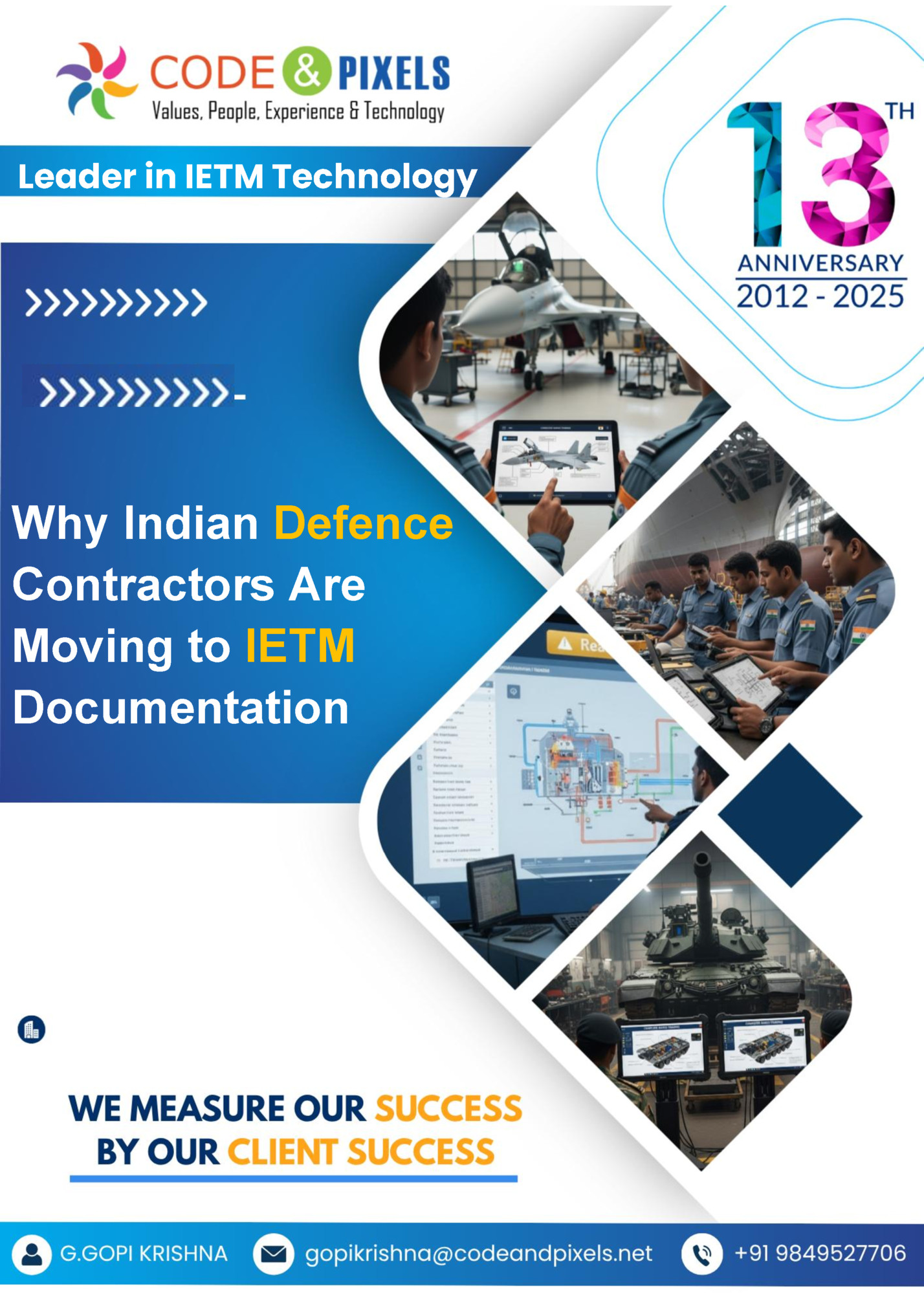
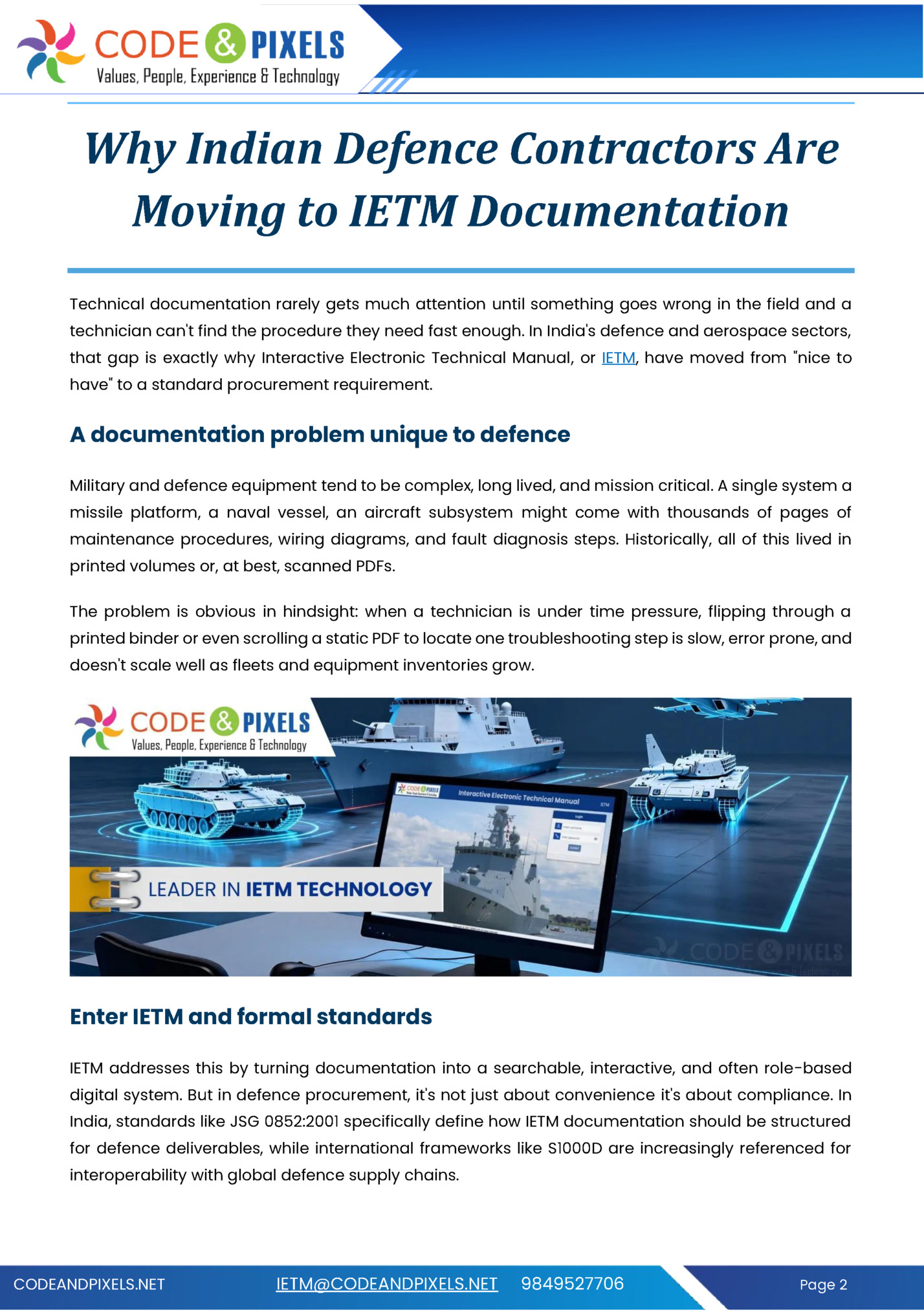
Moving to IETM Documentation Technical documentation rarely gets much attention until something goes wrong in the field and a technician can't find the procedure they need fast enough. In India's defence and aerospace sectors, that gap is exactly why Interactive Electronic Technical Manual, or IETM, have moved from "nice to have" to a standard procurement requirement. A documentation problem unique to defence Military and defence equipment tend to be complex, long lived, and mission critical. A single system a missile platform, a naval vessel, an aircraft subsystem might come with thousands of pages of maintenance procedures, wiring diagrams, and fault diagnosis steps. Historically, all of this lived in printed volumes or, at best, scanned PDFs. The problem is obvious in hindsight: when a technician is under time pressure, flipping through a printed binder or even scrolling a static PDF to locate one troubleshooting step is slow, error prone, and doesn't scale well as fleets and equipment inventories grow. Enter IETM and formal standards IETM addresses this by turning documentation into a searchable, interactive, and often role-based digital system. But in defence procurement, it's not just about convenience it's about compliance. In India, standards like JSG 0852:2001 specifically define how IETM documentation should be structured for defence deliverables, while international frameworks like S1000D are increasingly referenced for interoperability with global defence supply chains. CODEANDPIXELS.NET IETM@CODEANDPIXELS.NET 9849527706 Page 2
an IETM deliverable often isn't optional it's a contractual line item alongside the physical equipment itself. What "levels" mean in a defence context IETMs are typically classified by functional levels: • Level 1–2: Digitized or lightly cross-linked manuals, a step up from paper, but limited interactivity. • Level 3: Structured, database-driven content with improved search and navigation. • Level 4: Fully interactive manuals with dynamic content, multimedia, and often integration with diagnostic tooling this is frequently the target level for modern defence contracts. • Level 5: The most advanced tier, sometimes incorporating predictive maintenance data and deeper system integration. Higher levels mean more development effort, but they also translate to real operational payoff: faster fault isolation, reduced training time, and fewer dependencies on tribal knowledge held by a handful of experienced technicians. Why this matters beyond the paperwork There's a practical, human element here too. Defence technicians are often working in high pressure, time constrained environments sometimes in the field, sometimes on a ship or an aircraft, not in an office with an IT helpdesk nearby. A well-designed IETM that lets someone quickly search a fault code, view an interactive diagram, and jump straight to the relevant repair procedure can measurably reduce downtime. There's also a knowledge continuity angle. Defence platforms often stay in service for decades. Personnel rotate, retire, or move on. A properly structured IETM preserves institutional knowledge in a durable, searchable format rather than relying on decades old printed manuals that may be incomplete, outdated, or simply hard to find. The direction of travel As India's defence modernization efforts continue, documentation is increasingly treated as a firstclass deliverable rather than an afterthought. OEMs and system integrators evaluating IETM development partners are generally looking for demonstrated compliance with JSG and S1000D standards, proven experience across Level 3–4 implementations, and the ability to handle the sheer scale of documentation that comes with complex defence platforms. CODEANDPIXELS.NET IETM@CODEANDPIXELS.NET 9849527706 Page 3
IETM@CODEANDPIXELS.NET 9849527706 Page 4
Fleepit Digital © 2021