Minerals & Energy Resources
Minerals & Energy Resources
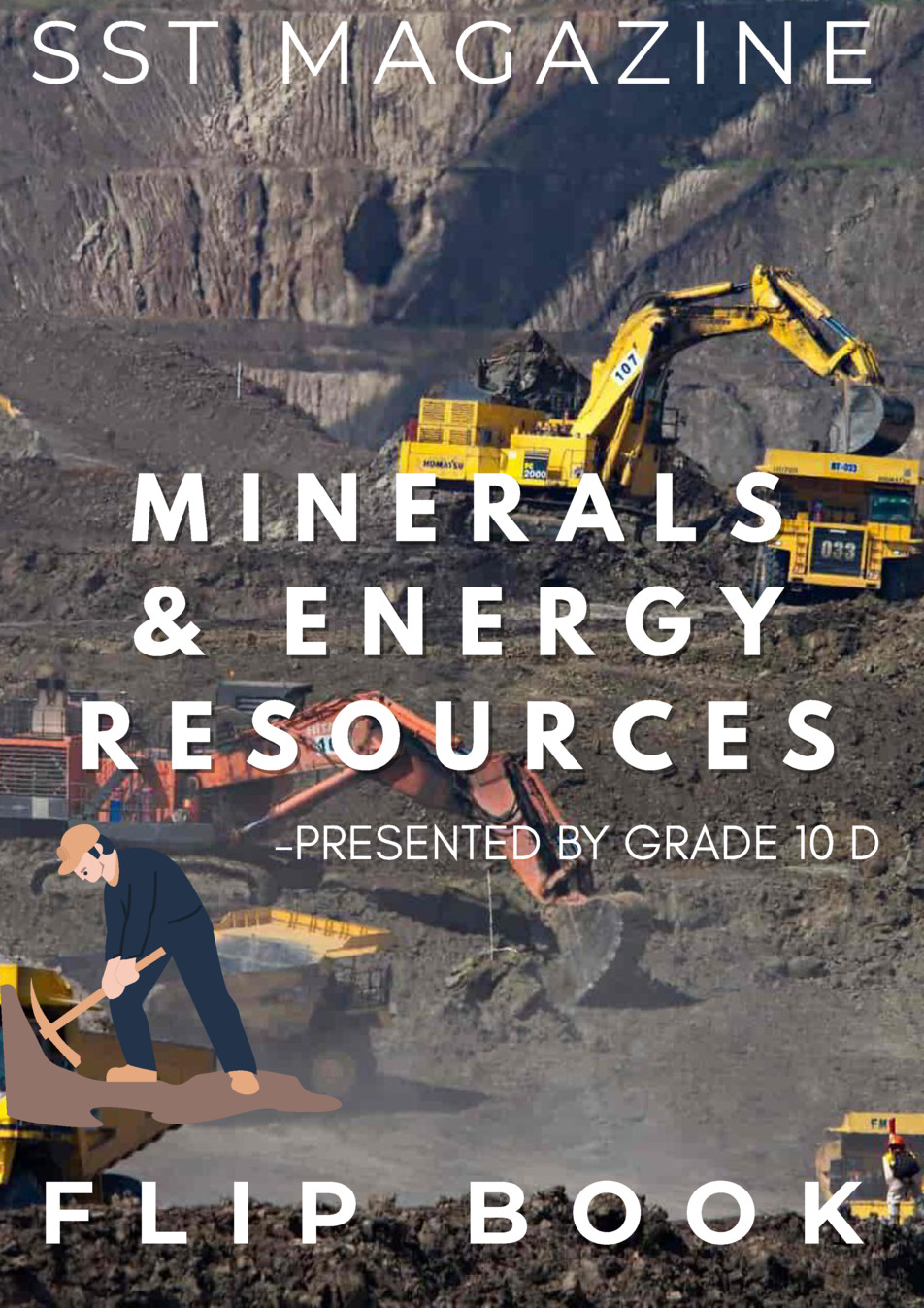
Minerals & Energy Resources: A Comprehensive Overview of Global Mining History, Distribution, Impacts, and Sustainable Pathways
1. The History of Mining: A Journey Through Time
Human engagement with minerals spans millennia, shaping technologies, economies, and societies from the earliest toolmaking to today’s advanced extraction and processing. In prehistoric periods, communities fashioned implements from naturally occurring stones such as flint and obsidian because of their sharpness and practicality for daily survival. The advent of copper and tin in the Bronze Age introduced a breakthrough in toolmaking and weaponry, transforming everyday life and resource exchange. During the Middle Ages, European mining expanded rapidly, with gold and silver driving wealth and trade networks that underpinned urban growth and monetary systems. In contemporary times, the focus has shifted toward sustainable practices and innovative materials, including synthetic minerals like cubic zirconia, which offer alternatives to virgin gemstones and reduce pressure on natural sources. The arc from curiosity to sophisticated industry illustrates how mining has continually redefined human capability while prompting ongoing debates about stewardship and responsibility. (Pg. 1)
2. Where Are Minerals Found? A Global Overview
The planet’s mineral wealth is unevenly distributed, with certain regions containing vast, historically productive reserves while others remain less endowed. For iron ore, Australia dominates the global stock, followed by Brazil and China with substantially smaller shares. The copper picture centers on Chile as the largest producer, with the DRC and Peru also contributing significant portions of world supply. These patterns reflect a mix of geology, investment, infrastructure, and governance that shape not only extraction rates but also geopolitical dynamics and price volatility. Understanding these geographic patterns helps explain why some economies rely heavily on particular minerals and how global markets respond to shifts in demand, technology, or policy. (Pg. 2)
3. Metallic Minerals: Powering Industries
Metallic minerals play a central role in building modern economies, serving diverse sectors from construction to electronics. Ferrous materials such as iron ore and manganese are essential for steel production, underpinning infrastructure, transportation, and manufacturing. Copper, valued for its conductivity and ductility, remains a cornerstone of electrical systems, wiring, and component fabrication. Gold, while historically treasured for jewelry and bullion, also finds specialized industrial applications due to its stability and resistance to corrosion. Together, these metals form the backbone of industrial output, shaping policy choices, investment strategies, and technological evolution across regions. (Pg. 3)
4. Non-Metallic and Energy Minerals: The Building Blocks of Society
Non-metallic minerals and energy-related resources support foundational sectors such as construction, energy generation, and industrial processes. Nonmetallics like sand, gravel, and limestone are indispensable for making concrete, glass, and various building products. Limestone, in particular, also plays a pivotal role in cement production, linking quarrying activities to urban development and modernization. Energy minerals, including coal, petroleum, and natural gas, constitute primary energy sources that drive transportation, power generation, and manufacturing. The regional reliance on coal, especially in India, highlights how resource endowments influence energy choices and industrial strategy, while offshore and onshore fields continue to shape national energy security. (Pg. 4)
5. Conventional and Non-Conventional Energy Sources
Energy sources are commonly categorized into conventional, non-renewable resources and non-conventional, renewable options. Coal, oil, and natural gas have long powered industry and mobility, yet their finite nature and environmental footprint have spurred a search for cleaner substitutes and efficiency improvements. In contrast, non-conventional energy technologies—such as solar, wind, geothermal, and tidal systems—offer sustainable generation paths that reduce emissions and dependence on fossil fuels. Nations like India pursue ambitious solar programs to diversify their energy mix, while global momentum grows toward electrification and decarbonization. The transition involves policy support, investment in grid modernization, and continued innovation in energy storage and efficiency. (Pg. 5)
6. Extraction of Minerals: Methods and Technologies
Mining methods differ by geology, depth, and resource type, balancing productivity with safety and environmental considerations. Open-cast mining dominates surface mineral extraction when deposits lie near the surface, enabling large-scale production but often requiring robust reclamation to mitigate land disturbance. Underground mining serves deeper ore bodies, offering access to precious and base metals with potentially lower surface disruption but higher operational risks. Quarrying targets non-metallic minerals like limestone and marble, where precise removal preserves quality material while managing landscape impact. Advances in blasting, blasting controls, vibration monitoring, and selective extraction contribute to more efficient operations and enhanced environmental stewardship. (Pg. 6)
7. Distribution of Resources and Energy Minerals: A Global Perspective
Resource endowments are globally uneven, with strategic implications for economies and security. Reserves of iron ore and bauxite are concentrated in regions such as Australia, Brazil, and India, shaping export flows and industrial capacity. Major coal production centers include Russia, the United States, and China, influencing energy markets, price dynamics, and policy levers. In terms of energy, the Middle East remains a central hub for petroleum reserves, with Saudi Arabia, Iraq, and Iran playing pivotal roles in global supply. This distribution informs geopolitical alliances, investment prioritization, and national development strategies as countries balance resource dependence with diversification and sustainability goals. (Pg. 7)
8. Exploitation of Minerals and Resources: Challenges and Consequences
Extractive activities bring a mix of benefits and consequences, including economic gains and environmental or social costs. Over-extraction can deplete finite resources and degrade ecosystems, while illegal mining undermines governance, finances, and public health. A telling case is the Kolar Gold Mines, once a thriving operation that was abandoned after resource exhaustion and severe environmental impacts, notably pollution from cyanide-related processes. These examples illustrate the tension between growth and responsibility, underscoring the need for governance, monitoring, and remediation to protect communities and ecosystems as mining proceeds. (Pg. 8)
9. Conservation of Minerals and Resources: A Sustainable Approach
To safeguard future access to minerals, sustainable management emphasizes reducing the demand for virgin resources and extending the life of existing ones. Recycling metals such as aluminum, copper, and iron yields substantial energy savings and minimizes extraction footprints; for instance, aluminum recycling can cut energy use by around three-quarters and often exceeds 90% energy savings in certain processes. Substitution and innovation further reduce mineral intensity, as technologies replace scarce materials with alternatives (e.g., optical fibers diminishing copper demand). Sustainable mining practices—such as underground methods, remote sensing, and controlled blasting—aim to lower environmental harm while maintaining recovery efficiency and safety. (Pg. 9)
10. Nationwide Troubles: The Socio-Economic and Environmental Impacts
Mining intersect with environmental health and social structures in multifaceted ways. Environmental effects include deforestation, air and water pollution, soil degradation, and habitat disturbance, all of which can threaten local livelihoods and biodiversity. Human health concerns arise from exposure to dust, chemicals, and toxic byproducts, leading to respiratory and other long-term conditions for workers and nearby communities. Socio-economic outcomes range from revenue generation and job creation to displacement of communities and inequities driven by resource booms and busts. The displacement of thousands of families in affected regions highlights the social costs, while illegal mining introduces safety hazards and governance challenges. (Pg. 10)
11. Environmental and Human Health Impacts
The environmental and health toll of mining is broad and persistent. Deforestation and habitat loss threaten ecosystems and indigenous ways of life, as seen in areas where mining projects encroach on forests and protected lands. Pollution of air and water streams damages communities and wildlife, with notable incidents that illustrate the severity of contamination and long-term remediation needs. Miners face increased health risks from exposure to silica, mercury, lead, and other toxins, resulting in respiratory diseases and systemic toxicity. Addressing these impacts requires stronger safeguards, health monitoring, and transparent reporting to protect workers and residents alike. (Pg. 11)
12. Social and Economic Impacts
Mining reshapes social fabrics and economic structures in complex ways. While it can drive local revenue, infrastructure, and employment, it may also cause displacement, inequality, and volatility in communities dependent on resource rents. The fight for indigenous rights and land protection, as seen in various regional struggles, demonstrates the social dimension of mining governance. Child labor remains a critical concern in some mining sectors, underscoring gaps in protection and enforcement. The broader economic narrative includes the resource curse phenomenon, where abundance can destabilize rather than empower communities if governance and distribution are mismanaged. (Pg. 12)
13. Political and Security Impacts
Mineral wealth frequently influences political dynamics and security concerns. Competition for control over valuable resources has fueled conflicts and shaped power relations, with illicit trade and resource-driven violence compromising stability. Local communities have demonstrated the potential for organized resistance, as seen in successful mobilization to block projects deemed harmful to culture or environment. Debates over new frontiers, such as deep-sea mining, raise questions about governance, transparency, and precaution given the uncertain ecological risks to marine ecosystems. International frameworks and norms seek to balance development with protection of shared resources. (Pg. 13)
14. Case Highlights: Mining Disasters and Their Consequences
Highlighting the risks associated with extractive activities helps illustrate the need for stringent safety measures and accountability. The Deepwater Horizon incident in the Gulf of Mexico, which released millions of barrels of oil, exemplified the catastrophic consequences of offshore drilling for ecosystems and coastal communities. In Neyveli, Tamil Nadu, mining activities led to land degradation, pollution, and displacement, revealing the social and environmental trade-offs of resource extraction. Conversely, the Bhadla Solar Park in Rajasthan stands as a positive example of renewable energy expansion, demonstrating how transition projects can foster sustainable development while reducing fossil fuel dependence. (Pg. 14)
15. Emerging Issues and Global Response
As mining and energy landscapes evolve, new challenges demand coordinated global action. Deep-sea mining has sparked debate about potential harm to fragile ocean ecosystems, prompting calls for cautious progression and research-led pauses until assessments are clearer. International efforts to prevent conflict in mineral-rich regions—such as the Kimberley Process for dangerous diamonds and regulatory frameworks under the UN International Seabed Authority—seek to curb illicit trade and ensure responsible sourcing. These responses reflect a growing consensus that economic gain must be aligned with environmental protection, social equity, and governance reform. (Pg. 15)
16. Global Actions and Sustainable Practices
The path forward hinges on scalable, cross-border collaborations and practical shifts in how resources are managed. Recycling and waste minimization significantly lower the demand for new extraction, with energy savings and material circularity fostering resilience in supply chains. The broader energy transition is advancing through investment in solar, wind, and geothermal technologies, spurred by leadership from nations actively expanding renewables. In India, ambitious solar targets under the National Solar Mission exemplify national-level commitment to decarbonization, while other economies accelerate the shift to cleaner energy and more sustainable mining practices. (Pg. 16)
Conclusion: The Path Forward
As global demand for minerals and energy continues to rise, the overarching challenge is to reconcile economic development with environmental stewardship and social justice. By embracing cleaner energy technologies, expanding recycling, and implementing more sustainable mining methods, societies can reduce ecological footprints while preserving resource availability for future generations. The convergence of innovation, policy, and international cooperation offers a viable route to grow economies without compromising the health of the planet or the well-being of communities that depend on these resources. (Pg. 17)