Minerals & Energy Resources
Minerals & Energy Resources
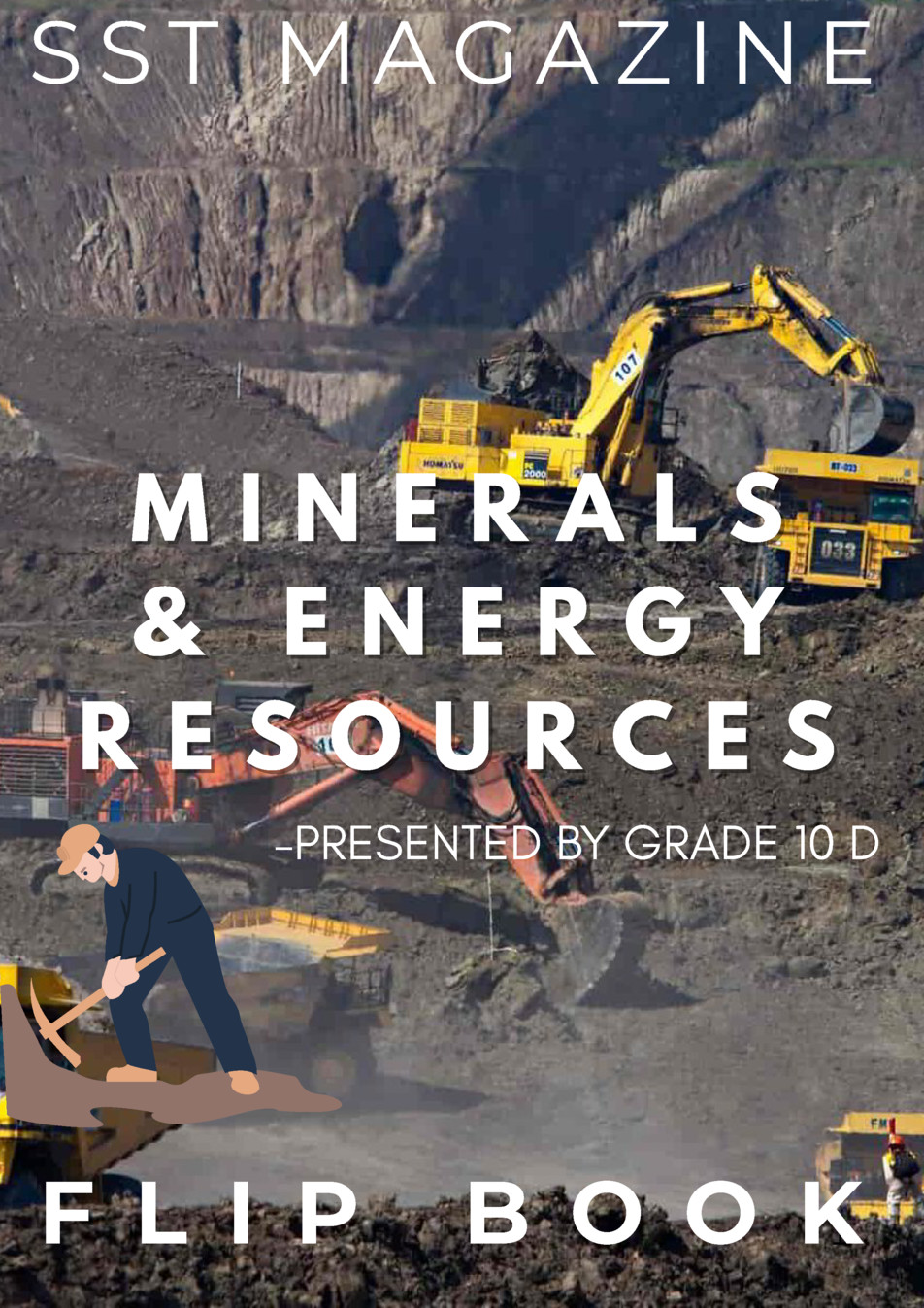
Meta Title: Minerals & Energy Resources — A Comprehensive Review Tracing the History of Mining, Global Distribution of Resources, Impacts on Society and Environment, and the Transition to Sustainable Practices and Renewable Energy Technologies
1. The History of Mining
Mining has acted as a powerful catalyst in human development, shaping how civilizations grow, trade, and innovate. In ancient times, early communities carved tools from naturally occurring stones to meet daily survival needs, leveraging the sharpness and durability of materials like flint and obsidian. The advent of metallurgy marked a turning point: the discovery and use of copper and tin to create bronze transformed weaponry, tools, and crafts, enabling more sophisticated societies and broader trade networks. During the Middle Ages, mineral extraction expanded across Europe, with gold and silver fueling wealth and commercial exchange. In the modern era, the focus shifted toward sustainable practices and technological advancement, including the emergence of synthetic minerals that can supplement or substitute natural gems, reflecting a broader responsibility toward resource stewardship.
As mining evolved, it increasingly connected culture, economy, and technology. Early mining relied on surface-accessible deposits and simple techniques, while later periods introduced complex mining systems, refined ore processing, and organizational methods that supported larger-scale operations. Today, the field emphasizes balancing productivity with environmental and social considerations, recognizing that mining's footprint extends beyond extraction sites to ecosystems, communities, and the long-term availability of resources. This historical arc demonstrates how human ingenuity has repeatedly reshaped not just our material world, but also policy, industry standards, and our approach to sustainable development.
2. Where Are Minerals Found? A Global Overview
Mineral deposits do not occur evenly around the globe; their distribution reflects geological history, tectonic processes, and climate over millions of years. Regions rich in iron ore, for example, dominate certain continents, while copper concentrates cluster in others where ore bodies formed under unique conditions. In modern global mining, Australia stands out with a substantial share of iron ore reserves, followed by Brazil and China, illustrating how geography and policy shape supply potential. Copper production also centers in specific nations, with Chile contributing a large portion of world output, and other significant producers including the Democratic Republic of Congo and Peru. These patterns affect price, investment, and strategic planning for energy and manufacturing sectors worldwide.
Beyond bulk metals, other key minerals exhibit distinct geographic footprints. Ferrous minerals such as iron ore and manganese underpin steelmaking and construction, often arising from sedimentary or igneous formations in particular belts or basins. Copper remains vital for electrical infrastructure and consumer electronics, sourced from regions where high-grade ore bodies are accessible and historically developed. Precious metals like gold, silver, and related materials appear in diverse contexts—from large-scale mines to smaller operations—reflecting their enduring demand in industry, jewelry, and investment. The uneven global map of mineral resources thus informs international trade, geopolitical considerations, and the resilience of supply chains for modern economies.
3. Metallic Minerals: Powering Industries
Metallic minerals are essential for a wide range of industrial applications, underpinning construction, machinery, transportation, and electronics. Ferrous minerals, notably iron ore and manganese, are the backbone of steel production, providing the structural material for infrastructure and manufacturing. Non-ferrous metals, including copper, are critical for wiring, electronics, and various alloys, reflecting their conductivity and adaptability. Gold, mined in regions such as Karnataka’s Hutti area, serves dual roles as a store of value and as a material for high-precision components used in specialized technologies. Across these groups, the demand for minerals shapes technological progress, energy use, and economic development, while also driving considerations about supply security and environmental stewardship.
Precious metals—gold, silver, and platinum—maintain a broad spectrum of applications, from jewelry and investment to industrial catalysts and electronics. Their values are influenced by market dynamics, mining policies, and geopolitical events, which in turn affect exploration priorities and investment in extraction technologies. When paired with other metallic minerals, these resources contribute to a diversified supply landscape that supports both everyday needs and strategic industries, highlighting the interdependence between resource availability and innovation across global economies.
4. Non-Metallic and Energy Minerals: The Building Blocks
Non-metallic minerals and energy resources form the practical foundation of modern infrastructure and energy systems. Non-metallics such as sand, gravel, and limestone are indispensable for construction, road building, and cement production, providing bulk material inputs that enable urban development and resilience. Energy minerals—coal, petroleum, and natural gas—are central to powering mills, factories, vehicles, and households, shaping energy security and economic performance. In many regions, including India, coal remains a dominant energy source, with rich deposits supporting power generation and industrial activity, while offshore fields contribute oil and gas to national energy mixes. This combination of materials underpins both daily life and long-term growth strategies, underscoring the need for careful resource management and transition planning.
Understanding the balance between mineral inputs and energy carriers helps illuminate how societies organize extraction, processing, and consumption. The dependence on non-metallic minerals for construction aligns with urban expansion and modernization, whereas energy minerals influence policy decisions, pricing, and supply resilience. As demand patterns shift toward cleaner energy and decarbonization, the role of these resources will adapt, calling for innovations in processing, substitution, and recycling to reduce environmental pressures while preserving essential economic functions.
5. Conventional and Non-Conventional Energy Sources
Energy resources are typically categorized into conventional (non-renewable) and non-conventional (renewable) families, each with distinct implications for sustainability and development. Conventional energy sources—coal, petroleum, and natural gas—have long powered industrial growth and mobility, but their finite nature and environmental footprint pose challenges for future energy systems. Coal, in particular, remains a major energy contributor in several economies, shaping electricity generation, manufacturing costs, and policy debates about emissions and air quality. Non-conventional energy, which includes solar, wind, geothermal, and tidal technologies, offers cleaner alternatives and opportunities to diversify supply while reducing greenhouse gas emissions. National programs, such as ambitious solar strategies, are part of a broader move toward energy transition and resilience.
The interplay between these energy categories influences investment, technology development, and regulatory frameworks. Transition plans frequently hinge on balancing reliability and cost with environmental objectives, leading to hybrid approaches that combine renewables with traditional fuels, improved efficiency, and energy storage solutions. As countries chart decarbonization pathways, the emphasis falls on innovation, policy alignment, and public acceptance to ensure a dependable and affordable energy future for all sectors of society.
6. Extraction of Minerals: Methods and Technologies
Mineral extraction employs a spectrum of techniques tailored to deposit type, depth, and surrounding geology. Open-cast mining is common for surface-bound resources like coal and iron ore, enabling efficient access and large-scale production but often requiring land restoration and careful environmental controls. Underground mining targets deeper ore bodies, using reinforced tunnels and ventilation systems to reach valuable minerals such as gold and copper while mitigating surface disturbance. Quarrying specializes in non-metallic materials like limestone and marble, where controlled blasting and processing yield construction materials. Across these methods, advancements in extraction technology strive to improve safety, reduce environmental impact, and optimize ore recovery, reflecting an ongoing commitment to responsible resource development.
Technologies such as remote sensing, automation, and precision blasting contribute to more efficient operations and improved environmental outcomes. In parallel, supporting infrastructures—water management, waste rock handling, and rehabilitation plans—play crucial roles in minimizing ecological disruption. The evolving toolkit of mining methods demonstrates how industry adapts to geologic realities while aligning with evolving standards for safety, transparency, and community engagement during project life cycles.
7. Distribution of Resources and Energy: A Global Perspective
Resource distribution varies widely by region, shaping strategic planning for economies and industries worldwide. Large iron ore reserves cluster in certain countries, influencing steel supply chains, export patterns, and investment flows. Energy minerals show a similar geographic concentration; for example, substantial petroleum reserves in the Middle East position the region as a pivotal actor in global energy markets, while coal production remains concentrated in a few major producers. Regional dynamics—such as the prominence of specific mining hubs or the emergence of new exploration frontiers—affect pricing, trade negotiations, and national strategies for energy independence and industrial growth.
Reserves and resources are not static; geological exploration, technological breakthroughs, and policy shifts can reframe the landscape. Countries with well-developed mining and energy sectors often pursue diversification to reduce dependence on a single commodity or market. This reality underscores the importance of transparent reporting, sustainable extraction practices, and international cooperation to ensure stable supply and responsible stewardship of shared resources for future generations.
8. Exploitation of Minerals and Resources: Challenges and Consequences
Resource exploitation often carries environmental and socio-economic costs that can undermine long-term well-being. Over-extraction depletes ore bodies faster than ecosystems can recover, leading to habitat loss, soil erosion, and water contamination. Illegal mining compounds these problems by bypassing regulations, increasing safety hazards, and diverting revenue away from communities and governments. A well-documented case is the abandonment of certain historic mines after resource exhaustion, accompanied by severe environmental damage and pollution, illustrating how poor management can leave lasting scars on landscapes and local livelihoods. These challenges stress the need for integrated planning that emphasizes restoration, regulation, and community participation.
Addressing exploitation requires a combination of monitoring, enforcement, and adaptive management. Case studies show that when communities organize to defend environmental and cultural values, they can curtail or redirect mining projects. Sustainable governance thus hinges on balancing demand and supply with ecological integrity and social equity, ensuring that extraction does not undermine the health and resilience of current and future generations.
9. Conservation of Minerals and Resources: A Sustainable Approach
Conserving mineral resources involves strategies that extend the life of deposits and reduce energy use across the value chain. Recycling metals such as aluminum, copper, and iron offers substantial energy savings and diminishes the need to access virgin ore, contributing to lower environmental footprints. Substitution—finding alternative materials or technologies that lessen demand for scarce minerals—helps alleviate pressure on certain supply lines. Sustainable mining practices emphasize measures like underground mining for sensitive deposits, remote sensing to minimize surface disturbance, and controlled blasting to protect nearby ecosystems and communities. Collectively, these approaches support a circular economy while maintaining material availability for essential industries.
Adopting a holistic approach to resource conservation also involves design choices, product stewardship, and end-of-life management. By integrating recycling, substitution, and cleaner extraction techniques, societies can reduce waste, lower emissions, and create a foundation for a more resilient industrial system. The goal is to decouple growth from unsustainable extraction, ensuring minerals and energy resources remain accessible for generations to come without compromising ecological integrity or public health.
10. Nationwide Troubles: Socio-Economic and Environmental Impacts
Mining activities shape societies in complex ways, bringing benefits like job creation and revenue while also generating social and environmental strains. Resource-driven development can lead to economic growth in some regions, but it may also trigger displacement of communities, disruption of local livelihoods, and inequalities in sharing benefits. Environmental consequences—deforestation, air and water pollution, and soil degradation—pose immediate risks to human health and ecosystem integrity. Notable examples include persistent fires and land-use changes tied to coal and other mineral resources, which highlight long-term environmental trade-offs and the need for vigilant stewardship and remediation programs.
Policy responses and community resilience efforts are essential to mitigate adverse effects. When communities organize to assert rights, demand accountability, and participate in decision-making, mining projects can align more closely with social objectives. Sustainable resource management thus requires balancing economic gains with environmental protection, health considerations, and inclusive development that leaves room for cultural and traditional practices to thrive.
11. Environmental and Human Health Impacts
The environmental and health dimensions of mining are interconnected and far-reaching. Deforestation and habitat loss reduce biodiversity and alter local climate patterns, while pollution from dust, chemicals, and waste streams can degrade air and water quality for neighboring populations. Health effects among workers and nearby residents range from respiratory diseases to exposure-related toxicities, underscoring the human cost of resource extraction. Historical cases of water and soil contamination illustrate how pollutants can persist for years, affecting communities long after mining activities cease. Addressing these impacts demands proactive mitigation, monitoring, and remediation, as well as stricter safety standards for workers and suppliers across the value chain.
Efforts to reduce health risks include better ventilation and protective equipment in mines, cleaner processing technologies, and rigorous environmental monitoring. The experiences of affected communities also demonstrate the importance of inclusive governance, access to information, and transparent reporting so that people understand potential hazards and can participate in protective measures. Sustainable mining ultimately requires a precautionary approach that prioritizes health and environmental quality alongside economic objectives.
12. Social and Economic Impacts
Mining can drive economic growth through job creation, local investment, and public revenue, yet it can also generate social tensions and economic volatility. Displacement of families from traditional lands and livelihoods can lead to conflicts over resources and cultural erosion. Instances of successful resistance by indigenous groups illustrate the power of organized communities to influence decisions and safeguard rights, setting precedents for future engagements with developers. The broader economy may experience benefits from mining-driven growth, but it can also suffer from volatility driven by commodity price swings, regulatory changes, and the “resource curse” phenomenon that can undermine diversification and long-term development.
Child labor remains a serious concern in some mining contexts, underscoring ethical dimensions that extend beyond environmental and health considerations. Responsible supply chains, community development programs, and transparent reporting are essential to ensure that economic gains do not come at the expense of vulnerable populations. A balanced approach seeks to maximize local benefits while building skills, infrastructure, and social protections that support communities over the lifecycle of mining projects and beyond.
13. Political and Security Impacts
Natural resources are frequently linked to political dynamics and security concerns. Competition over minerals can fuel conflicts, complicate governance, and drive external interference as different actors seek to control valuable assets. Movements and protests by local communities reflecting environmental and cultural grievances demonstrate the potential for civil action to influence policy decisions and project outcomes. In addition, debates around emerging technologies—such as deep-sea mining—raise questions about ecological risk, sovereignty, and international norms, prompting calls for precaution and governance that protects marine ecosystems while accommodating responsible exploration.
Global policy tools and frameworks—like efforts to prevent “blood minerals” from fueling conflict and to regulate seabed activities—seek to align resource development with peace, human rights, and environmental stewardship. The evolving regulatory landscape emphasizes transparency, accountability, and stakeholder engagement as essential ingredients for reducing tensions and ensuring that resources contribute to broad-based prosperity rather than conflict.
14. Case Highlights: Mining Disasters and Their Consequences
Illustrative disasters remind us of the stakes involved in mining operations. Offshore oil spills have demonstrated the catastrophic environmental and economic costs of drilling failures, while onshore mining practices have caused land degradation and community displacement in various regions. Positive counterpoints exist, such as solar energy initiatives that reduce dependence on fossil fuels and promote sustainable development in places with abundant sunlight. These case studies illuminate both the risks of traditional extraction and the potential of renewable options to contribute to cleaner, more resilient energy systems.
Learning from past incidents emphasizes the importance of robust safety culture, rigorous environmental safeguards, and transparent communication with affected communities. It also reinforces the value of diversifying energy portfolios and investing in technologies that minimize ecological harm while supporting livelihoods and development goals. The contrasts between disasters and successful transitions underscore the need for continuous improvement and accountable governance across the mining and energy sectors.
15. Emerging Issues and Global Response
The mining sector faces a range of evolving challenges, including debates over deep-sea mining and its potential ecological repercussions. Environmental groups advocate for cautious approaches or pauses until science clarifies the risks to marine life and ecosystems, while some nations push for continued exploration as part of their strategic resource agendas. International efforts to curb conflicts over minerals continue to gain traction, with mechanisms designed to promote responsible sourcing and reduce the flow of illicit materials into global markets. These conversations reflect a broader trend toward integrating environmental and social safeguards into economic development strategies.
Global actions to prevent conflict over resources, such as certification schemes and collaborative governance, underscore the importance of ethics, transparency, and shared responsibility. The Kimberley Process, for example, illustrates how disciplined oversight can reduce illicit trade in valuable commodities, while the International Seabed Authority seeks to establish norms for ocean-floor activities. Together, these initiatives point toward a more responsible global framework where minerals and energy resources support peace, prosperity, and sustainable growth rather than instability and harm.
16. Global Actions and Sustainable Practices
Advancing toward sustainability involves a combination of resource efficiency, recycling, and a transition to cleaner energy. Recycling metals—particularly aluminum, copper, and iron—offers substantial energy savings and reduces the need for virgin ore extraction, strengthening environmental performance across industries. Substituting scarce or environmentally problematic minerals with viable alternatives also helps ease demand pressures and extends resource lifetimes. The mining sector increasingly adopts practices that minimize waste, optimize energy use, and protect ecosystems, aligning with broader efforts to decarbonize economies and promote circular economy principles.
As nations pursue energy transitions, leadership in solar, wind, and other renewables gains prominence, with major economies investing in capacity expansion and grid modernization. The integration of renewable energy sources with efficient storage, advanced manufacturing, and sustainable mining practices creates a pathway to higher resilience, energy security, and economic vitality. In particular, national solar initiatives and cross-border collaborations illustrate how countries can accelerate the adoption of clean energy while maintaining reliable supply chains and fostering inclusive growth across communities and regions.
Conclusion: The Path Forward
Looking ahead, the global demand for minerals and energy resources is unlikely to abate, making sustainable stewardship essential for the planet’s health and future prosperity. Achieving this balance requires a combination of responsible extraction, recycling, substitution, and a broader shift toward clean energy systems. By embracing innovative technologies, strengthening governance, and fostering international cooperation, societies can reduce environmental harm, promote social equity, and ensure that resources continue to support growth without compromising the well-being of people and ecosystems. A future shaped by cleaner energy, smarter resource management, and inclusive development is within reach when policymakers, industry, and communities collaborate with transparency and purpose.