Volume 27 Issue 2
Volume 27 Issue 2
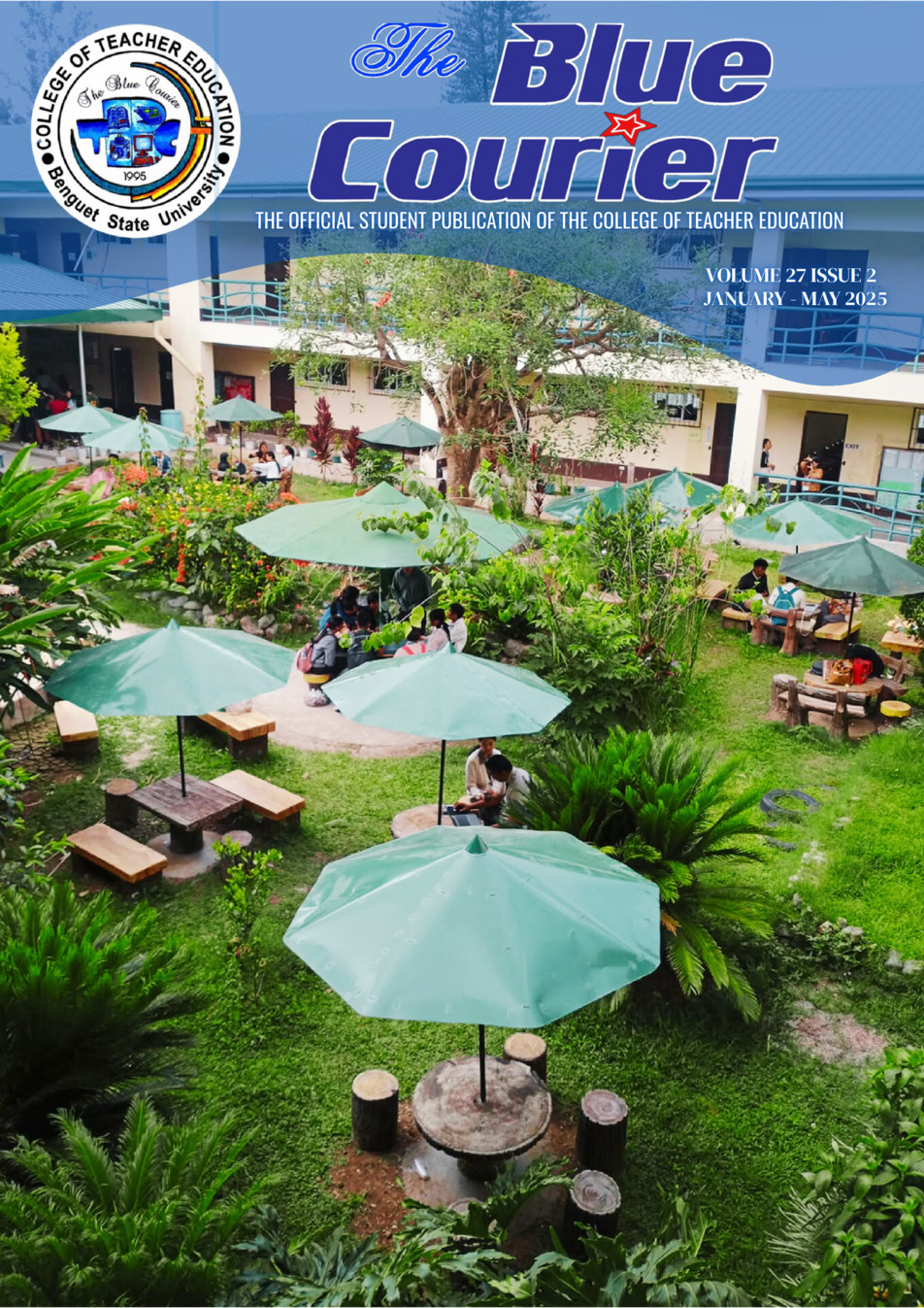
Volume 27, Issue 2: The Blue Courier — Education, Leadership, Sport, Campus Life, and Democratic Literacy in 2025
Summary
Volume 27, Issue 2 of The Blue Courier offers a broad portrait of campus life at the College of Teacher Education in early 2025. It spotlights student leadership, athletic achievement, community outreach, and the evolving role of media and governance in society. Across editorials, features, and reports, the magazine emphasizes education as a catalyst for regional development, highlighting resilience, collaboration, and service as core values. [Page 3]
The issue opens with reflections on how awards should reflect genuine leadership rather than merely formal recognition. It argues that while accolades can inspire, true impact is demonstrated through consistent, meaningful service and project outcomes. The piece calls for clearer, more transparent award criteria that acknowledge diverse forms of student work and the realities faced by different organizations, while preserving the motivational function of recognition. [Page 3]
A prominent feature chronicles the journey of John Paul Roldan, a Mountain Province-born track athlete pursuing Secondary Education with a Filipino major. Since his first year, he has dominated intramural events and earned honors at regional competitions (CARASUC and SCUAA). He credits tenacity, overcoming early asthma, and inspiration from stories of teamwork to fuel his progress, turning personal challenges into campus pride. [Page 4]
The narrative continues by detailing the hardships of balancing multiple events, the emotional toll of competition, and the resolve required to persevere. Roldan envisions continuing to represent the university through his final year, seeking further success at the SCUAA level and elevating the college’s standing through steady dedication. [Page 4]
In parallel, the issue highlights how athletic achievement is framed as part of a larger arc—chapters of struggle and triumph that shape a student-athlete’s identity. The piece highlights the broader campus culture of sport as a source of motivation, school pride, and inspiration for peers who share similar dreams. [Page 4]
A second major feature shifts focus to the campus environment, portraying the student lounge as a vibrant, multi-functional space. Rather than a mere backdrop, the lounge serves as a stress-relief zone, a catalyst for spontaneous collaboration, and a hub for informal learning. It functions as a retreat for quick rest, a site for rehearsals and presentations, and even a small marketplace where students trade meals and snacks to sustain busy schedules. [Page 4]
The magazine then recounts the “Shedom” project—a colorfully named initiative by the Secondary Education Pre-service Teachers Society (SEPTS) that installed new green umbrellas to shade the CTE garden. The project, though delayed by material and funding gaps, was advanced with roughly ₱40,000 in funds and support from the BSU President, who coordinated with the General Services Office. The completed shade structure transformed the outdoor area into a usable, open-air learning and recreation space, with students using it for study, research, and relaxation. [Page 4]
The issue also delves into a critical examination of the entertainment industry’s influence on culture and politics. The author argues that celebrities and media personalities increasingly transition into governance, shaping public discourse and voter perceptions. The piece analyzes the 2025 midterm landscape, touching on infrastructure priorities, human rights concerns, and governance challenges, while noting the pervasive role of social media in forming political opinions. [Page 7]
Further, the article discusses the voter landscape, emphasizing the importance of informed participation. It highlights the rising influence of younger voters and the dangers of misinformation, urging citizens to evaluate candidates based on track records, policy relevance, and financial transparency rather than celebrity status or online popularity. The discussion references contemporary examples of celebrity-turned-politicians and contrasts them with leaders who earned public trust through tangible reforms. [Page 7]
Throughout, the narrative insists that democracy requires active citizenship beyond election day. Readers are encouraged to fact-check online rhetoric, attend public forums, and demand accountability to ensure governance that matches stated ideals. The piece underscores that genuine leadership blends charisma with competence and that a robust, educated electorate is essential for sustaining democratic progress. [Page 7]
Taken together, Volume 27, Issue 2 presents a cohesive portrait of how education, student leadership, athletic excellence, campus spaces, and political literacy intersect on a university campus. By highlighting real-life stories of resilience, collaborative projects, and critical civic engagement, the publication invites readers to reflect on their roles as learners, servants, and engaged citizens in a rapidly evolving society. [Page 7]