ASU Community Recipe & Storybook
ASU Community Recipe & Storybook
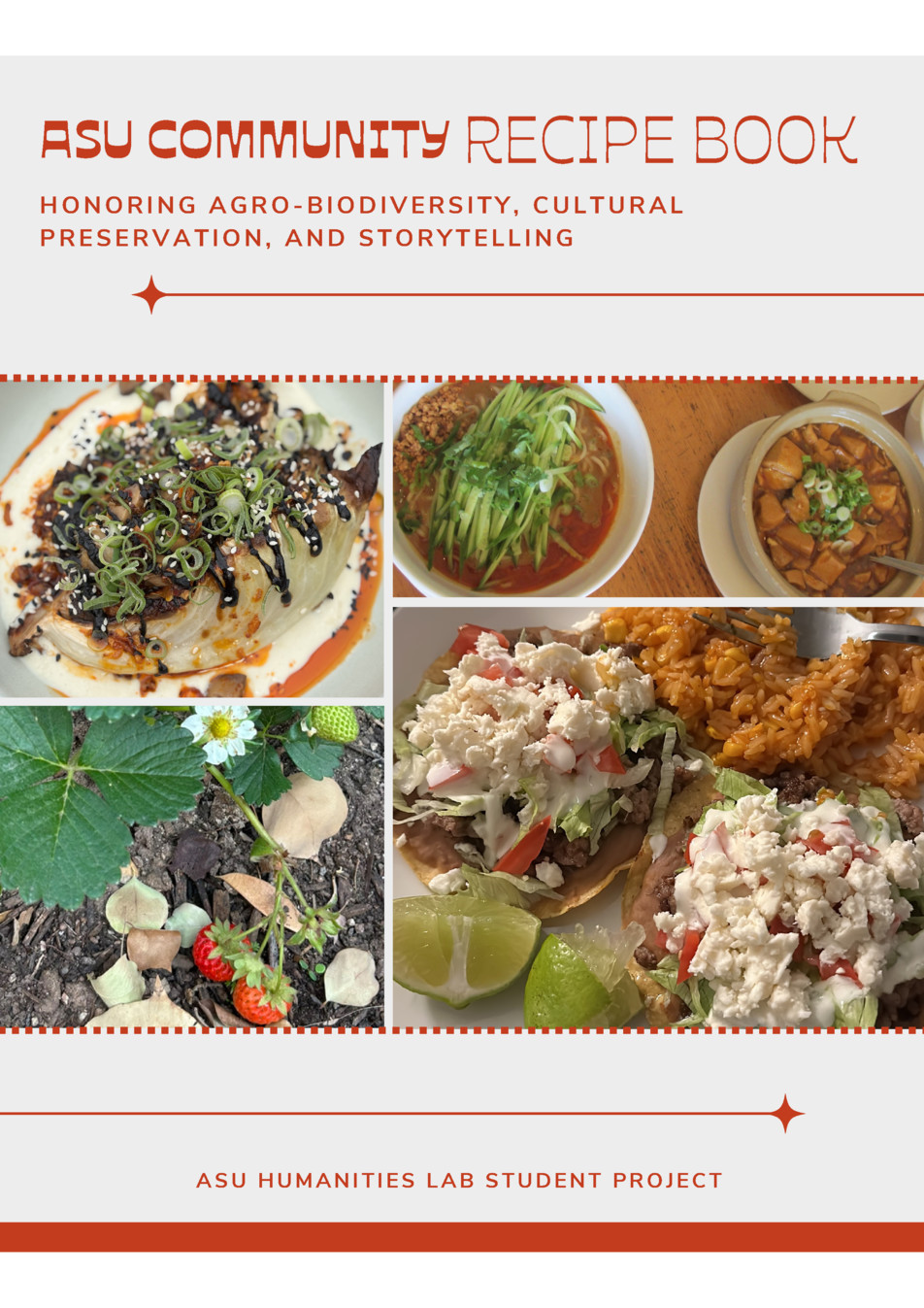
ASU Community Recipe & Storybook: Agro-biodiversity, Cultural Preservation, and Storytelling
Overview and Goals
The project presented by ASU centers on documenting and celebrating the interweaving of food, culture, and ecological stewardship through a community-driven recipe book and storytelling platform. It recognizes the collaborative effort behind the endeavor, acknowledging the guidance of faculty and the contributions of students and partners who supported the creation of a digital anthology that honors diverse agricultural traditions. The work is framed as a humanities initiative that uses culinary practices to illuminate broader questions about biodiversity, cultural memory, and community resilience.
At its core, the project articulates a concept known as agro-biodiversity, which encompasses the variety of crops, seeds, animals, and associated microorganisms that sustain agricultural systems. This breadth of living diversity underpins habitat health, productivity, and the capacity of farming ecosystems to endure changing conditions. Agro-biodiversity is presented as a critical subset of overall biodiversity, emphasizing the abundance and diversity of agricultural resources that communities rely on for nourishment, livelihood, and cultural expression. The narrative notes that maintaining this diversity is vital for the stability of land and the cultural practices tied to it, especially as agricultural modernization—characterized by mechanization, chemical inputs, and monocultures—has historically eroded both ecological resilience and traditional knowledge tied to foodways.
The text connects the idea of agro-biodiversity to the concept of place, arguing that meaningful eating is inseparable from the places where food is grown and the people who steward those lands. It stresses that preserving land, seeds, and farming practices is not only an ecological concern but a humane one, rooted in the memory and identity of communities. The adage about eating being connected to roots is used to underscore how re-grounding oneself in land and food can reconnect individuals to each other, especially in societies that risk losing touch with origins and cultural contexts. The narrative frames agro-biodiversity as both a scientific and a cultural project, where the health of ecosystems intersects with the vitality of cultural traditions and social well-being.
Within the Humanities Lab framework, students undertake projects that respond to real-world social challenges. The Growing Biodiverse Cultures initiative specifically honors the food traditions within the ASU community, aiming to celebrate cultural diversity while also drawing attention to practical issues around food access faced by university students. The project seeks to honor a wide spectrum of culinary practices and experiences across campus, highlighting how food heritage can foster inclusion and mutual understanding while drawing attention to systemic barriers to equitable nourishment.
A central part of the project is its exploration of food access for ASU students and how cultural foods shape identity and belonging. By foregrounding varied cultural food traditions, the initiative seeks to illustrate how dining experiences reflect larger questions of equity, inclusion, and community attachment. The efforts are presented as an invitation to reframe the conversation around food—moving beyond mere sustenance to recognize food as a cornerstone of culture, memory, and shared humanity. The aim is to use storytelling and recipe-sharing as tools for social awareness and community-building within the university setting.
The project also foregrounds empirical inquiry through a participant survey designed to illuminate ASU students’ relationship with food in its cultural and practical dimensions. It acknowledges the persistent stereotype that students experience limited access to nutritious, culturally appropriate foods, and it frames this issue as something that affects academic performance, mental health, and overall well-being. By examining how students navigate financial constraints, food sourcing, and cooking practices, the initiative seeks to uncover insights that can inform more equitable food systems and campus resources.
In presenting the survey results, the work shows a commitment to amplifying student voices and experiences. The survey employed a Likert-scale format to gauge levels of agreement with statements related to cooking confidence, experiences with food insecurity, hands-on farming exposure, knowledge about food origins, local purchasing habits, connections to cultural food traditions, and perceived value of cultural cuisines. The responses offer a window into how students perceive their relationship with food and how these perceptions intersect with issues of accessibility, community, and cultural heritage. By sharing these findings, the project aims to spark conversation and action around more inclusive food environments at ASU and beyond.
Beyond the textual narrative, the project is presented through a digital Flipbook with various galleries and sections that showcase participant voices, study outcomes, and the broader ambitions of the initiative. The materials reflect a collaborative, cross-disciplinary approach that blends humanities inquiry with practical considerations of food systems, identity, and community storytelling. The collaborative authorship and the visible contributions of multiple individuals underscore the collective nature of the work and its emphasis on shared learning, care for the land, and cultural preservation.
In sum, the ASU Community Recipe Book and Storybook project advances a multifaceted conversation about agro-biodiversity, cultural preservation, and storytelling as a form of social practice. It frames biodiversity not only as a matter of species and seeds but as a living repository of cultural knowledge, culinary wisdom, and communal memory. Through an emphasis on place-based traditions, food access equity, and student-centered research, the project invites readers to consider how everyday practices—cooking, farming, sharing meals—can reinforce connections among people, land, and heritage while contributing to more resilient and just food systems on campus and in the broader world.
Participants and contributors highlighted in the project include faculty mentors, student researchers, and community partners whose support helped bring the concept to life. By naming the individuals and institutions that collaborated on the work, the project acknowledges the collective effort behind the assembly of a resource that aspires to inspire future generations to value agro-biodiversity, protect cultural expressions linked to food, and tell stories that sustain human bonds across diverse communities. The overall aim is to translate scholarly insights into tangible, locally relevant practices that empower people to nurture the land and celebrate the rich tapestry of food traditions present within ASU and its wider network.