Creative Plants November Newsletter 2025
Creative Plants November Newsletter 2025
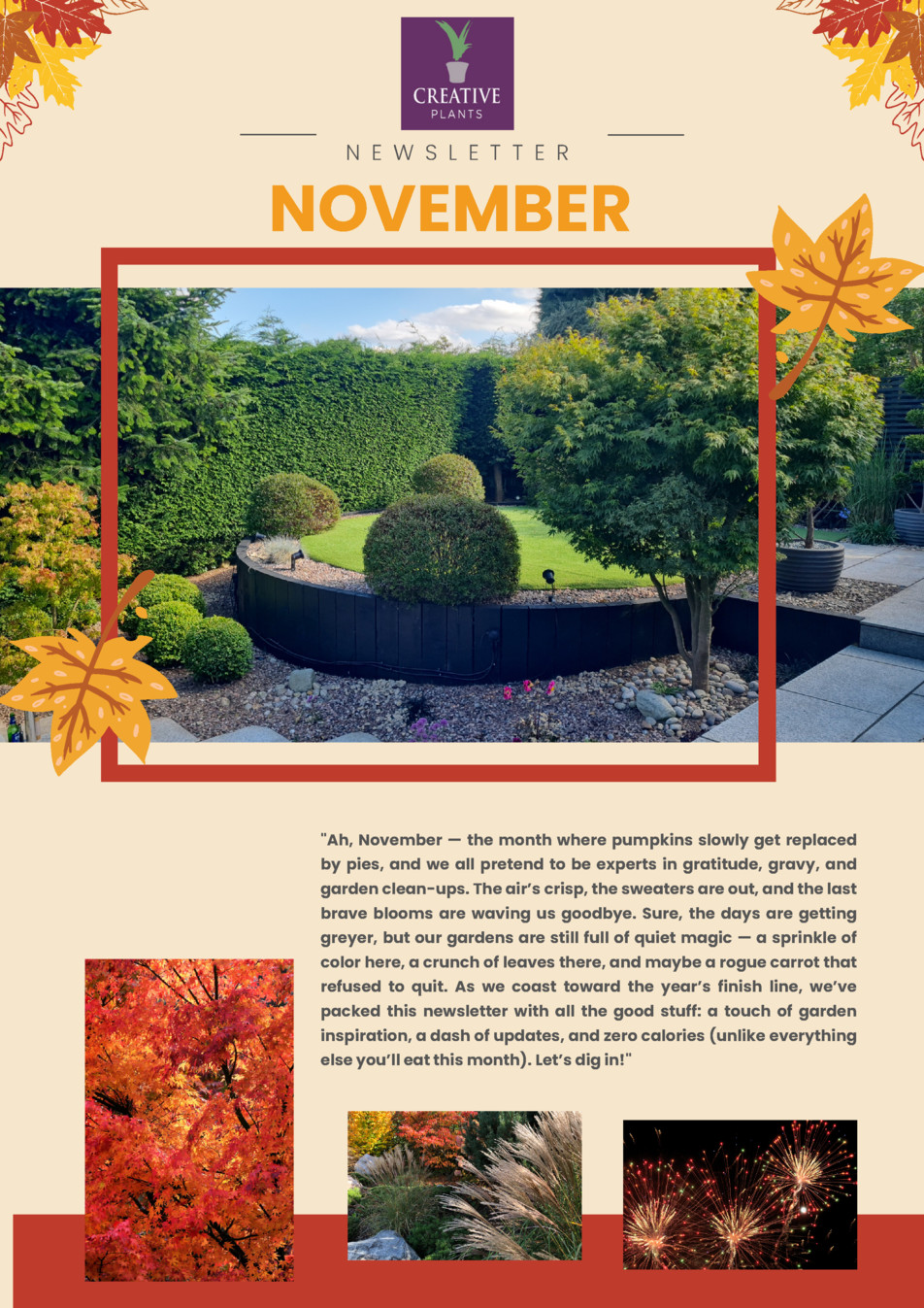
Creative Plants November Newsletter 2025 — Autumn Garden Insights, Skimmia Rubella, and Practical Tasks
Abstract: This November issue from Creative Plants invites readers to slow down and savor the shift from late autumn to the approach of winter, framing the season as a time when gardens still hold pockets of color and quiet magic. The tone blends wit with practical guidance, acknowledging the crisp air, the return of sweaters, and the hum of gratitude as the year winds toward its close. Rather than a sprint, the newsletter serves as a compact reservoir of inspiration, seasonal updates, and a dash of humor, all designed to help gardeners navigate the month with confidence. It signals that even as days grow greyer, there is value in observing your space—how color lingers in subtle pockets, how leaves crunch underfoot, and how a stubborn carrot might still push through. The overarching message is to lean into the moment: gather ideas, plan for what’s next, and enjoy the ritual of garden maintenance that keeps the landscape alive and meaningful through November. (Page: N/A)
In the spotlight this month is a plant of evergreen resilience and festive appeal. Skimmia rubella is highlighted not only for its glossy leaves but also for its ability to brighten borders and containers during autumn and winter with deep red flower buds. These buds persist into the cold season and lead to a spring display of fragrant white blossoms that pollinators adore. The plant’s compact habit makes it suitable for pots near entrances or tucked into shady corners where it can be a reliable showpiece without dominating the bed. The piece underlines that Skimmia rubella embodies the season’s spirit: dependable, aesthetically pleasing, and pleasantly scented, providing a festive flare even when other perennials have faded. (Page: N/A)
The core care guidance for Skimmia rubella emphasizes consistent, thoughtful upkeep. While the shrub is evergreen and sturdy, younger specimens benefit from protection during severe frosts, and regular observation helps maintain vigor through the colder months. The article advises a careful watering routine that keeps soil evenly moist but not waterlogged, noting that established plants tolerate some drought but containers or sunny spots may demand more frequent attention. Mulching is recommended to lock in moisture and suppress weeds, with a reminder to leave a small gap around the stem to prevent rot. Fertilization is not required in autumn, but if necessary, a slow-release, ericaceous fertilizer in spring can support growth and flowering. Pruning is kept minimal and timed for spring after flowering to avoid removing next season’s buds. For soil, Skimmia prefers well-drained, slightly acidic conditions, and for those with alkaline garden soil, planting in an ericaceous compost-filled pot can be a practical workaround. The guide also covers protection strategies for different plant situations, such as providing fleece for young plants during harsh frosts or sheltering potted specimens near walls or under cover to shield them from cold winds. (Page: N/A)
Beyond the plant care, the issue offers a lifestyle thread that ties gardening to the broader November mood. It presents a vivid snapshot of daily garden life as winter approaches—the sense of momentum that persists even when the garden looks quiet, and the small rituals that keep gardeners connected to their spaces. The narrative acknowledges that the garden’s pace does not pause for the season; instead, it invites readers to shift their focus toward tasks that prepare the ground for healthier growth in the future. It’s a reminder that careful observation, light maintenance, and selective protection are acts of stewardship that yield longer-term rewards, even during a month when growth slows and the landscape becomes more contemplative. (Page: N/A)
For the month’s practical gardening calendar, the newsletter pivots to a set of timely jobs designed to bridge autumn into winter. The plan encourages planting tulip bulbs in pots or borders with a snug soil cover, lifting and storing dahlia tubers after the first frost, and planning ahead by perusing seed catalogs to shape next year’s garden vision. It also highlights the tactic of planting bare-root hedges, roses, trees, and shrubs before harsher weather arrives, and urges gardeners to clear away overgrown annual climbers that have overstayed their welcome. Perennial maintenance is advised—trimming scruffy specimens and applying a mulch layer to enrich and insulate the soil, especially around planted borders or near exposed areas. The piece emphasizes creating sheltered conditions for tender plants and giving priority to sturdier specimens to ride out the cold. It also calls for protecting young trees and shrubs with protective materials, a reminder that even healthy mature plants benefit from routine checks and modest winter fortifications. (Page: N/A)
The narrative then broadens into more granular, October-tuned tasks that remain relevant in November. It urges pruning and tidying berry-producing plants after they enter dormancy, collecting and sowing seeds from berry-bearing trees and shrubs for future self-propagation, and using cloches to shield peas, beans, and leafy salads while allowing air flow at the ends. It also covers the practicalities of pruning raspberry canes after harvest and preparing garlic, shallots, and onions for winter by planting them now and securing them with a light mulch or fleece to deter nibbling wildlife. For fruit trees, bare-root selections can still be positioned while the ground tolerates it, with a note to check stored crops for rot or spoilage and to evict anything unfit for consumption. The list is rounded out by specific care for Brussels sprouts and other brassicas—ensuring tops are supported to withstand winds, while Jerusalem artichokes are cut back and their tubers stored in dry compost for later use. The emphasis throughout is on proactive preparation: safeguarding crops, maintaining structure, and ensuring the garden is ready to reawaken when warmer days return. (Page: N/A)
In the closing sections, the newsletter threads together seasonal ambiance with practical steps, encouraging readers to consider the month as a bridge between the year’s end and the renewal of spring. It invites gardeners to take cuttings from fruitful bushes to bolster future harvests, to cover tender plantings with cloches or lightweight protection, and to evaluate which crops can be moved or stored to minimize waste and maximize enjoyment. The overall message is that November is not a lull but a fertile period for planning, tidying, and reinforcing the garden’s foundations. The piece ends on a hopeful note about growth ahead, reminding readers that careful preparation, paired with a sense of curiosity and gratitude, helps cultivate resilience in both the garden and the gardener. (Page: N/A)
As a final touch, the gallery and catalog references in the original publication hint at a broader ecosystem of ideas—journals, magazines, and visual showcases—that accompany the newsletter. While the primary focus remains on practical month-by-month guidance, the content also underscores the value of taking inspiration from related resources, whether through seasonal recipes, styling ideas, or garden-centered media. Readers are encouraged to explore these sources to enrich their own garden narrative, stay connected with the community, and continue learning as the year moves toward its final chapters. (Page: N/A)
Creative Plants November Newsletter 2025 - Flipbook by Fleepit