Structure Welcome Pack
Structure Welcome Pack
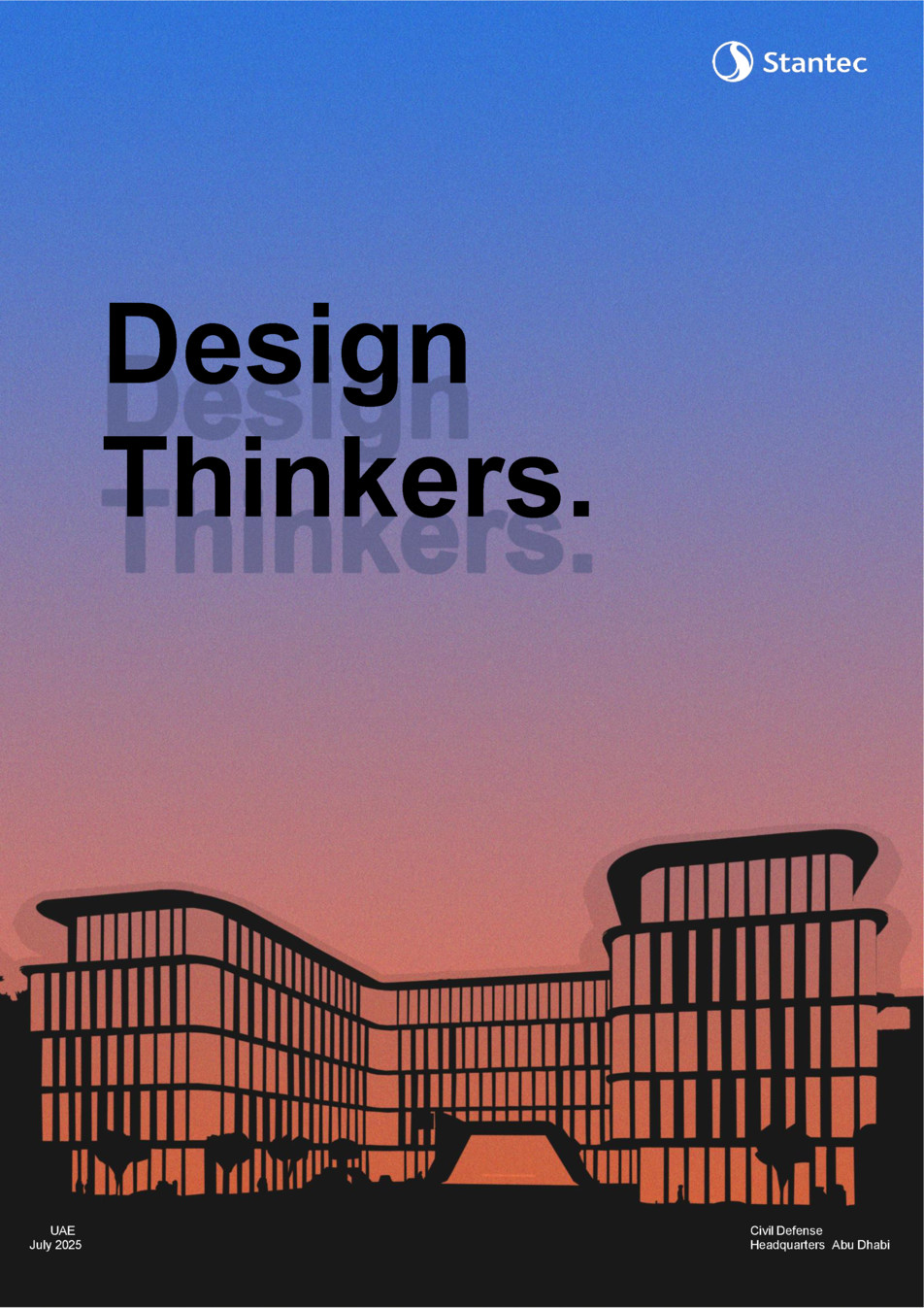
Stantec UAE 2025 Welcome Pack: Design Thinkers for the Civil Defense Headquarters in Abu Dhabi — Values, History, and Teams
Overview and Core Message
The document presents a structured Welcome Pack developed for design thinking in the UAE, dated July 2025, centered on the Civil Defense Headquarters in Abu Dhabi. It frames a vision where thoughtful design and collaborative effort drive progress, highlighting how an integrated approach to engineering, architecture, and environmental consulting can shape ambitious projects.
At its heart, the pack communicates a commitment to put communities at the center of every endeavor, underscoring the belief that thoughtful planning and responsible practice open up new possibilities for public safety, resilience, and quality of life.
Stantec positions itself as a global leader in sustainable engineering, architecture, and environmental services. The firm emphasizes its role in helping clients and communities manage aging infrastructure, shifting demographics, and the transition toward cleaner energy, with a portfolio spanning multiple sectors and scales.
The message expands beyond boundaries of place, noting that modern communities are interconnected. It highlights how diverse teams—spanning project groups, clients, and those affected by projects—bring varied perspectives that push us to rethink climate action, digital transformation, and the way cities and critical systems are prepared for the future.
The organization frames its work as a multidisciplinary collaboration—designers, engineers, scientists, project managers, and strategic advisors partnering with clients to deliver outcomes that improve communities around the world. Innovation is pursued at the nexus of people, ideas, and lasting relationships with clients.
Underpinning this effort are the core values that guide decision-making and delivery: a people-first mindset, integrity in tough choices, teamwork that leverages a global network, and an entrepreneurial spirit that seeks not only what’s next but what’s best for communities. The aim is to create enduring benefit while safeguarding safety and fostering meaningful career growth for staff.
In sum, the Welcome Pack presents a philosophy of collaboration and responsibility, inviting stakeholders to work together to achieve exceptional results that uplift the places where people live, work, and learn.
Document Structure and Contents
The materials outline a clear Table of Contents, listing sections on Stantec’s history, the team, notable projects, and practical guides for software use, project folder access, and quality control processes. It also covers administrative topics such as timesheets, payroll, and office information, all designed to streamline collaboration and project delivery.
Across the table of contents, the pack signals an emphasis on both historical context and practical workflows, balancing narrative about the company’s ethos with step-by-step guidance for project administration and operational setup.
In addition to process-oriented content, the document includes references to how teams access project data, ensure quality, and coordinate across offices in the Middle East and beyond, reflecting a structured approach to delivering complex, multi-disciplinary work.
There is an explicit intent to align the content with the needs of the region and its evolving urban landscapes, ensuring that both strategic vision and on-the-ground execution follow a consistent, rigorous standard.
Enabling Inspirational Development
The material emphasizes a regional focus where population growth and ambitious smart-city aspirations create opportunities for transformative solutions. It points to a commitment to sustainable development across essential domains—water resource management, healthcare infrastructure, and large-scale building and ecosystem projects—driven by the firm’s designers, engineers, and consultants.
Through this lens, Stantec articulates its role in shaping infrastructure and facilities that enhance the daily lives of people, while also preparing communities to adapt to evolving needs and environmental challenges.
The language suggests a philosophy of proximity to projects—working closely with stakeholders to understand local contexts and deliver outcomes that are technically robust, socially responsible, and environmentally sound.
Global Reach with Local Presence
The pack notes that Stantec operates across borders but remains connected to communities on a personal level, aiming to improve quality of life worldwide. This dual orientation—global expertise coupled with local engagement—drives the company’s approach to planning, design, and delivery.
In this regional context, the emphasis is on delivering value through tailored solutions that respect cultural and urban diversity, while drawing on the breadth of knowledge and best practices developed through projects around the world.
Regional Focus: Abu Dhabi
Abu Dhabi is described as a dynamic blend of heritage and innovation, where ancient sites sit alongside cutting-edge architecture. The city’s diverse expatriate population is highlighted as a driver of global culture and vitality. Since 1997, Stantec has contributed to the city’s growth across water, transportation, buildings, and urban planning, with notable work including major hospital and sewerage planning initiatives that shape the city’s trajectory while honoring its past.
Regional Focus: Dubai
Dubai is presented as a global symbol of ambition, having supported its transformation for more than six decades. From the central Dubai office, a team of more than 250 professionals delivers master planning, design, and construction supervision for projects spanning buildings, water, transportation, and urban planning. The firm’s portfolio in the city encompasses landmark communities and award-winning healthcare facilities, illustrating a broad and integrated capability.
Stantec’s History and Leadership
The document recounts a history of growth rooted in strong leadership and a clear purpose. It notes that the company began as a one-person operation in 1954 and has since expanded to a worldwide community of tens of thousands of employees. The narrative attributes success to long-standing leadership that prioritizes community impact and value creation for clients and partners, with a current focus on expanding capabilities and geographic reach to continue delivering excellent outcomes for communities worldwide.
Leadership and Team in the Middle East
Anas A. Kassem serves as the Regional Managing Director for the Middle East, guiding strategy, execution, and performance across the region. His leadership draws on more than three decades of experience spanning project management, program leadership, and regional business development.
Kevin Christon leads the Buildings sector for the Middle East, steering strategic growth, client relationships, and high-performance teams in healthcare, education, commercial, and industrial projects.
Murat Sarioglu heads the Water business line in the region, ensuring delivery of global best practices, resource allocation, and compliance with quality and regulatory standards across water-related initiatives.
Mark Wilson, with extensive experience across multiple markets, directs Design Services in the Middle East, bringing a track record of delivering large-scale building and infrastructure design projects and leading teams that span international geographies.
Oliver James leads Construction Services regionally, overseeing large, multidisciplinary programs and emphasizing health and safety, environmental sustainability, and social responsibility through all project stages.
Sawsan Elsharif heads Operations for Buildings in the Middle East, focusing on practical delivery while fostering collaboration across disciplines and stakeholder groups to ensure successful infrastructure outcomes.
Digital Footprint and Publications
The closing portion of the pack highlights the digital and print gallery ecosystem that accompanies the Welcome Pack. It points to a range of materials—magazines, catalogs, reports, flyers, portfolios, and art collections—hosted within the Flipbook platform (Fleepit) and notes the © 2021 copyright on the digital collection.
Closing Remarks and Reflection
In sum, the Welcome Pack combines a vision for community-centered design with concrete regional focus, historical context, and a clear roster of leadership and teams in the Middle East. It presents a cohesive narrative about how Stantec’s global capabilities can be mobilized to deliver safe, sustainable, and innovative outcomes for Abu Dhabi, Dubai, and broader regional projects, while staying faithful to values that emphasize people, integrity, collaboration, and impact.